
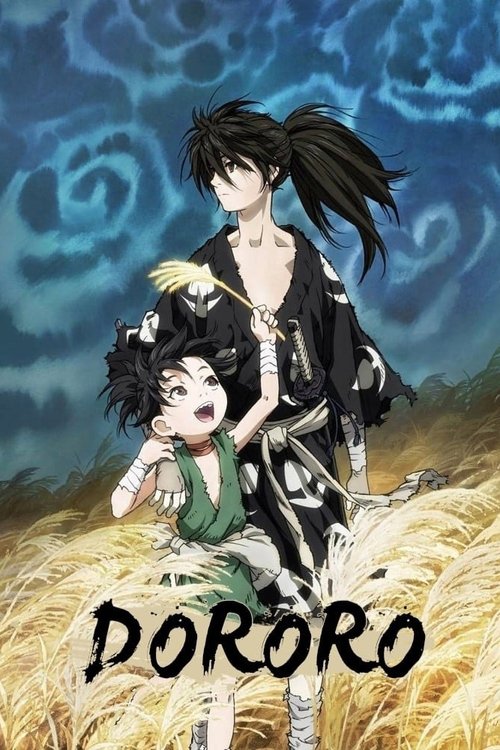
どろろ
Dororo - Symbolism & Philosophy
Symbols & Motifs
Prosthetic Limbs and Body Parts
The prosthetics symbolize Hyakkimaru's incomplete state and his manufactured, rather than natural, connection to the world. They are both tools for survival and a constant reminder of what was stolen from him. Each reclaimed body part represents a step toward physical wholeness but also introduces new vulnerabilities—pain, overwhelming sensations, and complex emotions—highlighting that becoming fully human is a painful and challenging process.
Throughout the series, Hyakkimaru starts with a fully prosthetic body, including blades in his arms which he uses to fight demons. Each time he defeats one of the twelve demons, a part of his body is restored. The return of his nerves brings pain, his ears bring the sounds of suffering, and his voice allows him to form a deeper connection with Dororo.
Demons
The demons are physical manifestations of greed, corruption, and the suffering caused by human ambition. They represent the dark pacts people make for power and prosperity, showing that such bargains come at a terrible, unnatural cost. They also serve as the catalyst for Hyakkimaru's journey, making them symbols of both his curse and his potential for redemption.
Daigo Kagemitsu makes a pact with twelve demons at the Hall of Hell, sacrificing his son to them in exchange for power and the prosperity of his land. Hyakkimaru must hunt and kill each of these demons to reclaim the corresponding body part they consumed. As he does so, the prosperity of Daigo's land begins to wane, showing the direct link between the demonic pact and the land's fortune.
Mio's Rice Seeds
The small bag of rice seeds given to Hyakkimaru by Mio symbolizes hope, dreams, and the potential for a peaceful future. Mio's dream was to create a rice paddy to feed the orphans she cared for, a humble goal of creation amidst widespread destruction. For Hyakkimaru, carrying the seeds becomes a promise and a reminder of a life beyond vengeance, representing the possibility of building a better world.
After Mio and the orphans are tragically killed by samurai, Dororo gives Hyakkimaru a bag of rice seeds that Mio had saved. This event fills Hyakkimaru with an intense rage, but the seeds become a treasured memento. In the series finale, after his journey is over, Hyakkimaru is implied to be fulfilling her dream, with the final scene showing Dororo running towards him in a lush, green field.
Philosophical Questions
What truly defines humanity?
The series explores this by contrasting physical humanity with spiritual humanity. Hyakkimaru starts as physically incomplete but morally neutral. As he gains his body, he is exposed to sensations that fuel rage and hatred, pushing him toward a demonic state. The story consistently argues that one's body does not define their humanity; rather, it is forged through choices, empathy, and connections with others. Daigo is physically human but acts monstrously, while Hyakkimaru must fight to retain his compassion and soul despite his suffering, proving that humanity is a quality that must be actively chosen and nurtured.
Is it justifiable to sacrifice one person for the greater good of many?
This is the core ethical dilemma of the series, rooted in the philosophy of utilitarianism. Daigo's pact with the demons saves his land from plague, famine, and war, bringing prosperity to thousands at the cost of his son's body. The series masterfully refuses to give an easy answer. While the audience sympathizes with Hyakkimaru's right to his own body, the narrative also shows the tangible suffering that his quest causes for the common people of Daigo's domain. Both Tahomaru and Daigo are positioned as antagonists who genuinely believe they are acting for the greater good, forcing the viewer to question if there is a moral absolute when survival is at stake.
Can one escape a cycle of vengeance?
Hyakkimaru's quest begins as a journey for restoration but is constantly in danger of becoming one of pure vengeance against his father and the world that wronged him. Mio's death, in particular, unleashes a murderous rage that nearly consumes him. His character arc is a battle against this impulse. Dororo serves as his conscience, constantly pulling him back from the brink. His final decision to spare his father's life is the culmination of this struggle, representing a conscious choice to break the cycle of violence and hatred, opting for a future defined by peace rather than retribution.
Core Meaning
The core meaning of "Dororo" revolves around the profound question of what it truly means to be human. The series posits that humanity is not merely defined by a physical body but by one's capacity for love, empathy, and connection. Hyakkimaru's journey is a powerful allegory for this; as he reclaims his physical form, he risks losing his spiritual self to rage and vengeance. It is through his bond with Dororo that he learns the value of compassion and interdependence, discovering that true wholeness comes from relationships and conscious moral choices, not just from reclaiming what was lost. The series ultimately suggests that true humanity is a continuous, difficult choice to connect with others and show mercy, even in a world defined by suffering and betrayal.