The core message of "Dou kyu sei – Classmates" is a celebration of the purity and simplicity of first love, asserting that genuine connection transcends personality differences and societal norms. The film intentionally avoids overt melodrama and social commentary, instead focusing on the internal, emotional world of its two protagonists. Director Shoko Nakamura crafts a narrative where the characters' homosexuality is a simple fact of their identity, not the central conflict. The film's meaning lies in its portrayal of a universal experience—the exhilarating, awkward, and tender journey of falling in love for the first time—and champions the idea that this experience is beautiful and valid regardless of orientation. It emphasizes the importance of communication, mutual respect, and facing the future together, even when paths diverge.
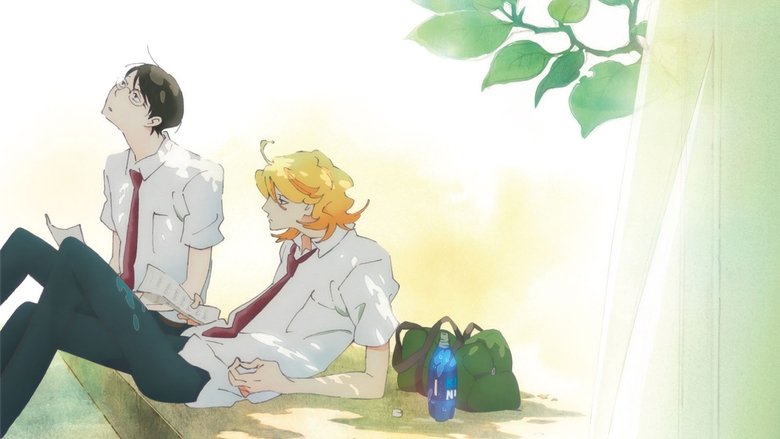

同級生
"Sincerely, Slowly, Falling in Love."
Director: Shoko Nakamura
Cast: Kenji Nojima, Hiroshi Kamiya, Hideo Ishikawa, Yurino
Dou kyu sei – Classmates — Symbolism & Philosophy
Symbols & Motifs
Singing and Music
Music is the catalyst for Sajo and Kusakabe's relationship and symbolizes their emotional harmony. Their initial connection is formed through practicing a chorus song, a literal act of harmonizing their voices. This represents their ability to find a shared rhythm despite their different personalities. Kusakabe's guitar playing and band activities symbolize his passionate, free-spirited nature, which initially intimidates the more structured Sajo.
The film opens with the class practicing for a chorus festival, which is where Kusakabe first takes a real interest in Sajo. Their private singing lessons become the foundation of their bond. Later, Sajo attending Kusakabe's band performance signifies his entrance into Kusakabe's world and his acceptance of their differences. The score, composed and performed by acoustic guitarist Kotaro Oshio, further enhances this symbolism, providing a gentle, dreamlike atmosphere that underscores the entire romance.
Rain and Summer
The changing seasons, particularly the transition from a bright, hopeful summer to a more contemplative autumn, mirror the progression of their relationship. Summer represents the new, exciting, and passionate beginning of their love. Rain often appears during moments of emotional turmoil or vulnerability, symbolizing both a cleansing release of emotion and the obstacles they face.
The story is divided into segments, beginning in the summer, which coincides with the start of their romance. A key early confession and kiss happen during a sudden summer downpour, mingling the passion of the moment with a sense of raw, unfiltered emotion. Later conflicts arise as autumn approaches, symbolizing the cooling-off period and the anxieties about the coming "winter" of their separation after graduation.
Eyeglasses
Sajo's eyeglasses represent his studious, introverted nature and, at times, his clouded perception or insecurity. They are a physical barrier that literally affects his vision, just as his anxiety sometimes clouds his judgment. Moments involving his glasses often relate to shifts in his perspective or moments of clarity and intimacy.
Kusakabe first notices Sajo because he can't read the music, a problem related to his poor vision even with glasses. When Kusakabe first kisses him, Sajo's glasses fog up, symbolizing his surprise and the overwhelming emotion of the moment. The act of removing or cleaning his glasses can signify moments where he sees Kusakabe—and their relationship—more clearly, unburdened by his own insecurities.
Philosophical Questions
Does true love require fundamental change or the acceptance of difference?
The film explores this question through the central relationship. Sajo and Kusakabe are presented as total opposites. Initially, their differences are a source of attraction and fascination. However, as they contemplate a future after graduation, these same differences—Sajo's academic path versus Kusakabe's artistic one—become a source of deep anxiety. The film doesn't suggest that one must abandon their identity for the other. Instead, it posits that their love is deepened not by changing who they are, but by making a conscious effort to understand, accept, and support each other's individual paths. The resolution comes from communication and a promise to face the future together, implying that love is an active commitment to navigate differences rather than erase them.
How does fear of the future shape the experience of present love?
"Dou kyu sei" vividly illustrates how anxiety about what's to come can impact the present. The first half of the film is bathed in the idyllic glow of a summer romance, where the future is a distant concept. As graduation looms, the pressure of making life-altering decisions introduces conflict and insecurity into their relationship. Sajo's panic attack during his mock exam is a literal manifestation of this fear. The film shows that their love is tested not by external forces, but by their internal fears of separation and an unknown future. It suggests that a mature relationship requires acknowledging these fears and choosing to believe in the connection's strength to endure change and distance.
Core Meaning
Explore More About This Movie
Dive deeper into specific aspects of the movie with our detailed analysis pages