
Dou kyu sei – Classmates
同級生
"Sincerely, Slowly, Falling in Love."
Overview
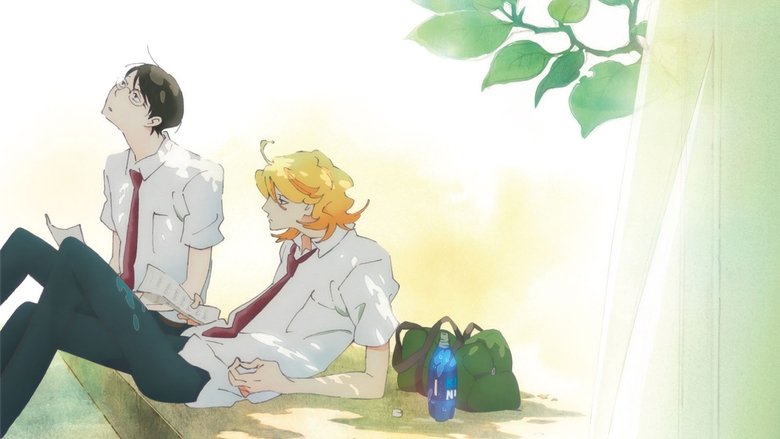
"Dou kyu sei – Classmates" is a tender and intimate animated film that chronicles the burgeoning romance between two high school boys who couldn't be more different. Rihito Sajo is a quiet, diligent honor student, while Hikaru Kusakabe is an easygoing, popular musician in a band. Their worlds intersect during practice for the school's chorus festival when Kusakabe notices Sajo isn't singing. He soon discovers Sajo practicing alone, struggling with the music, and impulsively offers to help.
What begins as simple after-school singing lessons blossoms into a deep, mutual affection. The film, told through a series of vignettes corresponding to the seasons, delicately portrays the small, significant moments of their developing relationship. From tentative conversations to shared walks home, their connection grows, forcing them to navigate the anxieties of first love, insecurity, and the looming uncertainty of their futures after graduation. The story is a pure and heartfelt exploration of a relationship that feels genuine and emotionally resonant.

Core Meaning
The core message of "Dou kyu sei – Classmates" is a celebration of the purity and simplicity of first love, asserting that genuine connection transcends personality differences and societal norms. The film intentionally avoids overt melodrama and social commentary, instead focusing on the internal, emotional world of its two protagonists. Director Shoko Nakamura crafts a narrative where the characters' homosexuality is a simple fact of their identity, not the central conflict. The film's meaning lies in its portrayal of a universal experience—the exhilarating, awkward, and tender journey of falling in love for the first time—and champions the idea that this experience is beautiful and valid regardless of orientation. It emphasizes the importance of communication, mutual respect, and facing the future together, even when paths diverge.
Thematic DNA
Opposites Attract and Complement
The film is built on the classic dynamic of two contrasting personalities finding common ground. Kusakabe is outgoing, direct, and lives in the moment, while Sajo is reserved, studious, and prone to anxiety about the future. Their relationship works because they complement each other. Kusakabe's carefree nature helps Sajo to open up and experience the joys of youth, while Sajo's diligence and thoughtful nature provide a grounding influence for Kusakabe. Their differences create a gentle friction that ultimately strengthens their bond, showing how love can bridge disparate worlds.
The Purity and Awkwardness of First Love
"Dou kyu sei" excels at capturing the authentic feelings of a first romance. It portrays the relationship as tender, loving, and genuine, focusing on emotional intimacy over physical. The narrative highlights the small, clumsy, yet significant moments: the initial attraction, the nervous conversations, the internal conflicts, and the shared vulnerability. It refreshingly steers clear of common Boys' Love (BL) tropes like forced drama or sexual assault, presenting a healthy, heartwarming, and relatable depiction of two teenagers navigating their feelings.
Communication and Misunderstanding
A central conflict in the latter half of the film revolves around the characters' anxieties about their different future paths. Sajo, the honor student, is headed for a prestigious university in Kyoto, while Kusakabe plans to stay in Tokyo to pursue music. This divergence creates insecurity and leads to misunderstandings born from their inability to properly articulate their fears and desires. The film explores how even in a loving relationship, a lack of clear communication can lead to emotional distance and pain, underscoring the necessity of honesty and trust to overcome such hurdles.
Acceptance and Self-Discovery
While the film doesn't focus on societal homophobia, it does touch on themes of acceptance. The characters' relationship is presented without judgment, and their sexuality is treated as a natural aspect of who they are. The narrative is more concerned with their personal journey of self-discovery through their relationship. They learn not only about each other but also about their own capacities for love, jealousy, and commitment. It's a story about growing up and understanding oneself in the context of a deeply meaningful connection.
Character Analysis
Rihito Sajo
Kenji Nojima
Motivation
Initially, his motivation is simply to succeed academically and get into a good university. As he falls for Kusakabe, his motivation shifts to navigating the complexities of their relationship and finding a way to maintain their bond despite their diverging life paths. He is driven by a deep-seated desire for stability and a fear of the unknown.
Character Arc
Sajo begins as a timid and studious honor student, isolated by his own anxiety and diligence. His world is orderly and focused on academics. Through his relationship with the spontaneous Kusakabe, Sajo learns to step outside his comfort zone, embrace emotion, and confront his insecurities about the future. His arc is about learning to balance his meticulous nature with the unpredictable currents of love and life, ultimately gaining the confidence to voice his desires and trust in their shared future.
Hikaru Kusakabe
Hiroshi Kamiya
Motivation
His primary motivation is to live in the present and pursue what makes him happy, whether it's his music or his feelings for Sajo. He is driven by his emotions and a desire for genuine connection, which he finds for the first time with Sajo. His challenge is to translate his passionate, in-the-moment feelings into a stable, long-term commitment.
Character Arc
Kusakabe starts as a popular, carefree, and somewhat impulsive musician who seems to drift through life with ease. He is drawn to Sajo's earnestness, which is a stark contrast to his own casual world. His relationship with Sajo forces him to think more seriously about the future and commitment. He develops from a boy driven by momentary feelings into a young man who understands the depth of his love and is willing to make sincere promises, learning that true freedom in a relationship comes from dedication, not just spontaneity.
Manabu Hara
Hideo Ishikawa
Motivation
His motivations are not fully explicit in the film. He seems drawn to Sajo's innocence and intelligence, but his actions also suggest a degree of loneliness or a history of his own romantic complications. He acts as a brief, potential obstacle that the main characters must overcome.
Character Arc
Manabu Hara, the music teacher, is a minor but intriguing character. He initially appears as a supportive teacher but is later revealed to have his own interest in Sajo, creating a brief moment of tension. His presence serves as an external test for the couple's relationship and hints at a wider world of adult gay relationships. While his own story is not explored deeply in the film, he functions as a catalyst for Kusakabe's protective instincts and Sajo's affirmation of his choice.
Symbols & Motifs
Singing and Music
Music is the catalyst for Sajo and Kusakabe's relationship and symbolizes their emotional harmony. Their initial connection is formed through practicing a chorus song, a literal act of harmonizing their voices. This represents their ability to find a shared rhythm despite their different personalities. Kusakabe's guitar playing and band activities symbolize his passionate, free-spirited nature, which initially intimidates the more structured Sajo.
The film opens with the class practicing for a chorus festival, which is where Kusakabe first takes a real interest in Sajo. Their private singing lessons become the foundation of their bond. Later, Sajo attending Kusakabe's band performance signifies his entrance into Kusakabe's world and his acceptance of their differences. The score, composed and performed by acoustic guitarist Kotaro Oshio, further enhances this symbolism, providing a gentle, dreamlike atmosphere that underscores the entire romance.
Rain and Summer
The changing seasons, particularly the transition from a bright, hopeful summer to a more contemplative autumn, mirror the progression of their relationship. Summer represents the new, exciting, and passionate beginning of their love. Rain often appears during moments of emotional turmoil or vulnerability, symbolizing both a cleansing release of emotion and the obstacles they face.
The story is divided into segments, beginning in the summer, which coincides with the start of their romance. A key early confession and kiss happen during a sudden summer downpour, mingling the passion of the moment with a sense of raw, unfiltered emotion. Later conflicts arise as autumn approaches, symbolizing the cooling-off period and the anxieties about the coming "winter" of their separation after graduation.
Eyeglasses
Sajo's eyeglasses represent his studious, introverted nature and, at times, his clouded perception or insecurity. They are a physical barrier that literally affects his vision, just as his anxiety sometimes clouds his judgment. Moments involving his glasses often relate to shifts in his perspective or moments of clarity and intimacy.
Kusakabe first notices Sajo because he can't read the music, a problem related to his poor vision even with glasses. When Kusakabe first kisses him, Sajo's glasses fog up, symbolizing his surprise and the overwhelming emotion of the moment. The act of removing or cleaning his glasses can signify moments where he sees Kusakabe—and their relationship—more clearly, unburdened by his own insecurities.
Philosophical Questions
Does true love require fundamental change or the acceptance of difference?
The film explores this question through the central relationship. Sajo and Kusakabe are presented as total opposites. Initially, their differences are a source of attraction and fascination. However, as they contemplate a future after graduation, these same differences—Sajo's academic path versus Kusakabe's artistic one—become a source of deep anxiety. The film doesn't suggest that one must abandon their identity for the other. Instead, it posits that their love is deepened not by changing who they are, but by making a conscious effort to understand, accept, and support each other's individual paths. The resolution comes from communication and a promise to face the future together, implying that love is an active commitment to navigate differences rather than erase them.
How does fear of the future shape the experience of present love?
"Dou kyu sei" vividly illustrates how anxiety about what's to come can impact the present. The first half of the film is bathed in the idyllic glow of a summer romance, where the future is a distant concept. As graduation looms, the pressure of making life-altering decisions introduces conflict and insecurity into their relationship. Sajo's panic attack during his mock exam is a literal manifestation of this fear. The film shows that their love is tested not by external forces, but by their internal fears of separation and an unknown future. It suggests that a mature relationship requires acknowledging these fears and choosing to believe in the connection's strength to endure change and distance.
Alternative Interpretations
While the film's narrative is quite direct, some interpretations focus on the underlying psychological aspects of the characters. One perspective is that the relationship is not just a simple romance, but a symbolic journey of integrating different parts of the self. Sajo represents the logical, anxious, and future-oriented side of a person (the superego), while Kusakabe embodies the passionate, impulsive, and present-focused side (the id). Their coming together can be seen as a process of achieving psychological balance and maturity, learning to live with both foresight and spontaneity.
Another interpretation delves into the role of Mr. Hara. Instead of seeing him as a simple, momentary rival, he can be viewed as a representation of a potential, perhaps more cynical, future for gay men. His enigmatic and slightly melancholic demeanor might suggest past heartbreaks or the complexities of adult relationships, serving as a subtle contrast to the pure, idealized first love experienced by the protagonists. His brief, almost predatory interest in Sajo could symbolize the dangers and complications that await them beyond the sheltered world of high school, making their decision to trust each other a more significant triumph.
Cultural Impact
"Dou kyu sei – Classmates" was released in 2016 and stands as a significant work within the Boys' Love (BL) or Shounen-ai subgenre of anime. Historically, anime exploring LGBT themes has existed for decades, but often catered to a niche audience with specific tropes. "Dou kyu sei" achieved both critical and unexpected commercial success, demonstrating that a sensitively and artfully told queer romance could have broader appeal. Critics praised it for avoiding the genre's negative clichés, such as non-consensual encounters or overly dramatic plotlines, and instead presenting a healthy, realistic, and heartwarming relationship.
Its reception was overwhelmingly positive, lauded for its beautiful and unique watercolor-esque animation, which faithfully adapted Asumiko Nakamura's distinctive art style. The film was celebrated for its meticulous character animation and gentle, atmospheric storytelling. By focusing on universal emotions of first love, the film became accessible and relatable to audiences regardless of their sexual orientation. Its success helped pave the way for other high-quality, mainstream BL anime productions, contributing to a growing acceptance and appreciation of LGBT stories within the medium. It is often cited as a benchmark for how to adapt a BL manga with respect and artistry.
Audience Reception
Audience reception for "Dou kyu sei – Classmates" has been overwhelmingly positive, with many viewers hailing it as a masterpiece of the romance and BL genres. Fans frequently praise the film for its beautiful and unique art style, which faithfully captures the essence of the source manga, and its fluid, expressive animation. The central relationship between Sajo and Kusakabe is consistently highlighted as a major strength; viewers find their dynamic to be genuine, sweet, and deeply touching, appreciating that the story focuses on emotional intimacy and avoids negative stereotypes often found in BL.
The main point of criticism, though often minor, is the film's short, 60-minute runtime. Some viewers and critics felt that this brevity led to a rushed feeling in certain parts and didn't allow for the full exploration of side characters, like the teacher Manabu Hara, who seemed interesting but underdeveloped. Despite this, the overall verdict is that the film is a short, sweet, and heartwarming story that perfectly captures the feeling of first love, making it a highly recommended watch for fans of romance, regardless of their familiarity with the BL genre.
Interesting Facts
- The film is an adaptation of the first volume of a long-running manga series by Asumiko Nakamura.
- This was the first feature-length film directed by Shoko Nakamura, who had previously directed episodes for acclaimed series like "Mawaru Penguindrum" and "Kill la Kill".
- The film's score was composed and performed entirely by acoustic guitarist Kotaro Oshio; it was the first film soundtrack of his career.
- The animation was produced by A-1 Pictures, a renowned studio known for works like "Anohana" and "Sword Art Online".
- The unique, watercolor-like visual style was intentionally designed to reflect the delicate and gentle aesthetic of Asumiko Nakamura's original manga art.
- Despite its niche genre, the film was a financial success in Japan, opening in ninth place at the box office and grossing over ¥201 million domestically.
- Director Shoko Nakamura and character designer Akemi Hayashi had worked together on several previous projects, including "Gurren Lagann" and "Mawaru Penguindrum", before collaborating on this passion project.
- The film uses split-screen visuals at times, a technique that pays homage to the manga's paneling and the work of influential directors like Osamu Dezaki.
Easter Eggs
A character with a prominent mustache who serves as a teacher bears a striking resemblance to the character Ramba Ral from the classic anime series "Mobile Suit Gundam".
This is likely a visual homage by the director, Shoko Nakamura. It's a subtle nod to a classic and influential anime, adding a layer of intertextuality for dedicated anime fans to appreciate. Kunihiko Ikuhara, a major influence on Nakamura, is also known for such referential humor in his works.
⚠️ Spoiler Analysis
Click to reveal detailed analysis with spoilers
Frequently Asked Questions
Explore More About This Movie
Dive deeper into specific aspects of the movie with our detailed analysis pages
Comments (0)
No comments yet. Be the first to share your thoughts!