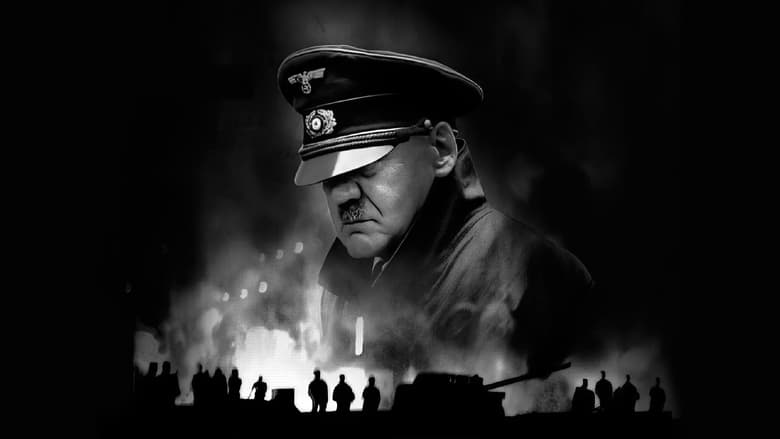
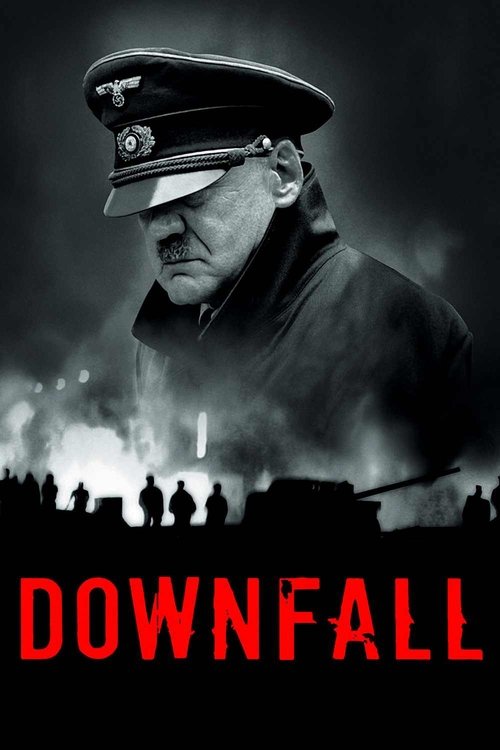
Downfall
A claustrophobic historical drama descending into the chilling, human banality of evil within the final, suffocating days of a crumbling Reich.
Downfall
Downfall

Der Untergang

"April 1945, a nation awaits its... Downfall"

16 September 2004 Austria 155 min ⭐ 7.9 (4,102)
Director: Oliver Hirschbiegel
Cast: Bruno Ganz, Alexandra Maria Lara, Corinna Harfouch, Ulrich Matthes, Juliane Köhler
Drama War History
The Humanization of Evil The Collapse of Ideology Blind Loyalty and Complicity Denial and Detachment from Reality
Budget: $16,000,000
Box Office: $92,181,574

Downfall - Ending Explained

⚠️ Spoiler Analysis

The final act of "Downfall" meticulously details the suicides of the Nazi leadership as the Soviet army overruns Berlin. After dictating his political and private testaments, Hitler marries Eva Braun. Realizing all military options are exhausted, he bids farewell to his remaining staff. He and Eva then retreat to his study, where he shoots himself and she bites a cyanide capsule. Their bodies are carried outside, doused in gasoline, and set ablaze in a shallow ditch in the Reich Chancellery garden, a pathetic funeral pyre for a self-proclaimed messiah.

This is followed by a cascade of suicides. Joseph and Magda Goebbels carry out their horrific plan: Magda poisons their six children with cyanide in their sleep. The couple then goes into the garden, where they are shot by an SS soldier. Other generals also take their own lives. The hidden meaning in this sequence is the ultimate bankruptcy of the Nazi ideology. It is a death cult that, when faced with defeat, can only offer self-annihilation. The dream of the Thousand-Year Reich ends not with a heroic last stand, but with a series of squalid, desperate suicides in a concrete tomb, a final, nihilistic act of a failed and murderous ideology. The film concludes with Traudl Junge escaping through the Soviet lines with the young Hitler Youth boy, Peter, a faint and ambiguous glimmer of a new generation emerging from the ashes.

Alternative Interpretations

While the film is largely a direct historical dramatization, critics have offered different interpretations of its subtext and focus. One perspective is that the film, by focusing on the 'suffering' within the bunker and using the naive Traudl Junge as a viewpoint character, subtly frames the Germans as victims of Hitler's madness rather than willing participants in his crimes. Some critics argue that by omitting explicit references to the Holocaust, the film allows for an interpretation that absolves ordinary Germans of their collective responsibility.

Another interpretation views the film not just as a historical account but as a universal study of the psychology of a collapsing totalitarian state. From this viewpoint, the specifics of Nazism are secondary to the film's exploration of themes like fanaticism, denial, and the intoxicating, corrosive nature of absolute power. It can be seen as a timeless allegory for any cult of personality or ideological system that becomes detached from reality and morality.