Downfall
A claustrophobic historical drama descending into the chilling, human banality of evil within the final, suffocating days of a crumbling Reich.
Downfall

Downfall

Der Untergang

"April 1945, a nation awaits its... Downfall"

16 September 2004 Austria 155 min ⭐ 7.9 (4,102)
Director: Oliver Hirschbiegel
Cast: Bruno Ganz, Alexandra Maria Lara, Corinna Harfouch, Ulrich Matthes, Juliane Köhler
Drama War History
The Humanization of Evil The Collapse of Ideology Blind Loyalty and Complicity Denial and Detachment from Reality
Budget: $16,000,000
Box Office: $92,181,574

Overview

"Downfall" chronicles the last ten days of Adolf Hitler's life and the Nazi regime, as seen through the eyes of his final private secretary, Traudl Junge. The film is set almost entirely within the Führerbunker in Berlin, a claustrophobic, subterranean world where Hitler and his inner circle face the impending collapse of the Third Reich as Soviet forces close in on the city.

As the military situation deteriorates, Hitler descends further into delusion and paranoia, issuing orders for phantom armies and lashing out at his generals for their perceived failures and betrayals. The atmosphere in the bunker becomes a surreal mix of fanatical loyalty, hedonistic denial, and abject despair. While some, like Eva Braun, throw parties to ignore the encroaching reality, others, like Magda Goebbels, prepare for a horrifying final act of devotion. The film provides an intimate and unsettling portrait of the architects of a monstrous ideology in their final moments.

Core Meaning

The core meaning of "Downfall" is an exploration of the 'banality of evil' and a powerful warning against the dangers of fanatical ideology and unquestioning loyalty. Director Oliver Hirschbiegel sought to demystify the leading figures of the Third Reich, not to excuse their actions, but to show that they were not abstract monsters, but human beings capable of monstrous acts. The film's intention was to present a historically accurate depiction that allows the German nation to confront its own history and trauma. By portraying Hitler's charm, his moments of kindness to his staff, alongside his terrifying rage and utter lack of compassion for the German people he claimed to champion, the film forces the audience to grapple with the uncomfortable truth that evil can have a human face, making it all the more chilling and cautionary.

Thematic DNA

The Humanization of Evil 40%
The Collapse of Ideology 30%
Blind Loyalty and Complicity 20%
Denial and Detachment from Reality 10%

The Humanization of Evil

The film's most controversial and central theme is its portrayal of Hitler and other high-ranking Nazis as complex human beings rather than monolithic monsters. This was a deliberate choice by the filmmakers to show that the atrocities of the Third Reich were committed by people, not mythical demons. This humanization is not meant to evoke sympathy but to underscore the chilling reality that ordinary individuals can be seduced by ideology and are capable of immense cruelty. Bruno Ganz's performance captures Hitler's moments of politeness and charm, which he used to manipulate those around him, juxtaposed with his violent, paranoid rages. This forces viewers to confront the uncomfortable idea that evil is not always obvious and can arise from within humanity itself.

The Collapse of Ideology

"Downfall" is a powerful depiction of the disintegration of a fanatical belief system. Inside the bunker, the characters cling to the tenets of National Socialism with varying degrees of desperation. Some, like the Goebbels, are so indoctrinated that they cannot imagine a world without it, leading them to murder their own children. Others begin to see the cracks in the facade as Hitler's orders become increasingly detached from reality. The film meticulously charts how the grand, self-proclaimed "Thousand-Year Reich" crumbles into a pathetic and nihilistic end in a concrete bunker, its leaders either committing suicide or trying to save themselves.

Blind Loyalty and Complicity

The film explores the spectrum of loyalty and complicity among Hitler's followers. From the unwavering fanaticism of Magda Goebbels to the more pragmatic but ultimately compliant generals, "Downfall" examines why so many people followed Hitler to the very end. It raises questions about personal responsibility, particularly through the character of Traudl Junge, whose youthful naivety is stripped away to reveal a retrospective understanding of her own culpability. The real-life Junge's closing statement in the film, expressing her guilt for not recognizing the monster sooner, drives this theme home.

Denial and Detachment from Reality

A palpable sense of unreality pervades the bunker. While Berlin is being obliterated above, Eva Braun throws a birthday party, and champagne flows freely. This disconnect is most embodied by Hitler himself, who moves non-existent armies on his map and refuses to accept defeat until the very last moment. The claustrophobic setting of the bunker symbolizes this psychological isolation, a self-imposed prison where the leadership of the Reich can maintain their delusions while the world they created burns around them.

Character Analysis

Adolf Hitler

Bruno Ganz

Archetype: The Fallen Tyrant / Antihero
Key Trait: Narcissistic Megalomania

Motivation

His primary motivation is the preservation of his power and his warped vision of a dominant Germany at any cost. When victory becomes impossible, his motivation shifts to a nihilistic desire for a grand, Wagnerian self-destruction, intending to drag the entire German nation down with him. He is driven by a narcissistic belief in his own destiny and an absolute refusal to accept failure.

Character Arc

Hitler's arc is one of rapid and total disintegration. The film begins with him already on the verge of defeat, but he maintains a facade of authority. As the narrative progresses, this facade crumbles completely. He devolves from a charismatic, albeit terrifying, leader into a paranoid, delusional, and physically frail old man, consumed by rage and self-pity. His journey is not one of redemption or growth, but of a descent into utter nihilism, culminating in his suicide and his final, contemptuous condemnation of the German people for failing him.

Traudl Junge

Alexandra Maria Lara

Archetype: The Naive Observer
Key Trait: Initial Naivety

Motivation

Initially, her motivation is a youthful desire for an exciting and important job. She is driven by a sense of duty and a genuine, if naive, admiration for Hitler. As the end nears, her motivation shifts to pure survival and the need to escape the suffocating horror of the bunker.

Character Arc

Traudl Junge begins as a young, apolitical woman who is initially captivated by Hitler's charm and the prestige of her position. Her arc is one of dawning horror and disillusionment. Through her eyes, the audience witnesses the inner workings of the bunker and the gradual unraveling of the man she saw as a respectable employer. By the end, her innocence is shattered, and she is forced to confront the monstrous reality of the regime she served. Her escape from the bunker and Berlin symbolizes a desperate flight from the darkness she was a part of, leading to a lifetime of grappling with her complicity, as expressed by the real-life Junge in the film's closing interview footage.

Joseph Goebbels

Ulrich Matthes

Archetype: The Fanatical Devotee
Key Trait: Ideological Fanaticism

Motivation

His sole motivation is his fanatical devotion to Hitler and the National Socialist ideology. He sees no value in a world without Hitler's Germany. This belief is so absolute that it overrides any paternal instinct, leading him to believe that his children are better off dead than living in a post-Nazi world.

Character Arc

Goebbels' character does not have a traditional arc of change; instead, he represents the unwavering, terrifying endpoint of Nazi ideology. He remains a true believer until the very end, his fanaticism never wavering. His 'arc' is a straight line into oblivion. He embraces the regime's downfall with a chilling resolve, seeing it as a logical conclusion to their 'all or nothing' philosophy. His final act of participating in the murder of his children and his own suicide is the ultimate expression of his absolute and horrifying devotion.

Magda Goebbels

Corinna Harfouch

Archetype: The Ideological Zealot
Key Trait: Unwavering Fanaticism

Motivation

Her motivation is a twisted form of maternal protection rooted in fanatical ideology. She genuinely believes that death is a better fate for her children than a life without National Socialism. Her actions are driven by the conviction that the world after the fall of the Third Reich will not be worth living in.

Character Arc

Similar to her husband, Magda Goebbels' arc is one of unwavering, horrific conviction. Her journey in the film is a descent into a cold, premeditated darkness. Initially seen as a devoted mother, her fanaticism is gradually revealed to be her defining trait. Her arc culminates in one of the most disturbing scenes in cinema, where she systematically murders her six children. This act is the terrifying apotheosis of her belief, demonstrating the complete destruction of her humanity by ideology.

Symbols & Motifs

The Führerbunker

Meaning:

The bunker symbolizes the claustrophobic, insular, and decaying world of the Nazi regime in its final days. It is a concrete tomb, both a physical and psychological prison, representing the dead end of Hitler's ideology. Its subterranean location signifies a detachment from the reality of the war devastating Berlin above ground.

Context:

The vast majority of the film takes place within the cramped, oppressive corridors and rooms of the bunker. The camera often uses tight framing to enhance the sense of entrapment. The deteriorating conditions within the bunker mirror the collapse of the Third Reich itself.

Hitler's Trembling Hand

Meaning:

Hitler's trembling left hand, which he often hides behind his back, symbolizes his loss of control, his failing health, and the physical decay of the man who once projected an image of absolute power. It is a constant, visible manifestation of the impending downfall of both himself and his regime.

Context:

Throughout the film, particularly in moments of stress or contemplation, Hitler's hand is shown shaking, a symptom of what historians believe was Parkinson's disease. Actor Bruno Ganz studied patients with the disease to portray this accurately. The tremor is a stark visual contrast to the iron will he attempts to project.

The Goebbels Children

Meaning:

The six children of Joseph and Magda Goebbels represent the innocent generation sacrificed for a fanatical and bankrupt ideology. Their murder by their own mother is the film's most chilling depiction of the horrifying depths of Nazi fanaticism and the ultimate perversion of morality.

Context:

The children are initially shown playing and singing, a stark contrast to the grim atmosphere of the bunker. Their presence highlights the humanity that is about to be extinguished. The scene where Magda Goebbels poisons them one by one is a harrowing and pivotal moment, illustrating the belief that a life without National Socialism is not worth living.

Memorable Quotes

Der Krieg ist verloren... Aber wenn Sie deswegen glauben, ich verließe Berlin, dann irren Sie sich gewaltig. Eher jage ich mir eine Kugel in den Kopf.

— Adolf Hitler

Context:

Spoken to his generals in the bunker after they inform him of the dire military situation and the impossibility of defending Berlin. It's a moment of grim realization mixed with defiant, nihilistic pride.

Meaning:

"The war is lost... But if you think that I'll leave Berlin for that, you are sadly mistaken. I'd rather put a bullet in my head." This quote encapsulates Hitler's absolute refusal to surrender and his preference for suicide over capture or defeat. It highlights his 'all or nothing' mentality and foreshadows the film's climax.

Ich empfinde kein Mitleid. Ich wiederhole, ich empfinde kein Mitleid! Das deutsche Volk hat sein Schicksal selbst gewählt. Das mag manchen überraschen. Machen Sie sich nichts vor. Wir haben das deutsche Volk nicht gezwungen. Es hat uns die Vollmacht gegeben, und jetzt werden ihm die Hälschen durchgeschnitten!

— Joseph Goebbels

Context:

Goebbels says this to General Mohnke, who is expressing outrage at the disregard for civilian lives as Berlin falls. Goebbels' cold response is a stark display of the regime's nihilistic and self-serving ideology.

Meaning:

"I feel no sympathy. I repeat, I feel no sympathy! The German people chose their fate. That may surprise some people. Don't fool yourself. We didn't force the German people. They gave us a mandate, and now their little throats are being cut!" This chilling quote reveals the utter contempt the Nazi leadership held for the very people they claimed to champion. It articulates their belief that the German populace deserved its horrific fate for failing to secure victory.

Verräter! Ich bin von Anfang an nur verraten und betrogen worden! Welch ungeheuerlicher Verrat am deutschen Volk. Aber all diese Verräter werden bezahlen. Mit ihrem eigenen Blut werden sie bezahlen. Sie werden in ihrem eigenen Blut ertrinken!

— Adolf Hitler

Context:

This is the centerpiece of Hitler's tirade after being informed by his generals that an expected counter-attack by SS General Steiner will not happen because the forces do not exist. This realization that the war is truly lost triggers a complete breakdown.

Meaning:

"Traitors! I've been betrayed and deceived from the very beginning! What a monstrous betrayal of the German people, but all those traitors will pay. They'll pay with their own blood. They shall drown in their own blood!" This is from the film's most famous scene. It showcases Hitler's complete detachment from reality, his paranoia, and his tendency to blame others for his own failures. His rage is a terrifying display of a man whose power has evaporated, leaving only impotent fury.

Philosophical Questions

What is the nature of evil, and can it be 'human'?

The film's central philosophical question revolves around the nature of evil. By refusing to portray Hitler as a one-dimensional monster, "Downfall" challenges the audience to consider that evil is not a supernatural force but a product of human behavior, ideology, and choice. It explores how a person can be both a 'charming man' to his secretaries and a genocidal tyrant. This raises profound questions: Does humanizing a figure like Hitler risk normalizing his evil? Or is it more dangerous to mythologize him as a demon, thereby distancing ourselves from the uncomfortable truth that such evil can arise from within our own species?

To what extent are individuals responsible for the crimes of a collective?

Through the character of Traudl Junge and other lower-level functionaries in the bunker, the film delves into the question of individual complicity in collective crimes. Junge's final on-screen confession, where she laments that her youth is no excuse, forces the viewer to consider the moral responsibility of those who 'just followed orders' or were swept up in the fervor of the times. The film doesn't provide an easy answer, instead presenting a spectrum of characters, from enthusiastic perpetrators to those who express late-stage regret, leaving the audience to contemplate the difficult lines between naivety, willful ignorance, and active participation in evil.

Alternative Interpretations

While the film is largely a direct historical dramatization, critics have offered different interpretations of its subtext and focus. One perspective is that the film, by focusing on the 'suffering' within the bunker and using the naive Traudl Junge as a viewpoint character, subtly frames the Germans as victims of Hitler's madness rather than willing participants in his crimes. Some critics argue that by omitting explicit references to the Holocaust, the film allows for an interpretation that absolves ordinary Germans of their collective responsibility.

Another interpretation views the film not just as a historical account but as a universal study of the psychology of a collapsing totalitarian state. From this viewpoint, the specifics of Nazism are secondary to the film's exploration of themes like fanaticism, denial, and the intoxicating, corrosive nature of absolute power. It can be seen as a timeless allegory for any cult of personality or ideological system that becomes detached from reality and morality.

Cultural Impact

"Downfall" had a profound cultural impact, both as a serious work of historical cinema and, unexpectedly, as a pop culture phenomenon. Critically, it was acclaimed for its powerful performances, particularly Bruno Ganz's definitive portrayal of Hitler, and its unflinching, claustrophobic depiction of the Third Reich's collapse. It reopened a conversation in Germany and internationally about how to represent Nazism on screen, with its 'humanizing' approach sparking considerable debate about whether it risked making the perpetrators of the Holocaust seem sympathetic.

However, its most widespread and ironic legacy is the internet meme phenomenon spawned from the scene of Hitler's furious tirade. This scene has been re-subtitled thousands of times to create parodies about countless topics, from politics and sports to video games and mundane frustrations. This has given the film a peculiar and paradoxical form of immortality; a scene depicting the breakdown of one of history's most reviled figures has become a globally recognized template for comedic frustration. Director Oliver Hirschbiegel has acknowledged the parodies, stating that they are, in a way, a compliment and fit with the film's goal of demystifying these figures. The film's success also helped pave the way for other German productions to critically examine the Nazi era from a German perspective.

Audience Reception

Audience reception for "Downfall" was overwhelmingly positive, though it was also a subject of intense discussion and controversy. The film was a commercial success, grossing over $92 million worldwide on a €13.5 million budget. Viewers widely praised the film's historical accuracy, its tense and claustrophobic atmosphere, and the tour-de-force performance of Bruno Ganz as Hitler, which many consider the definitive screen portrayal of the dictator. Audiences were often shaken by the film's raw and unflinching depiction of the final days, particularly the harrowing scene involving the Goebbels children. The primary point of criticism and debate among audiences, mirroring the critical discourse, was the 'humanization' of Hitler and other Nazis. Some viewers felt this was an important and necessary step to understand how such atrocities could happen, while others were uncomfortable with any depiction that could potentially elicit empathy for such figures.

Interesting Facts

  • To prepare for the role of Hitler, Bruno Ganz studied the only known recording of Hitler's normal speaking voice, which was secretly taped by a Finnish sound engineer in 1942.
  • Ganz also studied Parkinson's disease patients in a Swiss hospital to accurately portray Hitler's physical ailments and the tremor in his left hand.
  • The film was primarily shot in St. Petersburg, Russia, because its architecture from the period was more similar to 1945 Berlin than the modern-day German capital.
  • The movie is based on two main sources: the book "Inside Hitler's Bunker" by historian Joachim Fest, and the memoirs of Traudl Junge, "Until the Final Hour".
  • The actress Corinna Harfouch, who played Magda Goebbels, reportedly had a near breakdown while filming the scene where she poisons her children.
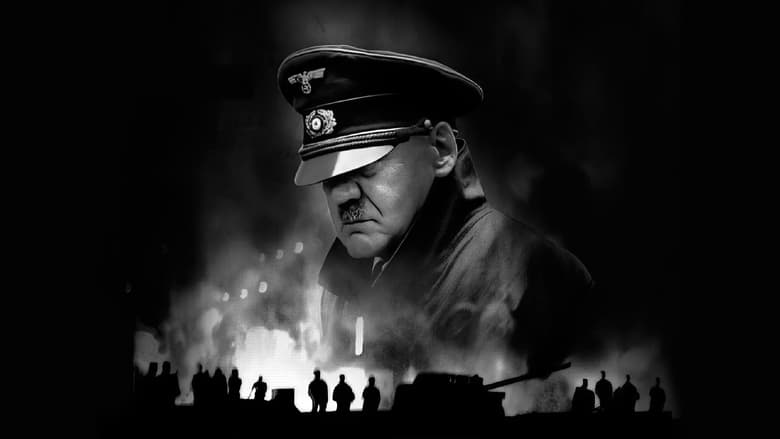
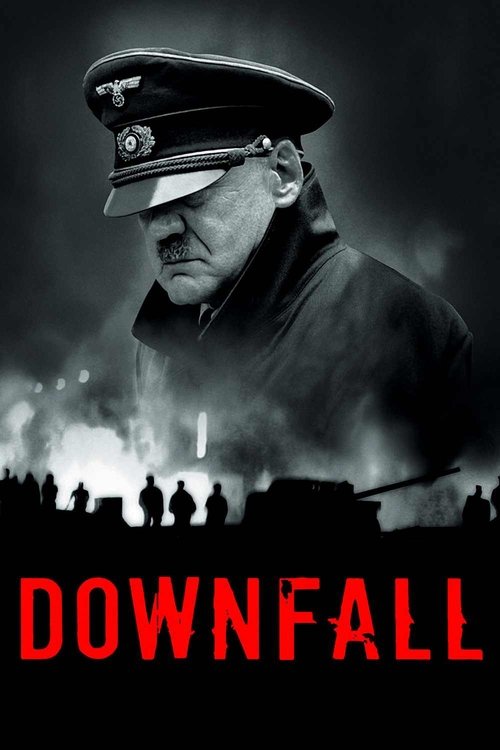
  • The movie poster, showing Hitler from behind looking over a devastated Berlin, is a recreation of the last known photograph taken of him, on April 28, 1945, two days before his suicide.
  • The famous 'rant' scene has become a massive internet meme, with thousands of parody videos created by re-subtitling the footage. Director Oliver Hirschbiegel has stated he finds many of them amusing.
  • "Downfall" was the first major German-produced film to feature Hitler as a central character since G.W. Pabst's "The Last Ten Days" (1955).

⚠️ Spoiler Analysis

Click to reveal detailed analysis with spoilers

Frequently Asked Questions

Explore More About This Movie

Dive deeper into specific aspects of the movie with our detailed analysis pages

Comments (0)

Leave a comment

No comments yet. Be the first to share your thoughts!