Stanley Kubrick's "Dr. Strangelove" is a powerful and scathing satire of the Cold War and the concept of mutually assured destruction (MAD). The film's core message is a stark warning about the dangers of nuclear proliferation and the absurdity of a political and military doctrine that relies on the threat of total annihilation for deterrence. Kubrick argues that when humanity creates the means for its own destruction, the combination of human fallibility, technological automation, and political incompetence makes catastrophe not just possible, but inevitable. The film exposes the inherent insanity of a world where a few individuals, driven by paranoia, ego, or misguided patriotism, can trigger a global holocaust. It suggests that in the nuclear age, the line between strategic planning and collective suicide is terrifyingly thin.
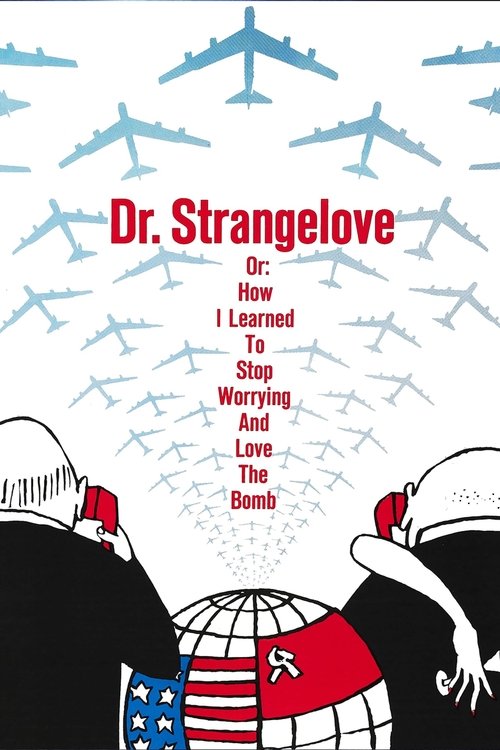
"The hot-line suspense comedy."
Director: Stanley Kubrick
Cast: Peter Sellers, George C. Scott, Sterling Hayden, Keenan Wynn, Slim Pickens
Dr. Strangelove or: How I Learned to Stop Worrying and Love the Bomb — Symbolism & Philosophy
Symbols & Motifs
The Doomsday Machine
The Doomsday Machine symbolizes the ultimate and absurd endpoint of the logic of nuclear deterrence. It represents a technology of mutually assured destruction that operates beyond human control, highlighting the inherent madness of a strategy that relies on the threat of total annihilation.
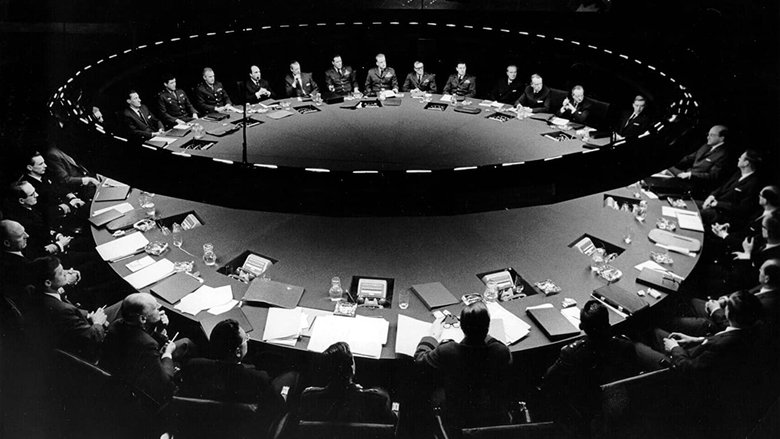
The Soviet Ambassador reveals its existence in the War Room. Its key feature is that it is fully automated and cannot be stopped once triggered, which happens when Major Kong's B-52 successfully drops its bomb on a Soviet target. The fact that the Soviets kept it a secret negates its purpose as a deterrent, further emphasizing the film's theme of absurdity.
Bodily Fluids
General Ripper's obsession with the purity of his "precious bodily fluids" symbolizes the irrational paranoia and anxieties that fueled the Cold War. It's a stand-in for fears of communist infiltration and ideological contamination, reduced to a bizarre and deeply personal delusion about sexual and physical purity.
General Ripper explains his theory to Captain Mandrake, linking the fluoridation of water to a communist plot to "sap and impurify" the fluids of Americans. This paranoid belief is the sole motivation for him launching the unauthorized nuclear attack.
The B-52 Bomber
The B-52 bomber, particularly the iconic image of Major Kong riding the atomic bomb, symbolizes the fusion of American patriotism, masculinity, and the destructive power of nuclear technology. It is a phallic symbol representing a climactic, orgasmic release of destructive energy.
The opening credits feature a B-52 being refueled in mid-air in a manner suggestive of sexual intercourse. The climax of the B-52's journey sees Major Kong straddling the bomb as it falls, whooping like a cowboy, directly linking the act of nuclear annihilation with a moment of perverse, triumphant ecstasy.
Dr. Strangelove's Arm
Dr. Strangelove's uncontrollable, black-gloved prosthetic arm, which often defaults to a Nazi salute, symbolizes the irrepressible nature of humanity's destructive and fascistic impulses. It suggests that despite attempts to control and civilize these urges, they remain just beneath the surface, ready to emerge at critical moments.
Throughout his scenes in the War Room, Dr. Strangelove struggles to control his arm, which at one point tries to strangle him. His final, triumphant exclamation of "Mein Führer, I can walk!" as he rises from his wheelchair, suggests that the apocalypse has somehow revitalized these dark forces within him.
Philosophical Questions
Can humanity be trusted with the technology it creates?
The film explores this question by presenting a scenario where the very systems designed to ensure security (nuclear deterrents, failsafe protocols) become the instruments of destruction. The 'Doomsday Machine' is the ultimate example of this – a technological creation that removes human agency from the most critical decision in history. The film suggests a deep pessimism about humanity's ability to wisely manage its own creations, arguing that our emotional and psychological flaws make us unfit custodians of apocalyptic power.
What is the nature of sanity in an insane world?
"Dr. Strangelove" presents a world where the official doctrines of global superpowers are inherently irrational. In this context, who is truly insane? Is it General Ripper, with his bizarre personal delusions, or the strategists in the War Room who calmly discuss 'acceptable' losses in the tens of millions? The characters who appear most sane, like President Muffley and Captain Mandrake, are rendered completely ineffective. The film suggests that in a world built on the logic of mutually assured destruction, sanity itself becomes a form of powerlessness.
Core Meaning
Explore More About This Movie
Dive deeper into specific aspects of the movie with our detailed analysis pages