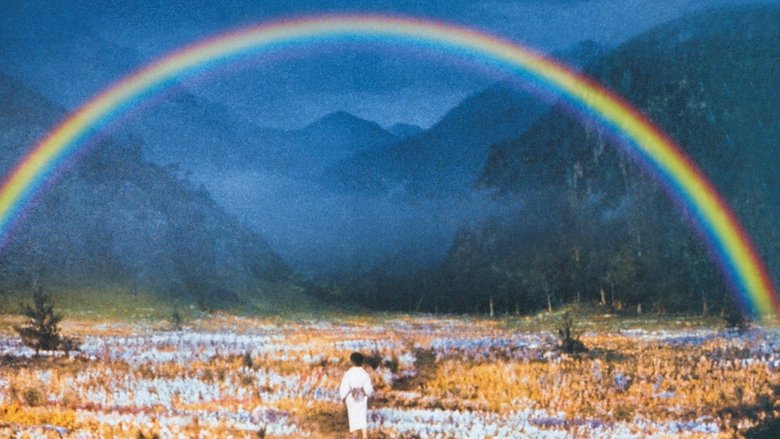
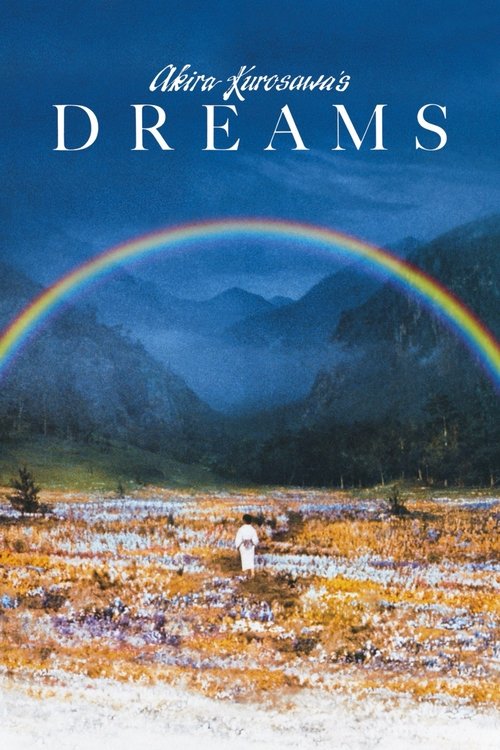
Sunshine Through the Rain: The boy is caught spying on foxes; his mother gives him a dagger to commit suicide unless he finds the foxes under the rainbow and begs forgiveness. He walks into the flowered field towards the rainbow.
The Peach Orchard: The boy cries for the cut trees; spirits appear and dance for him one last time before fading into stumps, leaving only one small blooming branch.
The Blizzard: The mountaineer nearly freezes, tempted by a Snow Woman (death), but wakes up just as the storm clears to see their camp is merely yards away.
The Tunnel: The commander is confronted by his dead platoon. He apologizes but admits he cannot bring them back. He orders them to 'About Face' and march away. They do, leaving him alone with a barking anti-tank dog.
Crows: The student meets Van Gogh, runs through his paintings (Wheatfield with Crows), and watches Van Gogh disappear as a train passes.
Mount Fuji in Red: Nuclear plants explode. The dreamer tries to protect a woman and child but is cornered by colored gas; he tries to wave it away with a jacket in a futile gesture.
The Weeping Demon: The dreamer meets a horned mutant who explains that the damned (former officials) now eat each other. The demon tries to eat the dreamer, who flees.
Village of the Watermills: The dreamer meets the Old Man, who explains their natural life. A funeral procession passes—it is a joyous parade with music. The Old Man joins it. The dreamer leaves, laying a flower on a stone in the river, finding peace.
夢
"The past, present, and future. The thoughts and images of one man... for all men. One man's dreams... for every dreamer."
Director: Akira Kurosawa
Cast: Akira Terao, Mitsuko Baisho, Toshie Negishi, Mieko Harada, Mitsunori Isaki
Dreams — Ending Explained
⚠️ Spoiler Analysis
Alternative Interpretations
While widely accepted as autobiographical, some critics view the film as a history of modern Japan. The child represents pre-modern, superstitious Japan; the soldier represents the Imperial/WWII era; the nuclear nightmares represent the post-war industrial anxiety; and the final village represents a nostalgic, idealized return to 'purity' that never truly existed.
Another interpretation focuses on the psychology of guilt. Every segment (except the last) involves the protagonist breaking a rule or failing: looking at the foxes, cutting the trees, losing the platoon, failing to stop the nuclear plant. The entire film can be seen as Kurosawa's public confession of his lifelong anxieties and perceived failures as a human being.
Explore More About This Movie
Dive deeper into specific aspects of the movie with our detailed analysis pages