Dreams
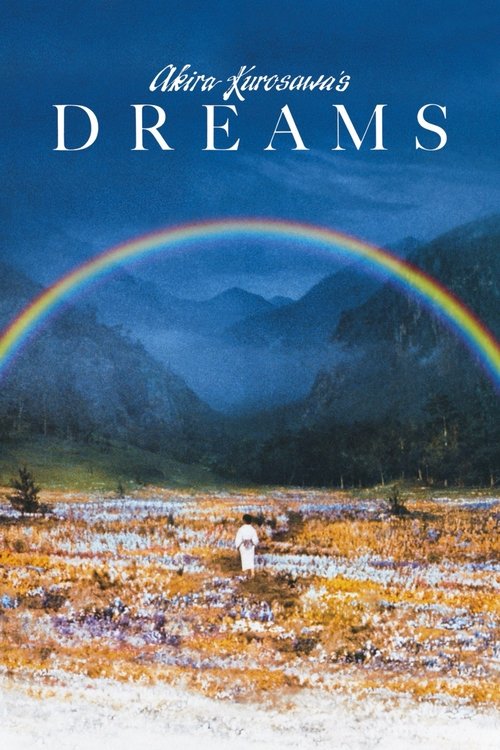
A vivid, painterly anthology of eight surreal vignettes exploring the human condition. From the magic of childhood to apocalyptic nightmares, it weaves a tapestry of guilt, art, and nature's reverence. A visual meditation on humanity's fragility.
Dreams

Dreams

"The past, present, and future. The thoughts and images of one man... for all men. One man's dreams... for every dreamer."

11 May 1990 United States of America 119 min ⭐ 7.7 (535)
Director: Akira Kurosawa
Cast: Akira Terao, Mitsuko Baisho, Toshie Negishi, Mieko Harada, Mitsunori Isaki
Drama Fantasy
Humanity vs. Nature War and Guilt The Cost of Technology Art and Immortality
Budget: $12,000,000
Box Office: $2,970,161

Overview

Dreams (1990), or Yume, is a magical realist anthology film consisting of eight distinct segments, each based on actual recurring dreams experienced by director Akira Kurosawa throughout his life. Departing from his traditional linear narratives, the film follows a surrogate protagonist named simply "I" (played by different actors corresponding to age) as he navigates a journey from the innocence of childhood to the wisdom of old age.

The vignettes traverse a wide emotional spectrum: a young boy witnesses a forbidden fox wedding in a sun-shower; a mountaineer battles a snow spirit in a blizzard; an art student steps inside the vibrant paintings of Vincent van Gogh; and a soldier confronts the ghosts of his fallen platoon in a dark tunnel. Later segments turn darker, depicting terrifying visions of nuclear disasters and post-apocalyptic mutations, before concluding with a serene meditation on life and death in a village of watermills.

Assisted by admirers George Lucas and Steven Spielberg, and featuring Martin Scorsese as Van Gogh, the film is Kurosawa's most personal and autobiographical work. It abandons traditional plot structures for visual poetry, using stunning special effects and color to manifest the director's subconscious fears about war, environmental destruction, and the loss of spiritual connection with nature.
Core Meaning

At its heart, Dreams is a plea for humanity to reconnect with nature and acknowledge its own fragility. Kurosawa uses the logic of dreams to expose the destructive consequences of human arrogance, particularly through war and technological hubris (symbolized by nuclear power). The film argues that true wisdom lies not in dominating the natural world, but in living in humble harmony with it.

The progression of the dreams mirrors the stages of life, moving from the terrifying wonder of childhood (fear of the unknown) to the guilt of adulthood (war and regret), and finally to the acceptance of mortality. The concluding segment offers a prescriptive solution: a return to a simpler, cyclical existence where life and death are celebrated as part of the natural order, contrasting sharply with the apocalyptic nightmares that precede it.

Thematic DNA

Humanity vs. Nature 30%
War and Guilt 25%
The Cost of Technology 25%
Art and Immortality 20%

Humanity vs. Nature

The central conflict of the film. Nature is depicted as a powerful, sometimes vengeful force—from the angry peach tree spirits and the unforgiving blizzard to the serene watermills. The film suggests that disrespecting nature leads to doom (nuclear disaster), while reverence leads to peace.

War and Guilt

explored deeply in The Tunnel, where a commander faces the platoon he sent to their deaths. It highlights the survivor's guilt and the senseless waste of life in war. The dead cannot rest, and the living are haunted by their responsibility.

The Cost of Technology

Critiques modern industrialization, specifically nuclear power, in Mount Fuji in Red and The Weeping Demon. Kurosawa portrays technology not as progress, but as a path to mutation and hell on earth, contrasting it with the idyll of the Watermill village.

Art and Immortality

In the Crows segment, art is presented as a way to transcend time and capture the essence of nature. Van Gogh's drive to create is shown as a consuming, almost madness-inducing force that allows one to see the world's true beauty.

Character Analysis

"I" (The Dreamer)

Akira Terao (Adult), Mitsunori Isaki (Child)

Archetype: The Observer / Everyman
Key Trait: Passive Observation

Motivation

To witness, understand, and survive the visions presented to him. He rarely acts to change events but rather observes and questions them.

Character Arc

He evolves from a curious, disobedient child to a guilt-ridden soldier, an aspiring artist, a terrified survivor, and finally a traveler seeking wisdom. He is the vessel for Kurosawa's own consciousness.

Vincent van Gogh

Martin Scorsese

Archetype: The Mad Artist / Mentor
Key Trait: Obsessive Creativity

Motivation

To capture the beauty of nature before his time runs out. He describes himself as a locomotive that must drive forward.

Character Arc

He appears briefly to lecture the dreamer on the nature of art and seeing, before disappearing into his own wheat field painting.

The Old Man

Chishu Ryu

Archetype: The Sage
Key Trait: Wisdom

Motivation

To live a clean life in harmony with nature and die a peaceful, celebrated death.

Character Arc

He represents the endpoint of the journey. He has rejected modern convenience for a life of spiritual peace and explains the village's philosophy to the traveler.

Symbols & Motifs

Foxes (Kitsune)

Meaning:

Symbolize the mysterious, forbidden, and dangerous aspect of nature and folklore. They represent the boundary between the human world and the spirit world that must not be crossed lightly.

Context:

In Sunshine Through the Rain, the boy disobeys his mother to watch the foxes' wedding procession, leading to a demand for his ritual suicide or apology.

The Tunnel

Meaning:

Represents the passage between life and death, and a subconscious corridor of repressed guilt and trauma.

Context:

In the segment of the same name, a soldier walks through a dark tunnel only to be followed by the 'ghosts' of his platoon who do not realize they are dead.

Peach Blossoms / Dolls

Meaning:

Represent lost natural beauty and the destruction of tradition in the name of progress. The dolls are the spirits of the trees that were cut down.

Context:

In The Peach Orchard, the spirits appear as living Hina dolls to the boy who cried for the cut trees, performing a dance that briefly restores the orchard's bloom.

Watermills

Meaning:

Symbolize the ideal harmony between human ingenuity and natural forces. They produce energy without destruction, representing a sustainable cycle of life.

Context:

In the final vignette, the Old Man explains how the villagers use the watermills for rice polishing, living without electricity or pollution.

Red Mount Fuji

Meaning:

A direct symbol of the apocalypse and the collapse of Japan's national identity through technological failure (nuclear meltdown).

Context:

In Mount Fuji in Red, the mountain glows an angry red as nuclear plants explode, sending colored poisonous gas toward the helpless population.

Memorable Quotes

Scientists... they may be smart, but most of them don't understand the heart of nature.

— The Old Man

Context:

In Village of the Watermills, the Old Man explains to the traveler why his village chooses not to use electricity or modern farming tools.

Meaning:

A critique of intellectual arrogance. It underscores the film's message that intelligence without spiritual connection leads to destruction.

A scene that looks like a painting does not make a painting. If you take the time and look closely, all of nature has its own beauty.

— Vincent van Gogh

Context:

In Crows, Van Gogh speaks to the aspiring artist while bandaging his ear, explaining how he devours the natural world with his eyes.

Meaning:

Defines the artistic process not as copying reality, but as seeing deeply into the essence of the subject.

It is not that they cannot rest. They simply want to go home.

— "I" (The Commander)

Context:

In The Tunnel, the commander speaks to the ghostly platoon standing at attention, trying to convince them to turn back into the darkness.

Meaning:

Expresses the tragedy of the dead soldiers who are stuck in limbo, unaware or unwilling to accept their death because of their attachment to life and duty.

The stupidest thing humans have done is to throw away the night.

— The Old Man

Context:

In the final segment, discussing why the village does not use lights at night.

Meaning:

A poetic observation on how artificial light (electricity) has disrupted the natural rhythm of life, rest, and the cosmos.

Philosophical Questions

Is scientific progress worth the loss of connection with nature?

Through the contrast between the nuclear hellscape in Mount Fuji in Red and the utopian Village of the Watermills, the film asks if convenience and technology have actually improved the human experience or merely accelerated our destruction.

What is the responsibility of the living to the dead?

In The Tunnel, the film questions whether survivor's guilt is a form of honoring the dead or a trap that prevents the living from moving forward. It explores the heavy burden of leadership and the cost of war.

Can art transcend reality?

Crows suggests that art allows us to see a 'truer' version of reality. Van Gogh's world is more vibrant and alive than the 'real' world the student walks in, positing that creative passion can reshape existence.

Alternative Interpretations

While widely accepted as autobiographical, some critics view the film as a history of modern Japan. The child represents pre-modern, superstitious Japan; the soldier represents the Imperial/WWII era; the nuclear nightmares represent the post-war industrial anxiety; and the final village represents a nostalgic, idealized return to 'purity' that never truly existed.

Another interpretation focuses on the psychology of guilt. Every segment (except the last) involves the protagonist breaking a rule or failing: looking at the foxes, cutting the trees, losing the platoon, failing to stop the nuclear plant. The entire film can be seen as Kurosawa's public confession of his lifelong anxieties and perceived failures as a human being.

Cultural Impact

Dreams holds a unique place in cinema history as a late-career masterpiece facilitated by the 'New Hollywood' generation (Lucas, Spielberg, Scorsese) who idolized Kurosawa. While it received a mixed critical reception upon release—some critics finding it too didactic or visually indulgent compared to his gritty samurai epics—it has since been re-evaluated as a profound visual memoir.

It is culturally significant for its early and blatant environmentalist message, predicting the anxiety surrounding nuclear energy (years before the Fukushima disaster) and climate change. The film bridged the gap between Eastern philosophy and Western visual effects technology (ILM), influencing how magical realism could be portrayed on screen. It stands as a testament to the collaborative respect between the masters of Western and Eastern cinema.

Audience Reception

Audience reactions to Dreams are generally positive but polarized by its pacing. Viewers universally praise the visual splendor—particularly the 'Crows' and 'Fox Wedding' segments—citing them as some of the most beautiful imagery in cinema. The participation of Martin Scorsese is often highlighted as a delightful surprise.

However, some audiences and critics criticize the film for being overly preachy and heavy-handed, particularly in the dialogue-heavy nuclear segments. The slow, meditative pacing (typical of Kurosawa's later works) challenges modern viewers used to faster narratives. Despite this, it holds a high rating among cinephiles and is considered an essential watch for fans of magical realism.

Interesting Facts

  • Martin Scorsese plays Vincent van Gogh, a casting choice made because Kurosawa felt Scorsese had the same intensity and drive as the painter.
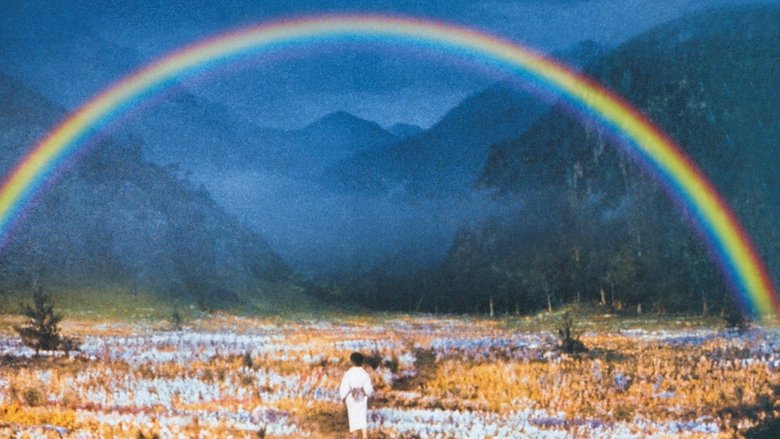
  • The special effects for the 'Crows' sequence (entering the painting) and the 'Sunshine Through the Rain' rainbow were created by George Lucas's Industrial Light & Magic (ILM) as a favor.
  • Steven Spielberg helped secure funding from Warner Bros. for the film when Kurosawa was having trouble financing it in Japan.
  • The 'Village of the Watermills' segment was filmed at the Daio Wasabi Farm in Nagano, which is now a popular tourist site.
  • The replica of Kurosawa's childhood home was built for the first segment, and the nameplate on the gate actually reads 'Kurosawa' (in Kanji).
  • This was the first screenplay Kurosawa wrote entirely by himself without any co-writers since 1945.
  • The scene in 'The Tunnel' was inspired by Kurosawa's own feelings of guilt for surviving World War II while many of his friends died.
  • Costumes for the Peach Orchard dolls were based on actual Hina Matsuri dolls, and the movements were choreographed based on Noh theater traditions.

Easter Eggs

Kurosawa's Nameplate

In the first segment, Sunshine Through the Rain, the nameplate on the gate of the boy's house says 'Kurosawa,' confirming the autobiographical nature of the dreamer.

Chopin's Raindrop Prelude

This piece of music plays during the Crows segment. It is a subtle auditory link to the theme of nature's beauty and melancholy.

Noh Theater Influence

The movement of the fox spirits and the peach tree spirits mimics the slow, deliberate movements of Japanese Noh theater, which Kurosawa often integrated into his films (like Throne of Blood).

⚠️ Spoiler Analysis

Click to reveal detailed analysis with spoilers

Frequently Asked Questions

Explore More About This Movie

Dive deeper into specific aspects of the movie with our detailed analysis pages

Comments (0)

Leave a comment

No comments yet. Be the first to share your thoughts!