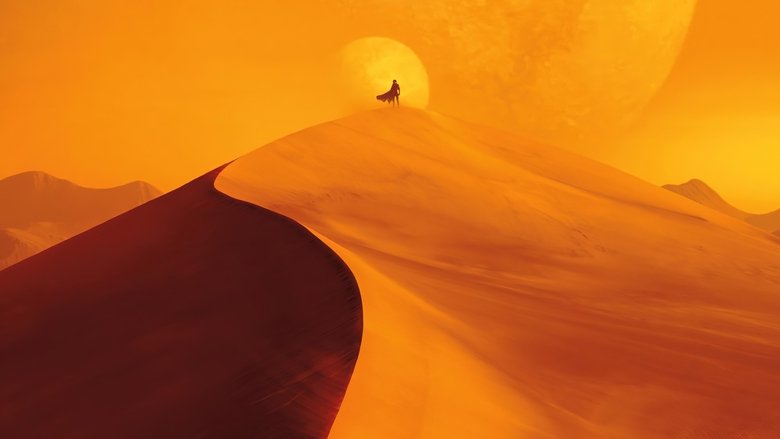

"It begins."
Dune - Symbolism & Philosophy
Symbols & Motifs
The Desert Mouse (Muad'Dib)
Symbolizes survival, adaptation, and wisdom. Despite its small size, it thrives in the harshest conditions by creating its own water, representing the Fremen's way of life and Paul's eventual path.
Paul observes the mouse twice: once in a holographic filmbook and later in the deep desert, where he finds inspiration in its resilience.
The Bull
Symbolizes legacy, tragic destiny, and the dangers of vanity. It represents the Atreides' history of facing overwhelming odds and the violent end that often follows.
A bull's head is displayed in the Atreides dining hall, a reminder of Paul's grandfather who died in a bullfight. It appears prominently during the fall of House Atreides.
Water
Symbolizes life, community, and the ultimate currency. On Arrakis, water is sacred; on Caladan, it is an abundant, taken-for-granted luxury.
Contrasts the lush oceans of Caladan with the "water discipline" of the Fremen, such as the act of spitting as a sign of respect (offering one's body's moisture).
The Ducal Signet Ring
Represents authority, responsibility, and the burden of leadership. It is the physical manifestation of the Atreides heritage.
Duke Leto wears it as a symbol of his power, and its passage to Paul signifies his transition from a son to the head of a fallen house.
Philosophical Questions
Is a predetermined destiny a gift or a prison?
The film explores this through Paul's prescience. He can see the future, but knowing it seems to lock him into a path of unavoidable violence, raising questions about whether free will can exist in the face of prophecy.
Does the survival of the species justify any level of violence?
Paul's visions of a 'holy war' fought in his name suggest that the path to human survival (The Golden Path) may require the deaths of billions, forcing the audience to weigh individual morality against cosmic necessity.
Core Meaning
At its heart, Dune is a cautionary tale about the dangers of messianic figures and the collision of ecology, religion, and power. Director Denis Villeneuve emphasizes the idea that human progress is often dwarfed by the scale of nature and time. The film explores the burden of legacy and the thin line between being a leader and being a tool of prophecy. It suggests that true power comes not from the exploitation of resources like spice, but from the mastery of one's own fear and the ability to adapt to a changing environment.