"Mexico 2010, Hell... nothing to celebrate"
El Infierno - Symbolism & Philosophy
Symbols & Motifs
The Bicentennial Celebration
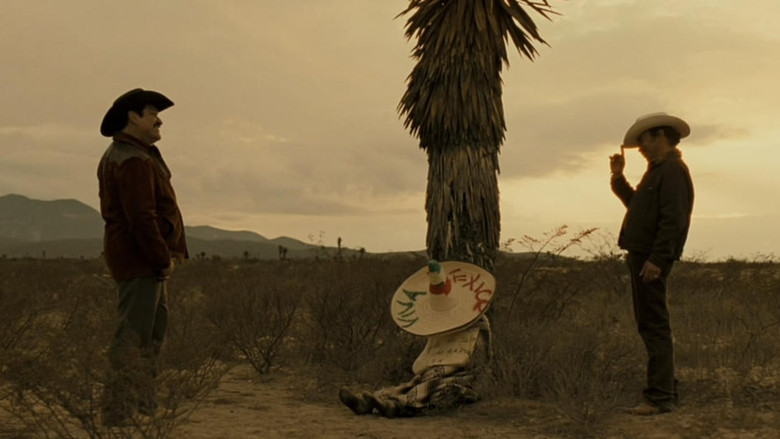
The recurring motif of Mexico's bicentennial celebration serves as a deeply ironic symbol. It represents the government's official narrative of national pride and progress, which the film starkly contrasts with the grim reality of violence and corruption plaguing the country. The tagline "Nothing to celebrate" makes this symbolism explicit.
The film was released in 2010 to coincide with the actual bicentennial. The climax of the film takes place during the town's bicentennial celebration, where Benny enacts his revenge against the backdrop of patriotic festivities, highlighting the deep hypocrisy and disconnect between the political rhetoric and the lived experience of the people.
Cowboy Hats and Western Attire
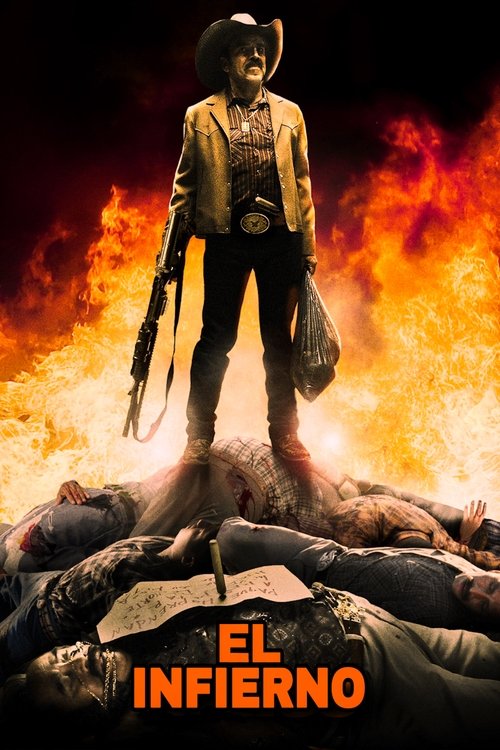
The adoption of Western-style clothing by the narcos, such as cowboy hats and boots, symbolizes their self-perception as modern-day outlaws, figures of power and authority in a lawless land. It's a visual representation of the hyper-masculine and often romanticized image of the narco lifestyle, even as the film deconstructs this image by showing its brutal reality.
As Benny becomes more entrenched in the cartel, he sheds his deportee clothes for the gaudy attire of a successful narco, including a prominent cowboy hat and a shiny belt buckle. This visual transformation marks his descent into the criminal world and his acceptance of its values and aesthetics.
San Miguel Arcángel
The fictional setting of "San Miguel Arcángel" (Saint Michael the Archangel) is a deeply ironic name for a town that has become a literal hell on earth. Saint Michael is known as the commander of God's army against the forces of evil. The name highlights the complete moral inversion that has taken place, where a place named after a protector against evil is now consumed by it.
The name of the town is established early on and serves as a constant, subtle commentary on the action. The bleak, dusty, and violent streets of "San Miguel Arcángel" are a visual embodiment of this symbolic irony.
Philosophical Questions
Can an individual remain moral in a systemically corrupt society?
The film explores this question through the character of Benny. He returns to Mexico with a basic moral compass, but the pervasive corruption and lack of legitimate opportunities quickly force him to make compromises. The film suggests that in an environment where every institution is rotten, individual morality becomes a luxury that is difficult, if not impossible, to maintain. Benny's descent implies that the system itself is the primary corrupting force, and that personal ethics are inevitably eroded when survival is at stake.
Is violence an inescapable cycle?
"El Infierno" presents a deeply pessimistic view on this question. The plot is driven by a series of retaliatory acts of violence that only beget more violence. The ending, in which Benny's young nephew is poised to continue the cycle of revenge, strongly suggests that the violence is generational and deeply embedded in the social fabric. The film offers no easy answers or hope for breaking this cycle, portraying it as the fundamental, tragic reality of its setting.
What is the nature of national identity in a failed state?
Set against the backdrop of Mexico's bicentennial, the film constantly questions what it means to be Mexican in a country ravaged by internal conflict. The patriotic slogans and celebrations are depicted as a hollow facade, starkly contrasting with the lived reality of chaos and despair. The film suggests that the official, celebratory version of national identity is a lie, and that the true, contemporary identity is one defined by violence, corruption, and a struggle for survival.
Core Meaning
Director Luis Estrada uses "El Infierno" as a biting political satire and a critical commentary on the state of Mexico. The film's central message is a denunciation of the systemic corruption, violence, and lack of opportunity that have allowed drug cartels to flourish. Released during the bicentennial of Mexico's independence, the film's tagline, "Nada que celebrar" ("Nothing to celebrate"), underscores its provocative stance, questioning the nation's progress and highlighting the devastating social and political consequences of the war on drugs. Estrada argues that the problem is not a simple matter of good versus evil, but a complex web of complicity that implicates everyone from law enforcement and politicians to the church. The film serves as a call for collective reflection on a society trapped in a seemingly endless cycle of violence and corruption.