Tropa de Elite 2
Elite Squad: The Enemy Within - Symbolism & Philosophy
Symbols & Motifs
The BOPE Skull Logo
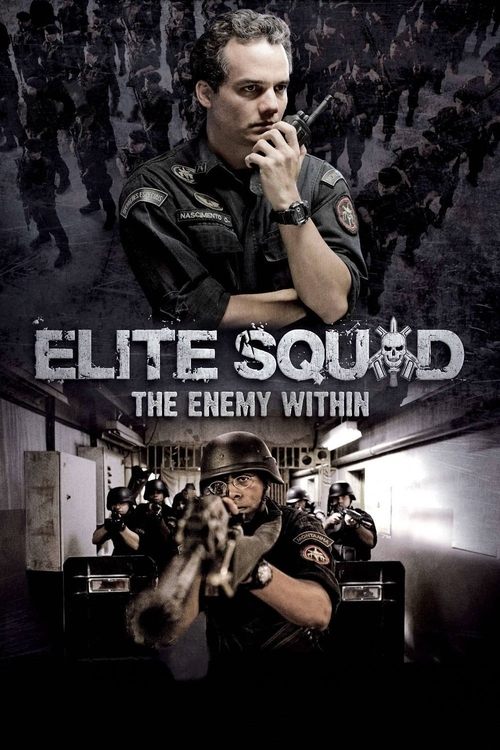
The skull emblem of the BOPE (Batalhão de Operações Policiais Especiais) symbolizes an uncompromising, ruthless approach to justice—death to criminals. In the first film, it represented a clear-cut, albeit brutal, ideology. In the sequel, as BOPE's power is co-opted and the lines blur, the symbol becomes more ambiguous. It represents a brand of violence that, while effective against one enemy, becomes a tool for an even greater evil when wielded by the corrupt system.
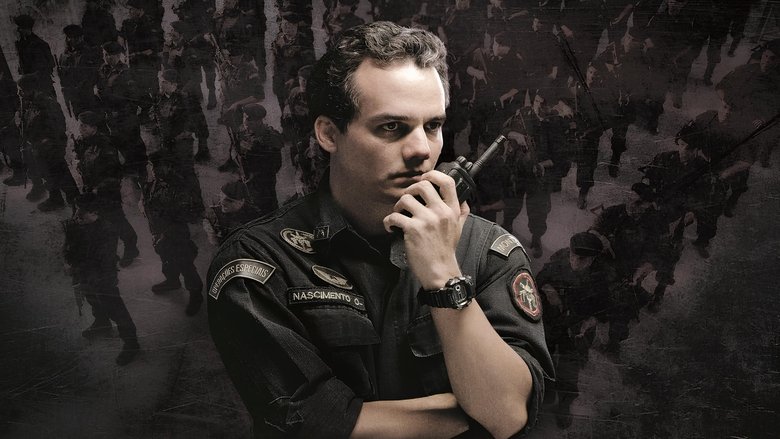
The logo is seen on the black uniforms and vehicles of the BOPE officers. When Nascimento is promoted, he uses his power to expand BOPE's reach, believing in the power this symbol represents. However, the tragic fate of Captain Matias, a true believer in the BOPE ethos, shows the vulnerability of this ideal in a corrupt system.
The View from the Office
Nascimento's promotion takes him from the favela streets to a high-rise office with a panoramic view of the city. This symbolizes his shift in perspective. From the ground, the enemy was clear (drug dealers). From above, he can see the interconnected web of politics, media, and police corruption—the true 'system'—that governs the city. It represents a strategic, but detached, viewpoint, where he can see the whole board but is removed from the direct action he craves.
Several key scenes take place in Nascimento's office, where he monitors wiretaps and observes the city below. It is from this perch that he realizes his efforts to clean up the streets have only empowered the corrupt officials who operate from similar offices.
Wiretaps and Recordings
The constant use of wiretaps and hidden recordings symbolizes the new nature of the war. The battle is no longer won with guns alone, but with information. For Nascimento, wiretaps are his primary weapon to understand and expose the system. For the corrupt politicians, they are a tool for blackmail and control. This highlights the shift from a physical war in the favelas to a political thriller centered on intelligence and secrets.
Nascimento is put in charge of all wiretaps in Rio. He uses this power to uncover the militia's schemes. The film's climax involves a journalist's hidden recording that contains evidence of the politicians' crimes, which becomes the key to exposing them.
Philosophical Questions
Can a fundamentally corrupt system be reformed from within?
The film explores this question through Nascimento's entire arc. He is given immense power within the Secretariat of Security and attempts to use the tools of the state—increased funding for BOPE, surveillance technology—to fix the problem. However, every action he takes is co-opted by "The System" to strengthen itself. His success in eliminating drug dealers only creates a new, more powerful criminal enterprise integrated with the state. The film bleakly suggests that working within the system may only serve to legitimize and empower it, implying that true reform might be impossible without a complete dismantling of the existing structures.
What is the relationship between state-sanctioned violence and organized crime?
"The Enemy Within" masterfully illustrates the porous boundary between law enforcement and criminality. It argues that the state's violent methods, embodied by BOPE, do not eliminate crime but transform it. The corrupt police officers who form the militias use their state-given training, weapons, and authority to run their own criminal enterprises. The film posits that when the state relies solely on violence and fails to address socio-economic issues and internal corruption, it inadvertently becomes the most efficient incubator for a more sophisticated and dangerous form of organized crime.
Where does the true responsibility for societal violence lie?
Nascimento's quote, "A cop doesn't pull the trigger by himself," is central to this question. The film systematically shifts the blame for violence away from individual actors—be they drug dealers or police officers—and towards the political and media figures who create and exploit the conditions for that violence. It holds politicians who trade votes for militia support, media moguls who profit from fear, and a public that demands simplistic, brutal solutions accountable. The film suggests that responsibility is collective and rooted in the political choices a society makes.
Core Meaning
The core meaning of "Elite Squad: The Enemy Within" is a scathing indictment of systemic corruption. Director José Padilha argues that the problem of violence in Brazil is not simply a matter of criminals versus police, but a deeply embedded political issue. The film's original title, "The Enemy is Now Another," explicitly states this shift in focus from the street-level drug dealers of the first film to the corrupt politicians, high-ranking police officials, and media figures who constitute "The System." Padilha's message is that simplistic, violent solutions to crime are futile because they fail to address the root causes. By clearing out the drug dealers, Nascimento inadvertently creates a more organized and powerful criminal enterprise—the militias—which is integrated with the state itself. The film posits that true change is impossible without confronting the political structure that profits from chaos and violence.