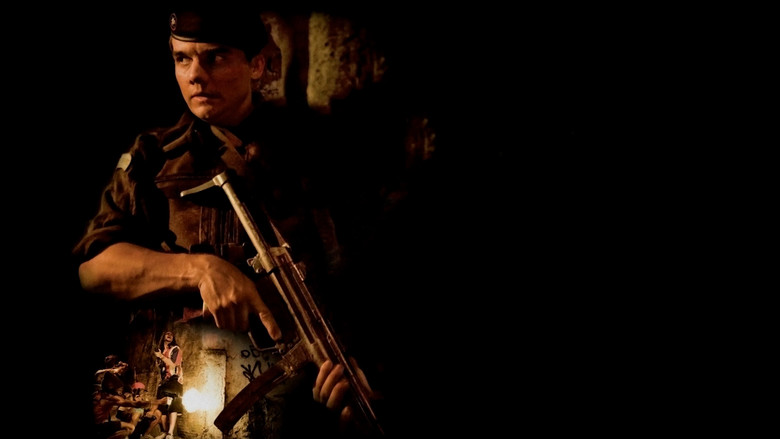
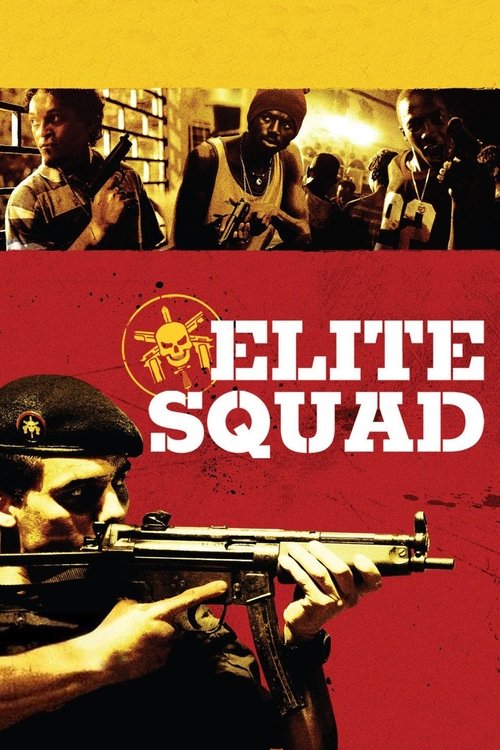
Tropa de Elite
"On the streets of Rio only the elite survive"
Elite Squad - Symbolism & Philosophy
Symbols & Motifs
The BOPE Skull Insignia (Caveira)
The skull pierced by a dagger with crossed pistols symbolizes death, warfare, and the unit's motto: "Victory over death." It represents an unflinching, take-no-prisoners approach to crime-fighting. For the officers, it is a badge of honor signifying incorruptibility, loyalty, and elite status. For criminals and the public, it is a fearsome symbol of brutal, unyielding state power.
The insignia is prominently displayed on the black uniforms and armored vehicle (the Caveirão) of the BOPE squad throughout the film. Neto gets the symbol tattooed on his arm after successfully completing the grueling training, marking his transformation and commitment to the unit.
The Plastic Bag
The plastic bag is a tool of torture, used for asphyxiation to extract confessions. It symbolizes the brutal, extra-legal methods employed by BOPE and the dark side of their "efficiency." It represents the point where the state abandons due process and resorts to the same terror tactics as the criminals, blurring the line between law enforcement and criminality.
The technique is used multiple times by Captain Nascimento and his squad during interrogations of suspected criminals in the favelas. These scenes are depicted in a raw and unflinching manner, forcing the audience to witness the brutality that underpins BOPE's successes.
The Shotgun
The shotgun in the final scene represents the transfer of power, responsibility, and the burden of violence. It is the instrument that seals Matias's transformation, marking his acceptance of Nascimento's brutal worldview and his new role as the 'new' Nascimento. It symbolizes the final loss of his idealism and his complete immersion in the cycle of violence.
In the film's climax, after the drug lord Baiano is cornered, Nascimento hands his shotgun to Matias and orders him to execute the criminal. This act is the final test for Matias, cementing him as Nascimento's chosen successor.
Philosophical Questions
Does the end justify the means in the fight for justice?
The film relentlessly explores this question through the actions of BOPE. The squad is effective and incorruptible, but achieves its goals through torture, intimidation, and summary executions. Captain Nascimento firmly believes that in the war against drug trafficking, traditional ethics are a luxury that cannot be afforded. The film forces the audience to confront whether BOPE's brutal methods are a justifiable response to an equally brutal enemy and a hopelessly corrupt system, or if these actions fundamentally undermine the very justice they claim to be serving.
Is institutional corruption the root of societal violence?
"Elite Squad" posits that the violence in the favelas is not an isolated problem but a direct symptom of systemic corruption. The regular police force's collusion with criminals actively sustains the drug trade. This forces honest officers like Neto and Matias into a corner, leaving them with the choice of becoming corrupt or joining an extremist unit like BOPE. The film suggests that until the state and its institutions are reformed, the cycle of violence is unbreakable, as the system itself creates the conditions for its own violent opposition.
How does extreme violence affect the human psyche?
The character of Captain Nascimento is a case study in psychological trauma. He is a highly competent commander, but the constant exposure to violence has left him with severe anxiety, panic attacks, and an inability to maintain a healthy family life. He is desperate to leave the front lines, showing that even the most hardened warrior pays a heavy price. The film depicts the dehumanizing effect of this 'war,' showing how it transforms idealists into killers and leaves its veterans emotionally and psychologically shattered.
Core Meaning
Director José Padilha aimed to expose the systemic nature of violence and corruption in Rio de Janeiro, arguing that the state itself creates both the criminals and the violent police officers needed to combat them. The film is a harsh critique of a failed public security system, where underpaid, poorly trained, and corrupt regular police forces perpetuate crime. BOPE, with its brutal methods, is presented not as a simple solution, but as a tragic and violent consequence of this systemic failure. Padilha uses the perspective of a BOPE captain to immerse the audience in the logic of this brutal world, forcing viewers to confront uncomfortable questions about morality, justice, and the cyclical nature of violence without offering easy answers. The film's core message is that in a broken system, the line between hero and monster becomes dangerously blurred, and violence begets more violence.