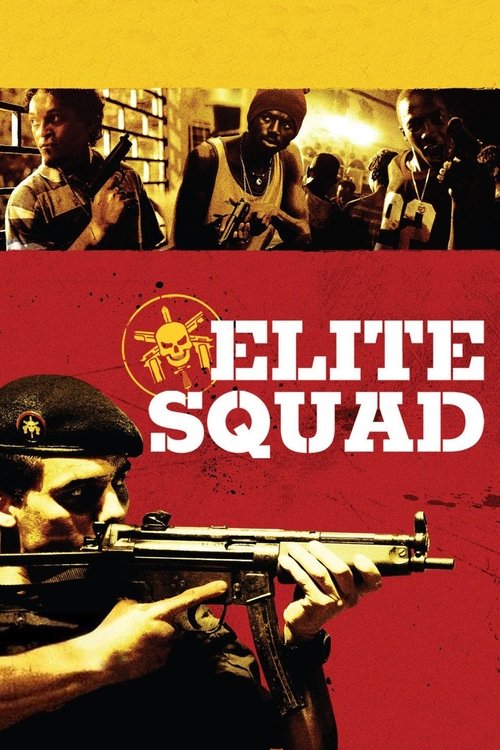
Elite Squad
Tropa de Elite
"On the streets of Rio only the elite survive"
Overview
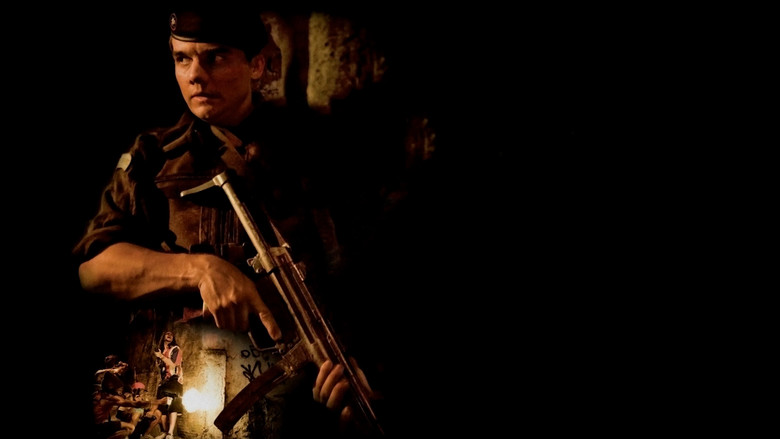
Set in 1997 Rio de Janeiro, "Elite Squad" chronicles the intense and brutal reality of the city's war on drugs. The story is narrated by Captain Nascimento (Wagner Moura), the weary and battle-hardened leader of BOPE (Special Police Operations Battalion), an elite and incorruptible, yet extremely violent, police unit. Facing immense pressure and psychological burnout, Nascimento is desperate to find a worthy successor so he can leave the front lines and be with his wife and newborn son.
His search leads him to two idealistic young police recruits and best friends, Neto (Caio Junqueira) and André Matias (André Ramiro). Neto is hot-headed and impulsive, driven by a fierce sense of justice, while Matias is an intellectual law student who believes he can change the corrupt system from within. As they witness the pervasive corruption within the regular police force, both men are drawn to the perceived purity and effectiveness of BOPE. The film follows their grueling training and their immersion into the violent conflict in the favelas, all set against the backdrop of an impending visit from the Pope, which cranks up the pressure on law enforcement to "clean up" the city.

Core Meaning
Director José Padilha aimed to expose the systemic nature of violence and corruption in Rio de Janeiro, arguing that the state itself creates both the criminals and the violent police officers needed to combat them. The film is a harsh critique of a failed public security system, where underpaid, poorly trained, and corrupt regular police forces perpetuate crime. BOPE, with its brutal methods, is presented not as a simple solution, but as a tragic and violent consequence of this systemic failure. Padilha uses the perspective of a BOPE captain to immerse the audience in the logic of this brutal world, forcing viewers to confront uncomfortable questions about morality, justice, and the cyclical nature of violence without offering easy answers. The film's core message is that in a broken system, the line between hero and monster becomes dangerously blurred, and violence begets more violence.
Thematic DNA
Police Corruption and Systemic Failure
This is the central theme of the film. From the outset, Nascimento's narration explains how the regular police are deeply enmeshed with criminals, running extortion rackets and taking bribes from drug dealers. Neto and Matias's idealism is shattered when they encounter this corruption firsthand, which ultimately pushes them towards the extreme alternative of BOPE. The film argues that the police institution is so broken that it breeds crime rather than preventing it, making an honest officer's job nearly impossible within the conventional force.
The Cycle of Violence
"Elite Squad" portrays a world where violence is the only language understood by all sides. The drug gangs rule the favelas through terror, the regular police are violent and corrupt, and BOPE responds with even more extreme, state-sanctioned brutality. The film suggests this is a self-perpetuating cycle. The violence of the state creates hardened criminals, and the violence of criminals justifies the brutal methods of units like BOPE. The tragic arc of the characters, particularly Matias, shows how idealistic individuals are consumed by this cycle, ultimately becoming what they once fought against.
Moral Ambiguity and Justification
The film deliberately operates in a gray area, refusing to paint its characters in black and white. Captain Nascimento is both a dedicated officer trying to protect his family and a torturer who suffers from panic attacks. The audience is placed inside his perspective, forced to understand his justifications for torture and summary executions. This created significant controversy, with some viewers seeing BOPE as heroes and others as fascists. The film challenges the viewer to question where the line is drawn and what actions are justifiable when the entire system is corrupt.
Social Class and Hypocrisy
The film critiques the wealthy, left-leaning university students who protest police brutality while simultaneously funding the drug trade by being consumers. Matias's experience in law school, where he hides his identity as a cop, highlights this disconnect. His girlfriend, Maria, and her friends work at an NGO in the favela but are shown to be naively complicit with the local drug lord, Baiano. Padilha uses this subplot to argue that the problem of violence is not confined to the favelas but is fueled by the hypocrisy of the upper classes.
Character Analysis
Captain Roberto Nascimento
Wagner Moura
Motivation
His main motivation is to find a replacement and secure a safer desk job so he can be present for the birth and upbringing of his son. He is driven by a profound weariness of the war and the toll it has taken on him, but also by a fierce, uncompromising loyalty to BOPE and its mission to eradicate crime and corruption, using any means necessary.
Character Arc
Nascimento begins as a burnt-out, anxiety-ridden captain desperate for an escape from the endless violence that is destroying his family life and mental health. His primary goal is to find a clean, capable replacement. Throughout the film, his narration provides a cynical, yet brutally honest, guide to the corrupt world he inhabits. He is a man in deep conflict, suffering from panic attacks while leading deadly missions. By the end, he succeeds in finding a successor in Matias, but only by molding the idealistic recruit into a hardened killer like himself, thus perpetuating the cycle he sought to escape.
André Matias
André Ramiro
Motivation
Initially, his motivation is to be an honest cop and pursue a career in law, adhering to a strict moral code. After Neto's death, his motivation shifts to vengeance and a belief that only BOPE's extreme methods can bring true justice to a corrupt world.
Character Arc
Matias starts as an honest, intelligent police officer and law student who believes in justice and changing the system from within. His experiences with police corruption and the hypocrisy of his university peers disillusion him. The murder of his best friend, Neto, becomes the turning point, pushing him to fully embrace BOPE's violent ideology. His arc is a tragic transformation from a naive idealist hoping to become a lawyer into a hardened, ruthless warrior, culminating in him executing a man in cold blood at Nascimento's behest.
Aspirant Neto Gouveia
Caio Junqueira
Motivation
Neto is motivated by a simple, fervent desire to fight criminals and achieve justice. He sees the world in terms of good versus evil and is frustrated by the bureaucracy and corruption that prevent him from taking direct action. He joins BOPE to be on the front lines of the war.
Character Arc
Neto is an impulsive, action-oriented rookie cop with a black-and-white view of justice. Described by Nascimento as being similar to a younger version of himself, Neto is brave but lacks Matias's intellectualism and restraint. He is disgusted by the corruption in the force and eagerly joins BOPE to seek direct action. His character represents the pure, unthinking warrior spirit. His arc is short and tragic; he excels within BOPE but his impulsive nature ultimately leads to his death, which serves as the catalyst for Matias's final transformation.
Symbols & Motifs
The BOPE Skull Insignia (Caveira)
The skull pierced by a dagger with crossed pistols symbolizes death, warfare, and the unit's motto: "Victory over death." It represents an unflinching, take-no-prisoners approach to crime-fighting. For the officers, it is a badge of honor signifying incorruptibility, loyalty, and elite status. For criminals and the public, it is a fearsome symbol of brutal, unyielding state power.
The insignia is prominently displayed on the black uniforms and armored vehicle (the Caveirão) of the BOPE squad throughout the film. Neto gets the symbol tattooed on his arm after successfully completing the grueling training, marking his transformation and commitment to the unit.
The Plastic Bag
The plastic bag is a tool of torture, used for asphyxiation to extract confessions. It symbolizes the brutal, extra-legal methods employed by BOPE and the dark side of their "efficiency." It represents the point where the state abandons due process and resorts to the same terror tactics as the criminals, blurring the line between law enforcement and criminality.
The technique is used multiple times by Captain Nascimento and his squad during interrogations of suspected criminals in the favelas. These scenes are depicted in a raw and unflinching manner, forcing the audience to witness the brutality that underpins BOPE's successes.
The Shotgun
The shotgun in the final scene represents the transfer of power, responsibility, and the burden of violence. It is the instrument that seals Matias's transformation, marking his acceptance of Nascimento's brutal worldview and his new role as the 'new' Nascimento. It symbolizes the final loss of his idealism and his complete immersion in the cycle of violence.
In the film's climax, after the drug lord Baiano is cornered, Nascimento hands his shotgun to Matias and orders him to execute the criminal. This act is the final test for Matias, cementing him as Nascimento's chosen successor.
Memorable Quotes
Na verdade, o sistema entrega pra sociedade um policial despreparado, mal pago, e corrupto. E o sistema que fode o cara.
— Captain Nascimento (Narration)
Context:
This line is from Nascimento's opening narration, setting the stage for the film's critique of the Rio de Janeiro police force and the entire public security apparatus.
Meaning:
English: "In reality, the system gives society an unprepared, underpaid, and corrupt cop. And it's the system that screws the guy." This quote encapsulates the film's core thesis: that the problem is not individual 'bad apples' but a systemic failure in how police are managed, paid, and trained, which inevitably leads to corruption and violence.
Pede pra sair!
— Captain Nascimento
Context:
This is shouted frequently during the grueling and humiliating BOPE selection course, aimed at weeding out candidates who lack the extreme physical and mental fortitude required by the unit.
Meaning:
English: "Ask to leave!" This is a taunt Nascimento repeatedly yells at recruits during the brutal BOPE training. It's a psychological tactic to break them down, forcing them to quit. The phrase became a massive cultural catchphrase in Brazil, symbolizing a situation of extreme pressure where giving up is the only easy option.
Nunca serão!
— BOPE Officers
Context:
This is chanted by BOPE instructors and officers during training exercises and in their interactions with other police, establishing their elite and separate identity.
Meaning:
English: "They will never be!" or "They'll never make it!" This is a chant used by BOPE officers, often in response to trainees or regular police. It's a statement of superiority and exclusivity, reinforcing the idea that BOPE members are a breed apart and that others can never attain their elite status. It highlights the unit's arrogance and isolation from the rest of the force.
Philosophical Questions
Does the end justify the means in the fight for justice?
The film relentlessly explores this question through the actions of BOPE. The squad is effective and incorruptible, but achieves its goals through torture, intimidation, and summary executions. Captain Nascimento firmly believes that in the war against drug trafficking, traditional ethics are a luxury that cannot be afforded. The film forces the audience to confront whether BOPE's brutal methods are a justifiable response to an equally brutal enemy and a hopelessly corrupt system, or if these actions fundamentally undermine the very justice they claim to be serving.
Is institutional corruption the root of societal violence?
"Elite Squad" posits that the violence in the favelas is not an isolated problem but a direct symptom of systemic corruption. The regular police force's collusion with criminals actively sustains the drug trade. This forces honest officers like Neto and Matias into a corner, leaving them with the choice of becoming corrupt or joining an extremist unit like BOPE. The film suggests that until the state and its institutions are reformed, the cycle of violence is unbreakable, as the system itself creates the conditions for its own violent opposition.
How does extreme violence affect the human psyche?
The character of Captain Nascimento is a case study in psychological trauma. He is a highly competent commander, but the constant exposure to violence has left him with severe anxiety, panic attacks, and an inability to maintain a healthy family life. He is desperate to leave the front lines, showing that even the most hardened warrior pays a heavy price. The film depicts the dehumanizing effect of this 'war,' showing how it transforms idealists into killers and leaves its veterans emotionally and psychologically shattered.
Alternative Interpretations
The central debate surrounding "Elite Squad" is whether it is a critique or a celebration of BOPE's violent methods. One interpretation, favored by many viewers and some on the political right, sees the film as an endorsement of a tough, no-nonsense approach to crime. In this view, Captain Nascimento is an incorruptible hero forced to use extreme measures to fight a war against ruthless criminals and a corrupt system; his actions are a necessary evil. This reading focuses on the perceived effectiveness of BOPE compared to the ineptitude of the regular police.
The alternative interpretation, and the one asserted by the director, is that the film is a tragedy that critiques the entire system. From this perspective, Nascimento is not a hero but a deeply damaged antihero, a man suffering from panic attacks whose violent profession has destroyed his personal life and turned him into a monster. The film's ending, where the idealistic Matias is transformed into a killer, is not a triumphant moment but a tragic one, symbolizing the perpetuation of a brutal cycle. Proponents of this view argue that the film's first-person narration is deliberately used to immerse the audience in a violent mindset to expose its flaws, not to endorse it.
Cultural Impact
"Elite Squad" was a seismic cultural event in Brazil. Its illegal pirated release made it one of the most-watched Brazilian films in history before it even officially premiered, sparking nationwide debate on police violence, corruption, and the war on drugs. The film was deeply polarizing; many viewers, frustrated with rampant crime, embraced Captain Nascimento as a national hero, a symbol of integrity who gets things done, despite his brutal methods. His catchphrases like "Pede pra sair!" entered the popular lexicon.
Conversely, many critics, particularly on the left, labeled the film as "fascist" for what they saw as a glorification of torture and extrajudicial violence. Director José Padilha has consistently argued that the film is a critique of the system, stating that his intention was not to endorse BOPE but to show how a failed state creates violent entities on both sides of the law. The film's raw, documentary-like style, reminiscent of Padilha's earlier work "Bus 174," brought a new level of gritty realism to Brazilian cinema. It won the prestigious Golden Bear at the Berlin Film Festival, bringing international attention to both Padilha and the complex social issues of Brazil. Its success spawned a sequel, "Elite Squad: The Enemy Within," which became the highest-grossing Brazilian film of all time and continued to explore the deeper connections between crime, police, and corrupt politicians.
Audience Reception
Audience reception for "Elite Squad" was overwhelmingly positive, especially in Brazil, even while it sharply divided critics. Viewers turned Captain Nascimento into a cultural icon and a folk hero, celebrating his tough stance against criminals and corruption. On platforms like IMDb and Rotten Tomatoes, the audience scores are significantly higher than the critic scores. Audiences praised the film's gripping action, gritty realism, and Wagner Moura's powerhouse performance. Many felt it was a raw and honest depiction of Brazil's public security crisis that other media were afraid to show. The primary point of criticism from some viewers mirrored that of professional critics: that the film was excessively violent and could be interpreted as an endorsement of fascism and police brutality. However, for a large portion of the audience, the film was a cathartic experience that channeled their frustration with crime and systemic corruption.
Interesting Facts
- The film is based on the semi-fictional book "Elite da Tropa" by two former BOPE officers, André Batista and Rodrigo Pimentel, along with anthropologist Luiz Eduardo Soares.
- Before its official theatrical release, a near-final cut of the film was leaked and sold on millions of pirated DVDs across Brazil, making it a massive cultural phenomenon before it even hit cinemas. An estimated 11 million people saw the pirated version.
- Captain Nascimento, played by Wagner Moura, was originally intended to be a secondary character. The story was supposed to focus on Neto and Matias. However, Moura's performance and improvisations were so powerful that during editing, the director decided to restructure the film around him, making him the narrator and protagonist.
- The actors, including Wagner Moura, underwent an extremely rigorous and realistic training preparation with actual BOPE officers. The process was so intense that Moura broke the nose of one of the instructors, and many actors found it psychologically traumatic.
- The film won the Golden Bear for Best Film at the 2008 Berlin International Film Festival, a decision that was met with both acclaim and controversy due to the film's violent content and morally ambiguous stance.
- Director José Padilha faced threats and a kidnapping attempt after the release of the sequel, which he attributes to his exposure of police and political corruption.
- The armored police vehicle used in the film, the "Caveirão," was a real one, driven by its actual police driver to ensure realism in the action scenes.
⚠️ Spoiler Analysis
Click to reveal detailed analysis with spoilers
Frequently Asked Questions
Explore More About This Movie
Dive deeper into specific aspects of the movie with our detailed analysis pages
Comments (0)
No comments yet. Be the first to share your thoughts!