
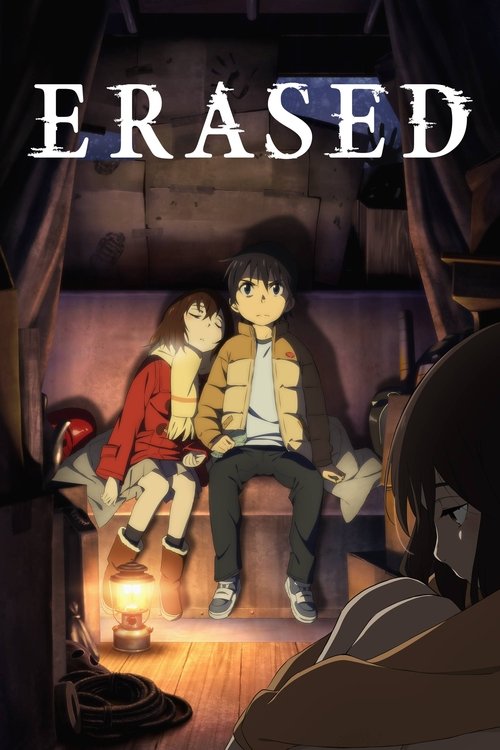
The central mystery of ERASED is the identity of the serial killer responsible for the kidnappings in 1988 and the murder of Sachiko Fujinuma in 2006. The killer is revealed in Episode 10 to be Satoru's trusted homeroom teacher, Gaku Yashiro. Yashiro orchestrated the deaths of Kayo Hinazuki, Hiromi Sugita, and Aya Nakanishi in the original timeline. His motive is a psychopathic obsession derived from a childhood incident, where he saw a hamster sacrifice itself, leading him to a twisted philosophy about severing the "spider's threads" of people's lives before they can fall.
After Satoru successfully saves all three potential victims, Yashiro realizes Satoru is thwarting him. He lures Satoru into his car and attempts to murder him by driving the car into a frozen river, which results in Satoru falling into a 15-year coma. During this time, the world moves on; Kayo Hinazuki and Hiromi Sugita, now safe, grow up, fall in love, and have a child together. When Satoru awakens at the age of 26, he has amnesia, which he fakes regaining to lure Yashiro into a final trap. On the hospital rooftop, Satoru provokes Yashiro, correctly gambling that Yashiro's obsession with him—as the one person who fills the "hole" in his life—is so complete that he wouldn't be able to let Satoru die on his own terms. Satoru arranges to fall off the roof, knowing Yashiro will save him. This act, witnessed by Satoru's friends, leads to Yashiro's arrest. The finale reveals a timeline where everyone Satoru sought to protect is alive and happy. He has become a successful manga artist, and his final encounter with Airi Katagiri signifies that he, too, now has a chance at a happy future.