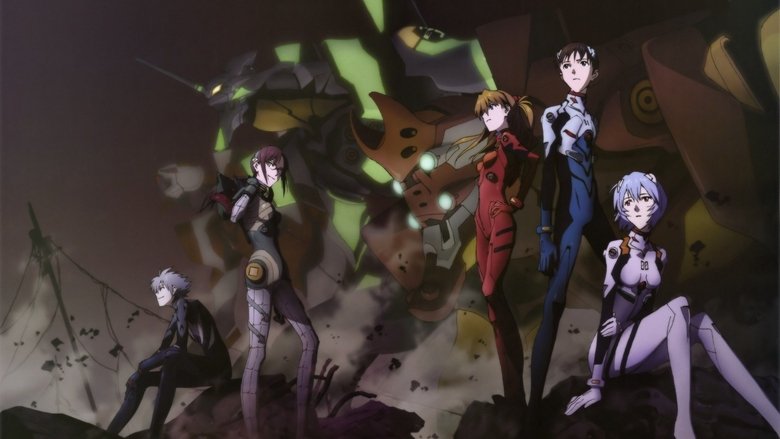
The film's third act is a series of escalating tragedies and revelations. It begins with the arrival of Eva Unit-03, which is possessed by the Ninth Angel. In a departure from the original series where Toji Suzuhara was the pilot, here it is Asuka. Shinji refuses to fight, leading Gendo to activate the Dummy System, which causes Unit-01 to brutally dismantle Unit-03 and crush Asuka's cockpit. Shinji, traumatized, quits NERV, only for the Tenth Angel to attack. After Mari and Rei fail to stop it, Shinji returns to save Rei, who has been consumed by the Angel. In his rage, Shinji forces Unit-01 to transcend human limits, turning into a god-like being. He successfully pulls Rei from the Angel's core, but this act of divine power triggers Near-Third Impact. The world is only saved at the last second when Kaworu Nagisa descends from the moon in Mark.06 and impales Unit-01 with the Spear of Cassius, halting the apocalypse but leaving the world in ruins.
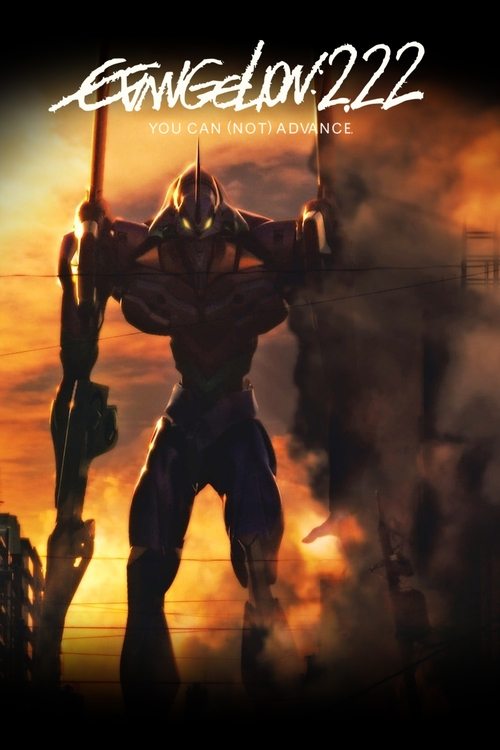
ヱヴァンゲリヲン新劇場版:破
"In the War Between Heaven and Earth, Salvation is Machine."
Director: Masayuki, Kazuya Tsurumaki, Hideaki Anno
Cast: Megumi Ogata, Megumi Hayashibara, Yuko Miyamura, Maaya Sakamoto, Kotono Mitsuishi
Evangelion: 2.0 You Can (Not) Advance — Ending Explained
⚠️ Spoiler Analysis
Alternative Interpretations
The most prominent alternative interpretation is the Sequel Theory, which posits that the Rebuild films are not a remake, but a literal continuation of the original series following a universal reset. Evidence for this includes the red seas and Kaworu's cryptic dialogue about "this time." Another interpretation suggests that the film is a meta-commentary on the anime industry; Mari represents the "new" fan or a disruptive outside force intended to break the repetitive cycles of the industry, while Shinji's destructive apotheosis represents the dangers of fan entitlement and the desire for a "perfect" escapist ending.
Explore More About This Movie
Dive deeper into specific aspects of the movie with our detailed analysis pages