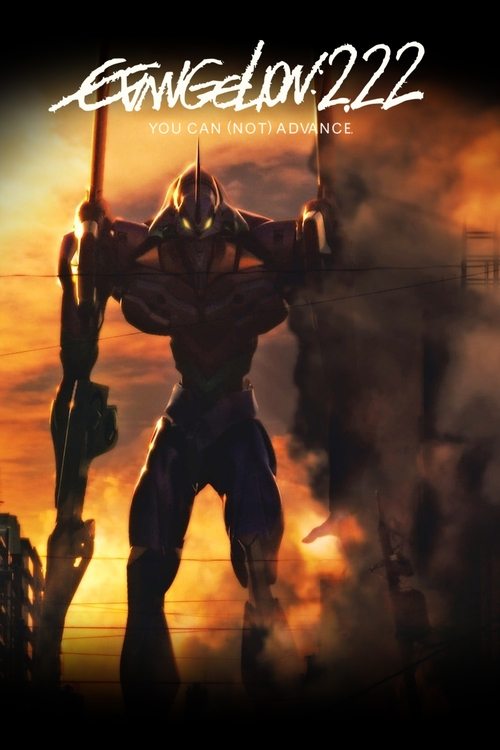
Evangelion: 2.0 You Can (Not) Advance
ヱヴァンゲリヲン新劇場版:破
"In the War Between Heaven and Earth, Salvation is Machine."
Overview
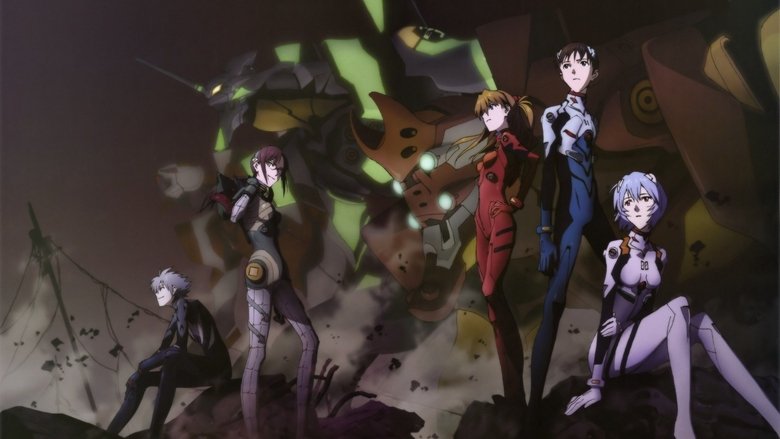
Evangelion: 2.0 You Can (Not) Advance is the second installment in the Rebuild of Evangelion tetralogy, serving as both a reimagining and a radical departure from the mid-90s cultural phenomenon Neon Genesis Evangelion. The story continues the struggle of Shinji Ikari, a young pilot of the giant bio-organic mecha known as Evangelions, as he defends the fortress-city of Tokyo-3 against the inexplicable and terrifying celestial entities known as Angels. While the film initially follows familiar beats from the original series, it quickly diverges with the introduction of the enigmatic new pilot Mari Illustrious Makinami and the arrival of the European pilot Asuka Shikinami Langley, whose presence shifts the emotional gravity of the narrative.
As the conflict with the Angels intensifies, the characters' personal boundaries begin to blur. Rei Ayanami, once an emotionless cipher, starts making proactive efforts to bridge the icy gap between Shinji and his distant father, Gendo Ikari. Meanwhile, Shinji attempts to find a sense of normalcy through cooking and social interaction, hoping to move beyond his role as a mere weapon. However, this fragile peace is shattered when a disastrous Eva test flight leads to a horrific moral crisis, forcing Shinji to choose between obedience and his own burgeoning willpower, leading to a climax that threatens to rewrite the very laws of the universe.
Core Meaning
The core meaning of the film is encapsulated in its Japanese title subtitle "Ha", which translates to "Break". This refers to the breaking of the traditional Evangelion narrative loop and the characters' attempts to break free from their established archetypes. Director Hideaki Anno utilizes the film to explore the concept of individual will versus systemic destiny. Unlike the original series, which focused heavily on the paralyzing nature of trauma, 2.0 depicts characters actively attempting to change their circumstances. The film suggests that while reaching out to others is painful and potentially catastrophic (the "Hedgehog's Dilemma"), the act of choosing to do so is the defining characteristic of being human, even if that choice comes with a terrible price for the rest of the world.
Thematic DNA
The Price of Individual Desire
The film explores the duality of Shinji's newfound agency. In the climax, Shinji ignores the warnings of logic and safety to save a single person, Rei. The film frames this as both a triumphant moment of personal growth and a terrifying act of cosmic selfishness that triggers an apocalypse, questioning whether a single human life is worth the fate of the world.
Escaping the Loop of Isolation
Characters like Rei and Asuka struggle to move beyond their self-imposed or externally mandated isolation. Rei's attempt to host a dinner party symbolizes a proactive break from her role as a "doll," while Asuka's internal monologue reveals a desperate need for companionship hidden beneath her fierce independence.
The Deconstruction of the 'Hero' Archetype
The film subverts the traditional mecha "shonen" tropes. By giving Shinji exactly what he wants—the power to save the girl and defeat the enemy through sheer willpower—the narrative shows the horrific consequences of such power, effectively deconstructing the idea of the "righteous" savior.
Technology as a Curse and a Tool
The Evangelion units are depicted not just as machines, but as biological horrors that demand the souls of their pilots. The introduction of the Dummy System and the "Beast Mode" highlights the loss of humanity that occurs when man relies too heavily on technology for salvation.
Character Analysis
Shinji Ikari
Megumi Ogata
Motivation
Initially seeks validation from his father, but eventually shifts to seeking a meaningful connection with Rei Ayanami, regardless of the consequences.
Character Arc
Shinji evolves from a passive victim of fate to an active agent of destruction. His development is marked by a transition from piloting because he is told to, to piloting out of a desperate, singular desire to protect his connection with Rei.
Rei Ayanami
Megumi Hayashibara
Motivation
To express her gratitude to Shinji and to help him find happiness with his father.
Character Arc
Rei undergoes a significant "thawing" process. She begins to experience warmth and seeks to foster reconciliation between the Ikari men through domestic acts like cooking, moving away from her identity as a replaceable object.
Asuka Shikinami Langley
Yuko Miyamura
Motivation
To prove her worth and superiority through solo combat, though she secretly yearns for a place to belong.
Character Arc
Unlike her TV counterpart, this version of Asuka is more of a solitary wolf. Her arc involves the realization that she is lonely, leading to a rare moment of vulnerability just before she is consumed by an Angel during a test flight.
Mari Illustrious Makinami
Maaya Sakamoto
Motivation
Shrouded in mystery, but she appears to be following her own agenda while aiding those who wish to disrupt NERV's plans.
Character Arc
Introduced as a completely new element, Mari functions as a catalyst for change. She represents a perspective that enjoys the thrill of the Eva and the destruction of the status quo, effectively forcing the narrative to "break."
Symbols & Motifs
The SDAT Player (Track 27)
Symbolizes the departure from the original series. In the 26-episode original anime, Shinji's player only ever looped tracks 25 and 26. In 2.0, the player skips to Track 27, visually signaling that the story has entered uncharted territory.
Seen when Shinji's player is broken and then repaired, and most significantly when it displays track 27 after Mari crashes into Shinji.
The Red Sea vs. The Blue Tank
Symbolizes the death of the old world and the artificial preservation of life. The red sea is a remnant of the Second Impact, while the blue water in the aquarium represents the lost beauty of the pre-impact Earth.
The characters visit a maritime preservation center where they see fish in blue water, contrasted with the vast, sterile red oceans outside.
The Key of Nebuchadnezzar
Represents a dangerous, transcendental power and a shift in Gendo's plan. It replaces the "Adam Embryo" from the original series, suggesting a different metaphysical endgame.
Ryoji Kaji delivers this mysterious item to Gendo Ikari as a "lost number" that can open the door to Human Instrumentality.
Memorable Quotes
The promised time has come, Shinji Ikari. This time, I'll make you happy, for sure.
— Kaworu Nagisa
Context:
Spoken in the post-credits scene as Kaworu descends from the moon to stop the Near-Third Impact.
Meaning:
Implies a cyclical nature to the Evangelion universe, suggesting that Kaworu has attempted to save Shinji in previous timelines or loops.
Go, Shinji! Not for anyone else's sake, but for your own wish!
— Misato Katsuragi
Context:
Misato shouts this to Shinji during the final battle with the Tenth Angel as Unit-01 begins its transcendence.
Meaning:
A pivotal line that encourages Shinji's agency, but also ironically cheers on the destruction of the world.
I can be replaced.
— Rei Ayanami
Context:
Rei says this to Shinji inside the Angel's core as he tries to rescue her soul.
Meaning:
Highlights Rei's tragic self-perception as a biological tool rather than an individual, a belief Shinji vehemently rejects.
Philosophical Questions
Is the pursuit of individual happiness worth the collective suffering of others?
The film poses this through Shinji's decision to save Rei. By choosing his personal emotional bond over the safety of humanity, he triggers Near-Third Impact, forcing the audience to weigh the value of a single human soul against the masses.
Can an artificial being possess a soul and the right to self-determination?
Rei's arc centers on her moving away from being a tool and toward being a person with desires. Her attempt to cook for Gendo and Shinji is a philosophical assertion of her own humanity.
Alternative Interpretations
The most prominent alternative interpretation is the Sequel Theory, which posits that the Rebuild films are not a remake, but a literal continuation of the original series following a universal reset. Evidence for this includes the red seas and Kaworu's cryptic dialogue about "this time." Another interpretation suggests that the film is a meta-commentary on the anime industry; Mari represents the "new" fan or a disruptive outside force intended to break the repetitive cycles of the industry, while Shinji's destructive apotheosis represents the dangers of fan entitlement and the desire for a "perfect" escapist ending.
Cultural Impact
Evangelion: 2.0 had a profound impact on the anime industry and fan culture. It marked the moment where the Rebuild series truly became its own entity, sparking intense debate over the "New Movie Edition" versus the original 1995 series. Critics praised its superior animation quality and the way it successfully translated the heavy psychological themes of the original into a more cinematic, action-oriented format. The film's ending, which subverted the audience's expectation of a heroic victory, became one of the most discussed moments in modern anime history. It also popularized the "Moe" elements in the Evangelion franchise through Rei's development, only to brutally deconstruct them in the second half, reminding audiences of the series' dark roots.
Audience Reception
The film was met with overwhelming praise for its visceral animation and the emotional evolution of its main cast. Fans of the original series were particularly moved by the "thawing" of Rei Ayanami and the high-stakes action sequences, such as the three-Eva sprint against the Eighth Angel. However, it was also highly controversial. The introduction of Mari was polarizing, with some viewers finding her lack of backstory frustrating. The biggest point of contention was the ending, which many found to be a jarring departure from the grounded, depressive tone of the original series, though most agreed it was a masterclass in cinematic tension.
Interesting Facts
- Asuka's surname was changed from Soryu to Shikinami to match the naming convention of Japanese destroyers (Ayanami, Shikinami, Makinami).
- The 'Beast Mode' of Unit-02 was a new addition for this film, showcasing a more feral, less mechanical side of the Evangelions.
- The children's song 'Tsubasa o Kudasai' (Please Give Me Wings) is used during the film's apocalyptic climax to create a jarring contrast between innocence and horror.
- The film was a massive box office success in Japan, outperforming its predecessor and solidifying the 'Rebuild' project as a major cultural event.
- Director Hideaki Anno founded Studio Khara specifically to produce these films, seeking independence from the traditional studio system.
- The film introduces the 'Bethany Base' in the Arctic and the 'Tabgha Base' on the Moon, expanding the series' global scale.
Easter Eggs
Track 27 on the SDAT
A meta-reference to the fact that the original TV series had 26 episodes. Track 27 signifies that the story is now going beyond the original ending.
The Four Crosses of Light
During the flashback to the Second Impact, four white crosses are seen, referencing the four 'Adams' that exist in the Rebuild continuity, as opposed to the single Adam in the original series.
Red Ocean Water
The red ocean is an visual callback to The End of Evangelion, suggesting that the Rebuild world may be a literal sequel or a world reborn from the previous apocalypse.
⚠️ Spoiler Analysis
Click to reveal detailed analysis with spoilers
Frequently Asked Questions
Explore More About This Movie
Dive deeper into specific aspects of the movie with our detailed analysis pages
Comments (0)
No comments yet. Be the first to share your thoughts!