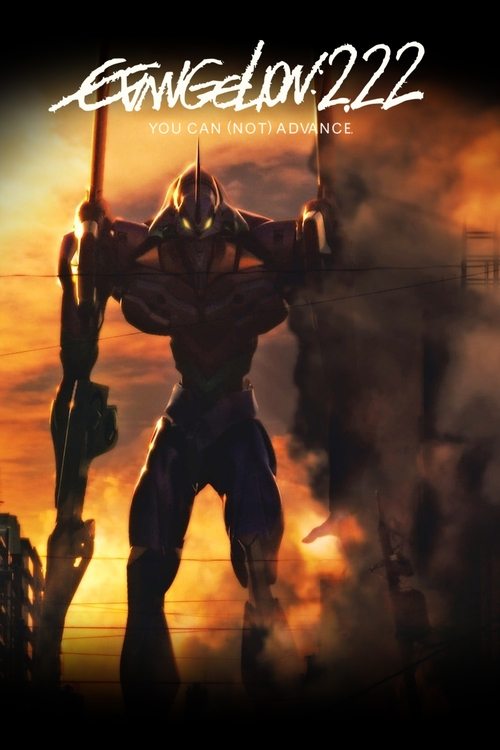
ヱヴァンゲリヲン新劇場版:破
"In the War Between Heaven and Earth, Salvation is Machine."
Evangelion: 2.0 You Can (Not) Advance - Symbolism & Philosophy
Symbols & Motifs
The SDAT Player (Track 27)
Symbolizes the departure from the original series. In the 26-episode original anime, Shinji's player only ever looped tracks 25 and 26. In 2.0, the player skips to Track 27, visually signaling that the story has entered uncharted territory.
Seen when Shinji's player is broken and then repaired, and most significantly when it displays track 27 after Mari crashes into Shinji.
The Red Sea vs. The Blue Tank
Symbolizes the death of the old world and the artificial preservation of life. The red sea is a remnant of the Second Impact, while the blue water in the aquarium represents the lost beauty of the pre-impact Earth.
The characters visit a maritime preservation center where they see fish in blue water, contrasted with the vast, sterile red oceans outside.
The Key of Nebuchadnezzar
Represents a dangerous, transcendental power and a shift in Gendo's plan. It replaces the "Adam Embryo" from the original series, suggesting a different metaphysical endgame.
Ryoji Kaji delivers this mysterious item to Gendo Ikari as a "lost number" that can open the door to Human Instrumentality.
Philosophical Questions
Is the pursuit of individual happiness worth the collective suffering of others?
The film poses this through Shinji's decision to save Rei. By choosing his personal emotional bond over the safety of humanity, he triggers Near-Third Impact, forcing the audience to weigh the value of a single human soul against the masses.
Can an artificial being possess a soul and the right to self-determination?
Rei's arc centers on her moving away from being a tool and toward being a person with desires. Her attempt to cook for Gendo and Shinji is a philosophical assertion of her own humanity.
Core Meaning
The core meaning of the film is encapsulated in its Japanese title subtitle "Ha", which translates to "Break". This refers to the breaking of the traditional Evangelion narrative loop and the characters' attempts to break free from their established archetypes. Director Hideaki Anno utilizes the film to explore the concept of individual will versus systemic destiny. Unlike the original series, which focused heavily on the paralyzing nature of trauma, 2.0 depicts characters actively attempting to change their circumstances. The film suggests that while reaching out to others is painful and potentially catastrophic (the "Hedgehog's Dilemma"), the act of choosing to do so is the defining characteristic of being human, even if that choice comes with a terrible price for the rest of the world.