Skip to content
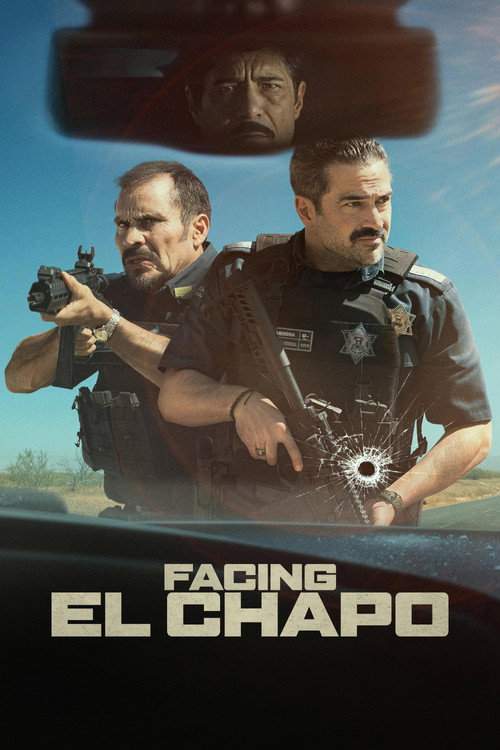
Facing El Chapo
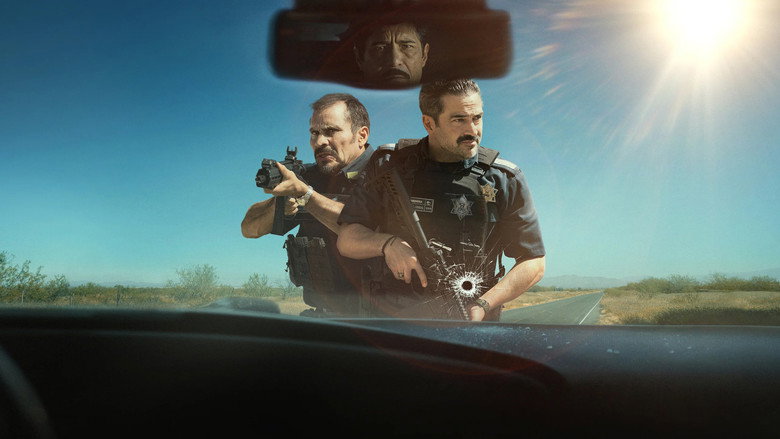
A claustrophobic, high-tension desert thriller steeped in dread and moral friction, where a solitary highway traffic stop turns into a white-knuckle standoff under the suffocating shadow of an untouchable criminal empire.
Facing El Chapo

Facing El Chapo

La captura

21 August 2026 Mexico 91 min 8.7 (228)

Director: Chava Cartas

Cast: Alfonso Herrera, Noé Hernández, Hector Kotsifakis, Juan Pablo Cruz García, Paola Fernández

Crime Action Thriller Moral Integrity vs. Self-Preservation & Corruption The Claustrophobia of Power & Psychological Terror Institutional Decay and the Breakdown of Trust De-Mythologizing the Cartel Legend

Overview

Facing El Chapo (La captura) is a 91-minute Mexican crime-action thriller directed by Chava Cartas, written by Bernardo Esquinca, and based on journalistic chronicles by investigative journalist Héctor de Mauleón. Set during the early morning hours of January 8, 2016, following the military raid in Los Mochis, Sinaloa, the narrative strips away sprawling cartel mythology to focus on a hyper-concentrated, real-time procedural scenario.

The narrative opens as Mexican Federal Highway Police officers Carmona (Alfonso Herrera) and Rosales (Noé Hernández) are nearing the end of a grueling night shift. After flagging down a stolen vehicle on Highway 15, what appears to be routine highway patrol work instantly transforms into a waking nightmare: the occupants of the car are Joaquín "El Chapo" Guzmán (Héctor Kotsifakis) and his lethal security chief Jorge Iván "El Cholo" Gastélum (Juan Pablo Cruz García), fleeing through the storm drain network of the city.

Realizing the magnitude of who they have detained, the two officers find themselves isolated and vulnerable. With cartel hit squads mobilizing across the municipality, corrupt radio lines buzzing, and staggering million-dollar bribes mixed with lethal threats being whispered in their ears, the officers must navigate hours of psychological warfare and physical survival while trying to secure their prisoner before their position is overrun.
Core Meaning

Director Chava Cartas shifts the lens of the narco-thriller away from glamorized kingpin folklore and relocates it firmly onto ordinary law enforcement personnel caught in an impossible moral and mortal meat grinder. The film’s core message explores the terrifying cost of everyday integrity in an ecosystem dominated by institutional corruption and omnipotent violence. By highlighting how close modern history came to taking a completely different turn over a single roadside decision, the film underscores that monumental historical shifts often balance on the split-second moral choices made by ordinary, terrified individuals.

Thematic DNA

Moral Integrity vs. Self-Preservation & Corruption 35%
The Claustrophobia of Power & Psychological Terror 25%
Institutional Decay and the Breakdown of Trust 20%
De-Mythologizing the Cartel Legend 20%

Moral Integrity vs. Self-Preservation & Corruption

Explored through the central dilemma facing Carmona and Rosales as they weigh life-altering bribes against immediate death or lifelong retribution.

The Claustrophobia of Power & Psychological Terror

Revealed through El Chapo's behavior in handcuffs, wielding authority not through weapons, but through psychological dominance, names of family members, and the absolute certainty that his men are closing in.

Institutional Decay and the Breakdown of Trust

Highlighted as the officers realize they cannot trust regular police radio frequencies or standard dispatch protocols without broadcasting their location to cartel moles.

De-Mythologizing the Cartel Legend

Contrasts the myth of the elusive druglord with the reality of an aging, cornered fugitive emerging from a sewer pipe, soaked and stripped of his armored convoys.

Character Analysis

Officer Carmona

Alfonso Herrera

Archetype: Reluctant Hero / Principled Lawman Key Trait: Unflinching resolve under psychological duress

Motivation

Survival and professional duty to state law enforcement.

Character Arc

Shifts from an exhausted officer counting down shift hours to the backbone of the capture, resolving to see duty through despite knowing the lifelong targets placed on his back.

Officer Rosales

Noé Hernández

Archetype: The Pragmatist / Everyman Partner Key Trait: Streetwise caution and deep wariness

Motivation

Protecting himself and his partner while surviving the shift.

Character Arc

Begins as a cynical, road-weary veteran tempted by the reality of cartel omnipotence; steels himself alongside Carmona as danger escalates.

All 5 characters and cast

Symbols & Motifs

The Sewer / Storm Drain System

Meaning:

Symbolizes the visceral reality beneath the cartel facade, stripping away the cinematic glamour of drug empire leadership through El Chapo's literal descent into the filth and mud of Los Mochis before his capture.

Context:

Used during the opening sequences depicting Guzmán's subterranean escape path prior to emerging near the highway.

The Police Badge / Handcuffs

Meaning:

Represents the fragile boundary of the rule of law in a territory where state institutions have been systematically hollowed out.

Context:

Emphasized as the physical instruments used by the patrol officers to restrain the cartel kingpin and maintain institutional authority.

The Highway / Open Desert Road (Highway 15)

Meaning:

Serves as a motif for total exposure and vulnerability; an open expanse where help is hours away and danger can approach from any direction.

Context:

Featured during the initial traffic stop and the officers' realization of their tactical isolation under open night skies.

The Motel Room

Meaning:

Used as a pressure-cooker motif representing the real-life Doux Motel refuge, serving as an austere, confining space where captors and captives are trapped together, blurring the lines of who holds the upper hand.

Context:

The central setting for the middle and final acts where the psychological standoff between the officers and Guzmán unfolds.

The Police Radio Frequency

Meaning:

A recurring auditory motif representing the omnipresent paranoia of the Mexican drug war, where every transmission carries danger.

Context:

Heard throughout the patrol car and motel sequences, conveying that broadcasting coordinates could either summon backup or direct cartel sicarios to their exact location.

Memorable Quotes

Ustedes no saben con quién se están metiendo... suéltenme y se van arreglados de por vida.
— Joaquín "El Chapo" Guzmán (Héctor Kotsifakis)

Context

Spoken inside the patrol vehicle immediately following the roadside pullover, delivering his initial multimillion-dollar bribe attempt while reminding the officers of the reach of his syndicate.

Meaning

Captures the classic cartel modus operandi—plata o plomo (silver or lead)—distilled down to a single terrifying sentence in an isolated patrol car.

Aquí no hay trato. Se queda sentado y callado.
— Officer Carmona (Alfonso Herrera)

Context

Carmona's immediate, decisive response cutting through the kingpin’s psychological seduction, marking the point of no return for the officers.

Meaning

The defining moment of moral resolve in the film, signaling that the officers refuse to become complicit.

All 3 quotes

Philosophical Questions

Is integrity an innate virtue or a situational luxury?

The film forces viewers to confront whether ordinary morality can survive when the alternative is absolute wealth or certain execution.

Who truly shapes historical turning points?

It asks whether monumental political and global events are steered by powerful figures or determined by the unpredictable, mundane choices of low-ranking individuals on the ground.

Can justice exist within broken systems?

It questions the value of capturing a kingpin when the surrounding institutional corruption ensures the machinery of organized crime remains largely intact.

Alternative Interpretations

The film invites three distinct analytical readings:

Full ending explanation

Cultural Impact

Facing El Chapo arrived at a moment of cultural re-examination of Mexico’s "War on Drugs". For over a decade, international streaming platforms saturated audiences with high-budget television series (such as Narcos, El Chapo, and El Señor de los Cielos) that frequently bordered on "narco-cultura" romanticism. Released in August 2026, Facing El Chapo served as a counterweight by stripping away criminal grandeur and focusing purely on institutional courage.

Upon its debut, the film became a surprise global streaming sensation on Netflix, claiming the #1 film spot globally in over 70 countries, racking up over 18 million views in its premiere week alone and leading non-English charts worldwide. Critics and audiences cited it as a Latin American companion to high-tension thrillers like Sicario and Training Day.

Audience Reception

Critical and audience reception was overwhelmingly positive toward the film's craft and tension:

  • What was praised: Critics and audiences widely praised the film's relentless pacing, taut 91-minute runtime, and claustrophobic atmosphere. The chemistry and grounded, unpretentious performances of Alfonso Herrera and Noé Hernández received universal acclaim for conveying genuine, sweat-inducing panic rather than superhuman bravado.
  • Points of criticism: Some genre critics noted that the film's laser focus on the motel/highway standoff leaves little room for broader political exploration or character backstories outside the 2-hour procedural event.
  • Overall Verdict: Regarded as a tightly executed, gritty, and refreshingly grounded Mexican crime thriller that proves tension and authentic procedural realism triumph over bloated budgets.

Interesting Facts

  • The script was developed by Bernardo Esquinca directly using the investigative chronicles of award-winning Mexican journalist Héctor de Mauleón, ensuring high fidelity to the documented transcripts of the 2016 arrest.
  • Although the historical events occurred in Los Mochis, Sinaloa, the production was largely filmed in the arid terrain and highways of Chihuahua, Mexico, to recreate northern Mexico's vast, desolate highway environments.
  • Alfonso Herrera, widely recognized for his portrayal of cartel lieutenant Javi Elizonndro in Netflix’s Ozark, specifically chose this project because it reversed his perspective—playing the honest law officer rather than the cartel aggressor.
  • Director Chava Cartas structured the film's 91-minute runtime to unfold almost in real-time, matching the actual frantic window between the highway stop and the arrival of the Mexican Federal Police / Naval reinforcements.
  • The film relied heavily on practical locations, shooting inside authentic highway motels, genuine patrol cruisers, and actual drainage tunnels to avoid artificial studio lighting.

Easter Eggs

The Doux Motel Authenticity

The motel staging explicitly mirrors the real Motel Doux in Los Mochis, down to the iconic room layout and bedspreads where the world-famous photograph of a disheveled El Chapo in a dirty sleeveless shirt was snapped on January 8, 2016.

Costume Accuracy of the Stained Tank Top

Héctor Kotsifakis's costume in the latter half of the film accurately replicates the dirty, dark-stained tank top El Chapo wore after crawling through the drainage system.

Homage to 1970s Pressure-Cooker Cinema

The cinematic blocking inside the cramped motel room intentionally pays homage to classic siege and bottle thrillers like John Carpenter’s Assault on Precinct 13 and Sidney Lumet’s gritty procedural style.

Frequently Asked Questions

Explore More About This Movie

Dive deeper into specific aspects of the movie with our detailed analysis pages

Comments (0)

Leave a comment

No comments yet. Be the first to share your thoughts!

Similar Movies