Skip to content
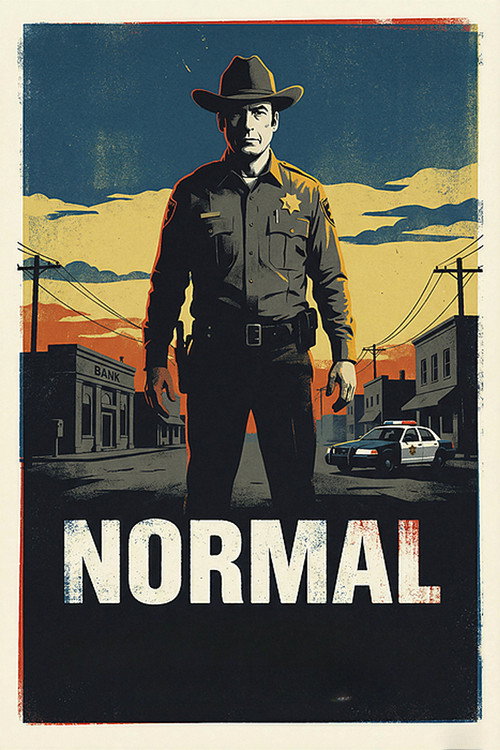
Normal
A darkly comic neo-Western soaked in freezing Midwestern sleet and sudden crimson spray, exploring weary disillusionment and suppressed rage as a solitary lawman finds himself trapped inside a quiet town’s violently ticking snow globe.
Normal

Normal

"Small town. Big secret."

16 April 2026 United States of America 91 min 7.2 (476)

Director: Ben Wheatley

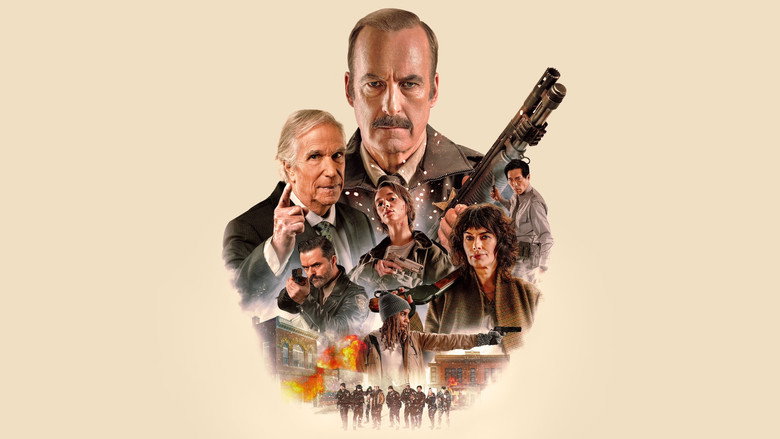
Cast: Bob Odenkirk, Henry Winkler, Lena Headey, Billy MacLellan, Ryan Allen

Crime Action Thriller The Illusion of Midwestern Innocence & Systemic Corruption Apathy and Emotional Detachment as Survival Mechanisms The Burden of Moral Responsibility vs. Complacency Collective Complicity and the Cost of Economic Survival
Budget: $10,000,000
Box Office: $6,095,691

Overview

Directed by Ben Wheatley (Free Fire, Kill List) from a screenplay by Derek Kolstad (John Wick, Nobody), Normal introduces audiences to Ulysses Richardson (Bob Odenkirk), a weary, soft-spoken lawman taking a temporary posting as the interim sheriff of Normal, Minnesota. Separated from his wife and haunted by a tragic confrontation in his past, Ulysses hopes for nothing more than a quiet, five-week bureaucratic assignment stamping routine forms and mediating minor neighborhood squabbles until an election takes place.

The veneer of small-town hospitality—championed by the smarmy, ever-smiling Mayor Kibner (Henry Winkler), affable deputy Mike Nelson (Billy MacLellan), and sharp-tongued bar owner Moira (Lena Headey)—quickly fractures when an inept, desperate couple attempts a robbery at the local bank. When Ulysses steps into the bank to de-escalate the hostage situation peacefully, he triggers an immediate, disproportionate armed reaction from the local authorities and townspeople.

Ulysses realizes that the bank’s vault conceals a catastrophic secret that connects the entire municipality to a brutal organized crime syndicate. Stranded in a brewing winter blizzard, cut off from outside help, and turned upon by the very community he was hired to protect, the unassuming sheriff is forced to ally with unlikely outcasts to survive an all-out, blood-spattered town siege.
Core Meaning

Normal is an indictment of the rot concealed beneath the picturesque surface of middle-class Americana. Director Ben Wheatley and writer Derek Kolstad use the conventions of the action-thriller and dark comedy to interrogate the moral compromises communities make to maintain prosperity. The film illustrates that when civic comfort and financial security are built on structural complicity with evil, "normality" itself becomes a violent fiction that must be sustained through collective silence and bloodshed. On a personal level, it examines the dangers of emotional numbness—arguing that passive neutrality in the face of widespread corruption is a failure of basic civic and human duty.

Thematic DNA

The Illusion of Midwestern Innocence & Systemic Corruption 35%
Apathy and Emotional Detachment as Survival Mechanisms 25%
The Burden of Moral Responsibility vs. Complacency 20%
Collective Complicity and the Cost of Economic Survival 20%

The Illusion of Midwestern Innocence & Systemic Corruption

The film subverts the cozy, folksy tropes of small-town Minnesota (reminiscent of Fargo). The town of Normal projects idyllic neighborliness, yet every municipal institution—from the mayor's office to the local police department—functions as a logistical front for illicit operations.

Apathy and Emotional Detachment as Survival Mechanisms

Ulysses clings to a personal philosophy of emotional non-involvement ("life's a lot easier when you care a little less") to protect himself from psychological burnout following a past failure. His arc forces him to abandon this detachment when survival demands moral clarity.

The Burden of Moral Responsibility vs. Complacency

While Ulysses initially acts as a compliant interim figurehead who refuses to rock the boat, the bank heist strips away his plausible deniability, forcing him to choose between self-preservation through ignorance and the heavy cost of doing the right thing.

Collective Complicity and the Cost of Economic Survival

Unlike standard action movies where a lone corrupt boss controls an innocent town, Normal reveals that nearly every resident voted with their wallets to harbor cartel assets in exchange for keeping their dying rural economy afloat.

Character Analysis

Sheriff Ulysses Richardson

Bob Odenkirk

Archetype: Reluctant Antihero / Weary Everyman Lawman Key Trait: Deceptive deadpan calm masking competent tactical survival skills

Motivation

Wants to quietly run out his five-week interim contract without causing conflict, nursing his divorce and past moral guilt.

Character Arc

Shifts from a passive, emotionally numb administrator to a proactive protector willing to burn the town's facade to the ground.

Mayor Kibner

Henry Winkler

Archetype: Corrupt Official / Smiling Patriarch Key Trait: Disarming folksy charm used to mask criminal ruthlessness

Motivation

Preserving the municipal deal with the Yakuza to maintain his town’s wealth and political power.

Character Arc

Remains outwardly jovial and grandfatherly until his enterprise is compromised, revealing ruthless, transactional villainy.

All 5 characters and cast

Symbols & Motifs

The Bank Vault

Meaning:

Symbolizes the buried rot and economic dependency of the town. Rather than storing standard community savings, the vault contains gold, laundered cash, and weapons belonging to an international crime syndicate, embodying how small-town solvency relies on global criminality.

Context:

Located inside the town's local bank and exposed during an attempted robbery by an inept couple.

The Winter Blizzard

Meaning:

Represents both isolation and the impending moral reckoning. It strips away civilization's warmth to reveal primal instincts.

Context:

The brewing storm physically traps the characters within the town limits and cuts off communication lines with the outside world.

Mounted Wall Guns / Firearms Decor

Meaning:

Evoke Chekhov’s gun in its most literal form, symbolizing how pervasive weaponization has become normalized as quaint rural decor.

Context:

Decorative rifles and shotguns hung throughout the local tavern and dining lodge restaurants.

Unanswered Voicemails

Meaning:

Highlight Ulysses’ emotional isolation, lingering regret, and inability to process unresolved trauma.

Context:

Heard as an audio motif through Ulysses’ constant, one-sided telephone messages to his estranged wife.

The Sheriff's Badge

Meaning:

Represents the hollowed-out nature of institutional authority that has abandoned justice in favor of administrative convenience.

Context:

Passed down to Ulysses merely to "keep the seat warm" during his temporary five-week interim posting.

Memorable Quotes

Life’s a lot easier when you care a little less.
— Sheriff Ulysses Richardson

Context

Spoken in voiceover and conversation during the opening act.

Meaning

Encapsulates Ulysses’ resigned worldview and his strategy for avoiding psychological pain following his past trauma.

Please park better.
— Sheriff Ulysses Richardson

Context

Written on a citation note left on a vehicle windshield instead of an actual fine.

Meaning

Highlights Ulysses' desire to gently de-escalate petty local infractions rather than assert aggressive institutional dominance.

All 4 quotes

Philosophical Questions

Can neutrality exist in the face of structural corruption?

The film explores whether an individual who chooses non-involvement in an unethical system is inherently guilty of perpetuating it.

What is the real moral cost of rural survival?

It examines how far a neglected community will go to ensure economic stability when legitimate societal safety nets collapse.

Is redemption possible through reactive violence?

The narrative questions whether Ulysses’ armed intervention truly corrects his previous failure or simply leaves behind an even larger trail of carnage.

Alternative Interpretations

The Anti-Vigilante Reading (Structural Complicity): Some critics argue the ending demonstrates that true justice cannot be achieved through gun violence. Ulysses eliminates the immediate local conspirators and Yakuza envoys, but the broader criminal infrastructure and rural economic incentives remain untouched—leaving the surviving deputy to likely repeat the cycle.

Full ending explanation

Cultural Impact

Released theatrically in the spring of 2026 by Magnolia Pictures (and Vertigo Releasing in the UK) following its 2025 festival debut, Normal arrived amid the growing cinematic subgenre of "geriaction" and everyman-led shootouts championed by Nobody, John Wick, and The Beekeeper.

Critics and audiences embraced the film as an enjoyable, darkly humorous B-movie thriller. While some reviewers noted that the third-act chaos leaned heavily on familiar genre tropes and unnecessary voiceover exposition, Odenkirk’s grounded performance and Wheatley’s unhinged action direction earned praise for subverting the invincible "super-assassin" archetype in favor of a messy, vulnerable protagonist.

Audience Reception

Normal received generally positive aggregated reception, holding a 76% Rotten Tomatoes Tomatometer score and a Metascore of 63 on Metacritic.

  • Praised: Bob Odenkirk’s empathetic, deadpan leading performance; Henry Winkler’s delightfully wicked turn against type; kinetic, gory gunfights; tight 90-minute pacing.
  • Criticized: Over-reliance on voiceover exposition in the first half; narrative beats bearing strong similarities to Hot Fuzz; occasional murky nighttime lighting.
  • Controversial Moments: A sudden, darkly comedic accident in the final act (the wall-mounted shotgun misfire) that instantly reignites total carnage just as the plot appears resolved.

Interesting Facts

  • Normal marks the third action collaboration between actor Bob Odenkirk and screenwriter Derek Kolstad, following their work together on Nobody (2021) and Nobody 2.
  • Kolstad originally drafted an early version of the script before Nobody was produced; while shooting that film, Odenkirk and Kolstad reworked the concept to fit an older, less invulnerable lawman character.
  • Bob Odenkirk received a formal "Story by" credit alongside Derek Kolstad, contributing specific character beats and dialogue to ground the protagonist's emotional fatigue.
  • Ben Wheatley took the helm, blending his distinctive kinetic shootout staging from Free Fire (2016) with Kolstad’s stylized choreographic action.
  • Although set in rural Minnesota, principal photography took place in Manitoba and Alberta, Canada, taking advantage of authentic blizzards and sub-zero temperatures.
  • The film made its world premiere in the Midnight Madness section at the Toronto International Film Festival in September 2025 before its theatrical rollout.

Easter Eggs

Japanese Cover of Black Sabbath's "Paranoid"

The movie opens abruptly in Osaka with a frenetic Japanese-language cover of Black Sabbath's Paranoid over a Yakuza disciplinary scene, establishing the film's eccentric, cross-continental collision of tones.

Homage to Hot Fuzz and Fargo

The premise pays explicit homage to Edgar Wright's Hot Fuzz (an outsider cop uncovers that an entire quaint town is united in murderous conspiracy) merged with the folksy, snowbound noir atmosphere of the Coen Brothers' Fargo.

Cinematic Echoes of Assault on Precinct 13

The mid-movie siege sequences in the barricaded police station and the bank directly reference John Carpenter’s 1976 classic Assault on Precinct 13.

Chekhov's Restaurant Shotgun

A prominently displayed, loaded shotgun mounted on the wall of a dining lodge—established early in the background—becomes the catalyst for the climactic shootout.

Frequently Asked Questions

Explore More About This Movie

Dive deeper into specific aspects of the movie with our detailed analysis pages

Comments (0)

Leave a comment

No comments yet. Be the first to share your thoughts!

Similar Movies