墮落天使
"The night's full of weirdos."
Fallen Angels - Symbolism & Philosophy
Symbols & Motifs
The Ultra Wide-Angle Lens
It symbolizes emotional distance, the distortion of reality, and the paradox of physical closeness versus psychological isolation.
Used extensively by cinematographer Christopher Doyle, it stretches the characters' faces and distorts their surroundings, creating a claustrophobic yet detached feeling, particularly when characters are in cramped locations like noodle shops or subway cars.
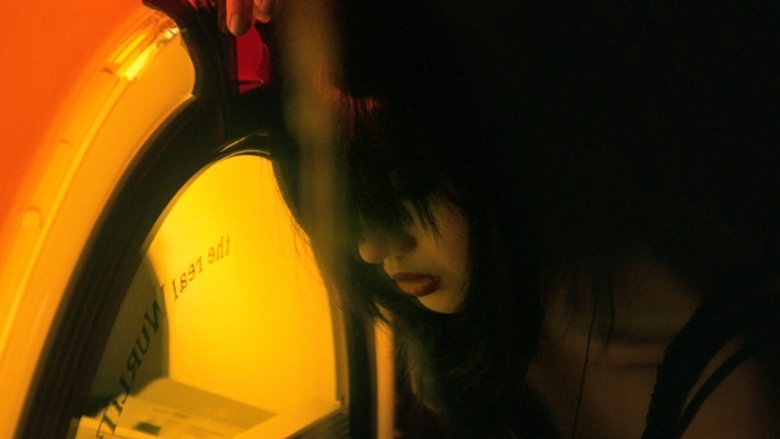
The Jukebox and the Song 'Forget Him'
It represents the inability to let go of the past, emotional expression through secondary mediums, and the pain of severing interpersonal ties.
The Hitman uses the song 'Forget Him' on the jukebox to communicate his desire to end his partnership with the Agent, entirely avoiding a direct, verbal confrontation about their feelings.
The Agent's Cleaning and Trash Sifting
These acts symbolize voyeuristic intimacy, unrequited love, and a desperate, unconventional attempt to bridge an emotional gap.
The Agent meticulously cleans the Hitman's apartment and sifts through his garbage to feel physically close to him and decipher his life, highlighting the tragic lengths she goes to for a one-sided connection.
The Motorcycle
The motorcycle symbolizes fleeting intimacy, temporary escape, and the transient nature of human connection.
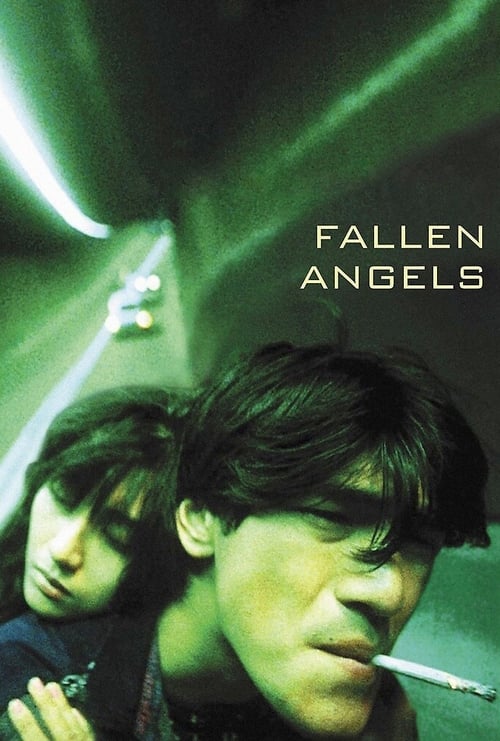
The film ends with the grieving Agent riding on the back of Ho Chi-Wu's motorcycle. She explicitly acknowledges the warmth of this brief encounter, despite knowing the journey through the city tunnel will soon end.
Philosophical Questions
Is it better to relinquish control to fate, or to claim agency even if it leads to destruction?
The Hitman initially loves his job because he doesn't have to make decisions; his life is entirely planned by others. The film explores this tension by showing his eventual desire to seize agency and make a choice of his own—a choice that ironically leads directly to his tragic death, challenging the viewer to decide if the freedom of choice is worth the ultimate cost.
If all human connections are temporary, do they still have meaning?
He Zhiwu frequently points out that everything, including relationships, has an 'expiration date.' The film explores this existential dread but concludes on a hopeful note: despite the inevitable end of connections, the temporary, fleeting warmth they provide is profoundly meaningful and what makes life endurable.
How can one be completely isolated while surrounded by millions of people?
The film investigates the paradox of urban proximity versus emotional isolation. Through extreme wide-angle lenses, the film visually represents this philosophical gap, depicting characters who are physically close in cramped, crowded spaces but emotionally oceans apart, unable to truly reach one another.
Core Meaning
Wong Kar-Wai explores the profound existential loneliness of urban life, where physical proximity in a densely populated city contrasts sharply with deep emotional isolation. The film suggests that human connections are inherently fleeting and elusive, shaped by missed opportunities and the inability to effectively communicate one's true feelings. It reflects the anxieties of 1995 pre-Handover Hong Kong—a transient city in flux—by depicting characters who are trapped in repetitive cycles, yearning for love and identity but ultimately resigning to the unpredictable, temporary nature of life and relationships.