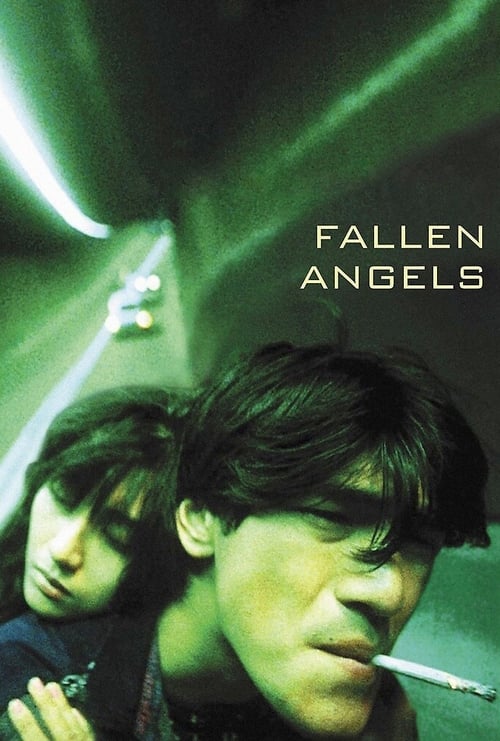
Fallen Angels
A neon-drenched neo-noir dreamscape exploring profound urban loneliness and the desperate yearning for connection. Characters drift like phantoms through the distorted nightscapes of Hong Kong, forever crossing paths yet remaining emotionally isolated.
Fallen Angels

Fallen Angels

墮落天使

"The night's full of weirdos."

06 September 1995 Hong Kong 98 min ⭐ 7.7 (1,247)
Director: Wong Kar-Wai
Cast: Leon Lai Ming, Michele Reis, Takeshi Kaneshiro, Charlie Yeung Choi-Nei, Karen Mok Man-Wai
Crime Action Romance
Urban Alienation and Loneliness Unrequited Love and Missed Connections The Transient Nature of Time and Memory Existentialism and Lack of Agency

Overview

Originally conceived as the third act of Chungking Express, Fallen Angels (1995) is a fragmented neo-noir crime drama set in the nocturnal underbelly of pre-Handover Hong Kong. The film follows two distinct, intertwining storylines featuring characters who exist on the fringes of society, navigating lives filled with danger, isolation, and unrequited love.

The first narrative thread centers around Wong Chi-Ming, a disillusioned hitman longing to escape the criminal underworld, and his unnamed female Agent, who maps out his hits, cleans his apartment, and nurses a deep, obsessive infatuation with him despite their strict professional rule against emotional involvement. The second thread follows Ho Chi-Wu, a mute, eccentric ex-convict who breaks into closed businesses at night to run them, and Charlie, a mentally unstable woman obsessively searching for 'Blondie,' the woman who stole her ex-boyfriend.

Told with Wong Kar-Wai's signature blend of melancholy and cool, the film emphasizes mood and atmosphere over traditional narrative structure. As the characters cross paths in cramped noodle shops, empty subway cars, and neon-lit streets, the film paints a vibrant yet deeply lonely portrait of a chaotic city where physical proximity rarely translates to emotional intimacy.
Core Meaning

Wong Kar-Wai explores the profound existential loneliness of urban life, where physical proximity in a densely populated city contrasts sharply with deep emotional isolation. The film suggests that human connections are inherently fleeting and elusive, shaped by missed opportunities and the inability to effectively communicate one's true feelings. It reflects the anxieties of 1995 pre-Handover Hong Kong—a transient city in flux—by depicting characters who are trapped in repetitive cycles, yearning for love and identity but ultimately resigning to the unpredictable, temporary nature of life and relationships.

Thematic DNA

Urban Alienation and Loneliness 35%
Unrequited Love and Missed Connections 30%
The Transient Nature of Time and Memory 20%
Existentialism and Lack of Agency 15%

Urban Alienation and Loneliness

The bustling, crowded city of Hong Kong serves as a backdrop for intense isolation. The characters are constantly surrounded by millions of people in claustrophobic environments, yet they remain emotionally stranded, desperately seeking warmth in fleeting, nocturnal encounters.

Unrequited Love and Missed Connections

Romantic feelings in the film are rarely mutual or timed correctly. The Agent's obsession with the Hitman, Ho Chi-Wu's brief romance with Charlie, and Charlie's obsession with her ex all highlight the tragedy of one-sided affection and the painful distance between partners.

The Transient Nature of Time and Memory

Echoing the anxieties of pre-Handover Hong Kong, relationships and moments have expiration dates. Characters struggle to hold onto memories or let them go, reflecting a broader temporal anxiety where nothing in the city is permanent.

Existentialism and Lack of Agency

Characters often surrender to fate or allow others to make decisions for them. Wong Chi-Ming stays a hitman because he is a 'lazy person' who likes others to arrange things for him, symbolizing a broader existential paralysis until he makes a fatal choice of his own.

Character Analysis

Wong Chi-Ming

Leon Lai

Archetype: The Disillusioned Antihero
Key Trait: Nihilistic and detached

Motivation

To find a way out of his dangerous, predetermined life and eventually make a choice of his own, breaking free from his existential 'laziness.'

Character Arc

He starts as a detached, professional killer who avoids emotional entanglements. As the film progresses, he grows weary of the violence and his lack of agency, ultimately attempting to quit the business and take control of his fate. Ironically, his first true independent decision leads directly to his tragic downfall.

The Killer's Agent

Michele Reis

Archetype: The Obsessive Lover
Key Trait: Voyeuristic and melancholic

Motivation

To connect with and possess Wong Chi-Ming, desperately trying to bridge the vast emotional distance between them.

Character Arc

She operates in the shadows, strictly managing the Hitman's schedule while secretly obsessing over him. When he abruptly severs their partnership, her unrequited love curdles into a vindictive grief. She arranges his final, fatal job before finding a fleeting, bittersweet moment of solace with another lonely soul at the film's conclusion.

Ho Chi-Wu (He Zhiwu)

Takeshi Kaneshiro

Archetype: The Eccentric Outcast
Key Trait: Mute, playful, and optimistic

Motivation

To find genuine companionship, make people happy through his forced entrepreneurial endeavors, and stave off his own deep loneliness.

Character Arc

Mute since childhood, he lives a bizarre nocturnal life breaking into stores to run them. He falls deeply in love with Charlie, acting as her emotional crutch. Eventually, he must accept that his feelings are unreciprocated when she moves on and forgets him, yet he manages to maintain his resilient, optimistic outlook.

Charlie

Charlie Yeung

Archetype: The Heartbroken Scorned Woman
Key Trait: Manic and emotionally dependent

Motivation

To exact revenge on 'Blondie' and cope with the overwhelming pain of romantic rejection.

Character Arc

Introduced as deeply unstable and manic, she is obsessed with hunting down her ex-boyfriend's new lover ('Blondie'). She uses Ho Chi-Wu to cope until she eventually recovers from her heartbreak. By the end, she transforms into a completely different, put-together professional woman who coldly no longer recognizes their past connection.

Symbols & Motifs

The Ultra Wide-Angle Lens

Meaning:

It symbolizes emotional distance, the distortion of reality, and the paradox of physical closeness versus psychological isolation.

Context:

Used extensively by cinematographer Christopher Doyle, it stretches the characters' faces and distorts their surroundings, creating a claustrophobic yet detached feeling, particularly when characters are in cramped locations like noodle shops or subway cars.

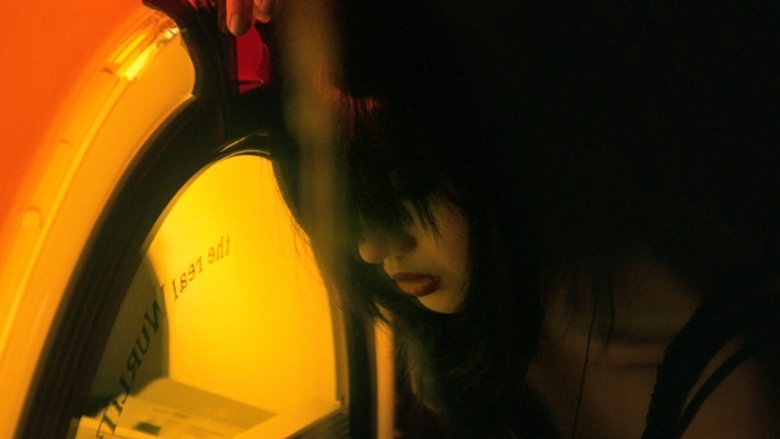
The Jukebox and the Song 'Forget Him'

Meaning:

It represents the inability to let go of the past, emotional expression through secondary mediums, and the pain of severing interpersonal ties.

Context:

The Hitman uses the song 'Forget Him' on the jukebox to communicate his desire to end his partnership with the Agent, entirely avoiding a direct, verbal confrontation about their feelings.

The Agent's Cleaning and Trash Sifting

Meaning:

These acts symbolize voyeuristic intimacy, unrequited love, and a desperate, unconventional attempt to bridge an emotional gap.

Context:

The Agent meticulously cleans the Hitman's apartment and sifts through his garbage to feel physically close to him and decipher his life, highlighting the tragic lengths she goes to for a one-sided connection.

The Motorcycle

Meaning:

The motorcycle symbolizes fleeting intimacy, temporary escape, and the transient nature of human connection.

Context:

The film ends with the grieving Agent riding on the back of Ho Chi-Wu's motorcycle. She explicitly acknowledges the warmth of this brief encounter, despite knowing the journey through the city tunnel will soon end.

Memorable Quotes

I'm a lazy person. I like people to arrange things for me. That's why I need a partner.

— Wong Chi-Ming

Context:

Spoken in a voiceover, establishing his philosophical approach to his dangerous profession and his distant relationship with his Agent.

Meaning:

This quote reflects his existential passivity and reliance on the Agent. It contrasts sharply with his character's later, fatal desire to finally make a choice for himself and reclaim his agency.

We rub shoulders with many people everyday. Some may become close friends, or confidants. That's why I'm always optimistic.

— He Zhiwu

Context:

Delivered via voiceover narration as he discusses the transient nature of life in Hong Kong and his fleeting interactions with strangers in the night.

Meaning:

This captures the overarching theme of the film: the random, transient nature of urban encounters and the inherent hope for human connection amid a sea of profound loneliness.

The best thing about my profession is that there's no need to make any decision. Who's to die... when... where... it's all been planned by others.

— Wong Chi-Ming

Context:

Spoken in voiceover as he reflects on the emptiness and functional ease of his life as an underground assassin.

Meaning:

Highlights the theme of lost agency and the dark allure of relinquishing personal control in a chaotic, overwhelming world.

Although I know this journey home isn't very long, and very soon, I'll have to get off. But at this moment, I feel such warmth.

— The Killer's Agent

Context:

The final line of the film, spoken in voiceover as she rides on the back of He Zhiwu's motorcycle through a tunnel.

Meaning:

A beautiful, melancholic summation of the film's thesis: human connections may be painfully brief and ultimately doomed to end, but the warmth they provide in the present moment is deeply valuable and necessary for survival.

Philosophical Questions

Is it better to relinquish control to fate, or to claim agency even if it leads to destruction?

The Hitman initially loves his job because he doesn't have to make decisions; his life is entirely planned by others. The film explores this tension by showing his eventual desire to seize agency and make a choice of his own—a choice that ironically leads directly to his tragic death, challenging the viewer to decide if the freedom of choice is worth the ultimate cost.

If all human connections are temporary, do they still have meaning?

He Zhiwu frequently points out that everything, including relationships, has an 'expiration date.' The film explores this existential dread but concludes on a hopeful note: despite the inevitable end of connections, the temporary, fleeting warmth they provide is profoundly meaningful and what makes life endurable.

How can one be completely isolated while surrounded by millions of people?

The film investigates the paradox of urban proximity versus emotional isolation. Through extreme wide-angle lenses, the film visually represents this philosophical gap, depicting characters who are physically close in cramped, crowded spaces but emotionally oceans apart, unable to truly reach one another.

Alternative Interpretations

The Purgatory Reading: Some critics interpret the distorted, exclusively nocturnal Hong Kong of Fallen Angels as a literal or metaphorical purgatory. The characters are 'fallen angels' trapped in endless loops of repetition—the Hitman repeating assassinations, the Agent repeating her voyeuristic rituals, and He Zhiwu repeatedly breaking into stores. The extreme wide-angle distortion creates a dreamlike, unearthly atmosphere, suggesting these are lost souls who cannot ascend until they make a genuine connection or embrace death.

The Handover Allegory: The film is frequently read as a sociopolitical allegory for the 1997 handover of Hong Kong to China. The characters' lack of agency, profound displacement, and desperate search for identity mirror the anxieties of Hong Kong citizens transitioning from British to Chinese rule. The Hitman's desire to quit but ultimate tragic fate can be seen as a pessimistic view of the city's future, while the fleeting warmth found by the Agent at the end suggests a need to embrace temporary comforts amid inevitable, uncontrollable change.

The Metacinematic Dream: Another interpretation posits that the characters are projections of Wong Kar-Wai's own filmmaking process, existing in a shared metacinematic universe with Chungking Express. Wong himself stated the characters are 'inter-reversible.' He Zhiwu might literally be Cop 223 from the previous film, having suffered a mental break. The constant presence of the camera, the voiceovers, and the direct addresses to the audience break the fourth wall, implying the characters are aware they are performing in a tragic spectacle.

Cultural Impact

Fallen Angels has achieved a massive cult following and is widely regarded as a quintessential text of 1990s international cinema. Released in 1995, just two years before the handover of Hong Kong to China, the film acts as a vital cultural time capsule. It perfectly encapsulates the collective anxiety, transience, and existential dread of a city bracing for a monumental sociopolitical identity shift.

Its visual aesthetic—crafted by Wong Kar-Wai and cinematographer Christopher Doyle—revolutionized independent and art-house cinema. The heavy use of extreme wide-angle lenses, neon-drenched nightscapes, jump cuts, and step-printing established a 'grunge' neo-noir aesthetic that profoundly influenced countless filmmakers, music videos, and the emerging MTV generation. Directors like Barry Jenkins (Moonlight) and the Safdie Brothers have cited Wong's kinetic, emotionally saturated visual language as a major inspiration.

While initially overshadowed by its more accessible sister film, Chungking Express, critical reappraisal has elevated Fallen Angels as its equally brilliant, darker counterpart. It is celebrated for its postmodern pastiche, blending genres from hyper-violent heroic bloodshed to melancholic romantic comedy. Today, its iconic stills of alienated, beautiful people chain-smoking in neon-lit diners are deeply embedded in internet pop culture, continuing to resonate strongly with a modern generation navigating their own urban alienation.

Audience Reception

Audience reception of Fallen Angels has evolved significantly over the years. Upon its initial release, some viewers criticized it as an exercise in style over substance, feeling that its fragmented narrative and extreme visual distortion were self-indulgent or too closely mirrored Chungking Express without offering the same charm. The hyper-kinetic camera work and non-linear, dual-plot structure left some traditional audiences feeling alienated and disoriented.

However, over the decades, the film has garnered near-universal acclaim among cinephiles and holds very high ratings on aggregate sites like Rotten Tomatoes and Letterboxd. Modern audiences heavily praise Christopher Doyle's breathtaking, neon-drenched cinematography, noting that the 'style' actually perfectly communicates the 'substance' of urban isolation. Takeshi Kaneshiro's eccentric performance is frequently highlighted as a source of much-needed levity and heart amidst the grim underworld setting.

While the graphic violence and the Hitman's nihilistic storyline can still be polarizing for those expecting a pure romance, the overall verdict is that Fallen Angels is a masterpiece of mood. Viewers celebrate it as a mesmerizing, intoxicating, and deeply emotional experience that perfectly captures the profound loneliness of being young, lost, and yearning for love in a chaotic metropolis.

Interesting Facts

  • The film was originally conceived as the third story in Wong Kar-Wai's previous film, Chungking Express (1994). Due to the cumulative length, Wong decided to split them, making Fallen Angels a standalone feature and a dark spiritual counterpart.
  • Wong Kar-Wai and cinematographer Christopher Doyle deliberately shot almost the entire film at night using ultra wide-angle lenses (specifically a 9.8mm lens) to differentiate it from Chungking Express and give it a darker, highly distorted feel.
  • Takeshi Kaneshiro's character, He Zhiwu, claims to have become mute after eating expired canned pineapples at age five. This is a direct, meta-fictional callback to his character in Chungking Express, Cop 223, who obsessively ate expired canned pineapples.
  • The film features prominent use of the song 'Because I'm Cool' by Nogabe 'Robinson' Randriaharimalala, which is a re-orchestration and sampling of Massive Attack's 'Karmacoma.'
  • The cinematic style heavily features 'step-printing', a technique where the film is shot at a lower frame rate and then printed multiple times to create a jarring, smeared, slow-motion effect that perfectly conveys emotional disorientation.

Easter Eggs

Expired Canned Pineapples

Takeshi Kaneshiro's character became mute from eating expired pineapples. This directly references his character Cop 223 from Chungking Express, who eats expired pineapples to cope with a brutal breakup.

Takeshi Kaneshiro's Character Name

His character is named He Zhiwu (Ho Chi-Wu), the exact same name as his character in Chungking Express. Wong Kar-Wai has stated the films are counterparts, representing the bright and dark sides of Hong Kong.

The Number 223

He Zhiwu's prison convict number is 223, another sly nod to Takeshi Kaneshiro's police badge number, Cop 223, in Chungking Express.

'Blondie' the Antagonist

The woman Charlie frantically searches for is named 'Blondie,' which serves as a thematic visual link to Brigitte Lin's iconic blonde-wigged drug smuggler character from Chungking Express.

⚠️ Spoiler Analysis

Click to reveal detailed analysis with spoilers

Frequently Asked Questions

Explore More About This Movie

Dive deeper into specific aspects of the movie with our detailed analysis pages

Comments (0)

Leave a comment

No comments yet. Be the first to share your thoughts!