Fantozzi
Fantozzi: White Collar Blues - Symbolism & Philosophy
Symbols & Motifs
The "Megaditta" (Mega-company)
The Mega-company, with its faceless hierarchy culminating in a "Galactic Mega-Director," symbolizes the oppressive, dehumanizing nature of modern corporate capitalism. It is an all-encompassing entity that dictates every aspect of its employees' lives, both professional and personal, demanding total submission.
The entire film is set against the backdrop of the Megaditta. Its power is shown through the absurd rituals it imposes, such as the mandatory Christmas poems, the worship of a director's mother's statue, and the pseudo-events organized by Filini that are extensions of the corporate culture of suffering.
Fantozzi's Bianchina Car
The tiny, perpetually battered Autobianchi Bianchina represents Fantozzi's social status and his fragile dignity. It is a symbol of the lower-middle class, constantly being crushed and abused by the larger, more powerful forces of the world, much like its owner.
The car appears in multiple scenes where it suffers immense damage, most notably when Fantozzi tries to impress Signorina Silvani and ends up in an altercation where his car is brutally dismantled by thugs. The destruction of his car mirrors the destruction of his hopes and pride.
The Office Attire (Beret and Suit)
Fantozzi's uniform of a tight-fitting suit, trousers pulled high above the waist, and a floppy beret symbolizes his identity as a conformist clerk (ragioniere). It's the visual representation of his meekness, his lack of style, and his complete absorption into his corporate role, making him a generic, forgettable figure.
This is Fantozzi's consistent look throughout the film and the entire saga. It defines him visually and socially, instantly placing him within a specific, powerless Italian social class of the 1970s.
The Company Outings (Calcio, Skiing)
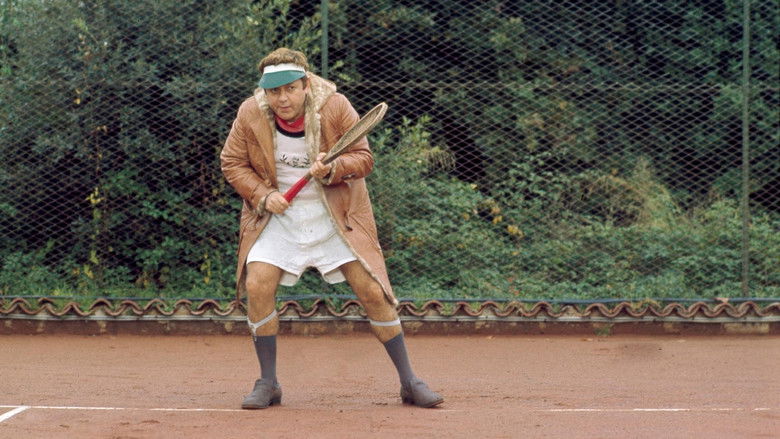
The disastrous recreational events organized by Filini, such as the muddy soccer match or the catastrophic skiing trip in Courmayeur, symbolize the illusion of corporate camaraderie. They are presented as opportunities for fun but are, in reality, extensions of the workplace's misery, hierarchy, and suffering, mandated and inescapable.
In these episodes, Fantozzi and his colleagues endure freezing weather, physical injury, and extreme humiliation, all under the guise of leisure. The events are not escapes from work but rather grotesque parodies of freedom organized by the company culture itself.
Philosophical Questions
What is the nature of dignity in a dehumanizing system?
The film constantly questions whether an individual can retain dignity when placed in a system designed to strip it away. Fantozzi's every action is a struggle for a shred of self-respect. He lies about being a national ski champion, tries to impress a woman who despises him, and attempts to stand up for his daughter. His most poignant moment of dignity comes when he quietly rescues his daughter from the mockery of his bosses at Christmas. Yet, his ultimate submission to the Mega-Director, choosing to become an office pet for a semblance of security, suggests that in his world, true dignity is an unaffordable luxury, ultimately sacrificed for survival.
Is servility a choice or a survival mechanism?
"Fantozzi" explores the fine line between choosing to be obsequious and being forced into it by circumstance. The characters, especially Fantozzi and Calboni, demonstrate different approaches. Calboni's servility is a calculated, successful tool for advancement. Fantozzi's, however, is a clumsy, ingrained response to constant fear and intimidation. The film asks whether he is responsible for his own debasement or if the corporate structure leaves him no other option. The ending suggests the latter, as even his revolutionary spark is easily extinguished, implying that the system itself shapes individuals into the servile beings it requires.
Where is the line between comedy and tragedy?
The film deliberately blurs this line. The audience laughs at Fantozzi's extreme physical comedy and absurd misfortunes, which are often presented in a surreal, cartoonish manner. However, the underlying reality is one of profound sadness, loneliness, and despair. Paolo Villaggio himself stated the character wasn't just comedic but reflected a sad condition. The film forces the viewer to confront their own laughter: are we laughing at a clown's antics, or are we laughing at the painful, relatable humiliation of a broken man? This tension makes the comedy deeply unsettling and memorable.
Core Meaning
The core meaning of "Fantozzi" is a sharp, satirical critique of the alienation and dehumanization of the middle-class worker in 1970s Italy. Director Luciano Salce and creator Paolo Villaggio use grotesque comedy and surreal slapstick to expose the oppressive corporate hierarchy and the soul-crushing servility it demands. Fantozzi is not just a clumsy man; he is the product of a system that rewards sycophancy and punishes individuality. The film's message is a pessimistic yet poignant commentary on the loss of dignity in the face of bureaucratic power, where even rebellion is ultimately co-opted and neutralized by the very system it opposes. Fantozzi's endless cycle of humiliation serves as a tragic mirror for a society grappling with the false promises of the post-war economic boom.