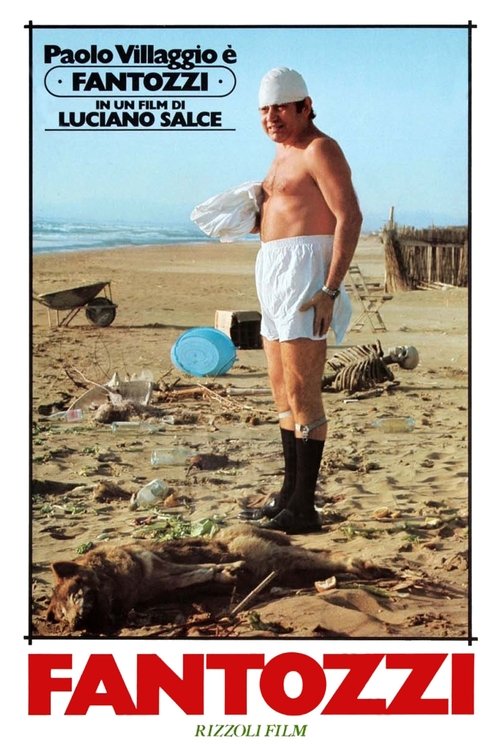
Fantozzi: White Collar Blues
A grotesque tragicomedy painting the soul-crushing servility of corporate life, feeling like a perpetual, clumsy fall down an endless flight of bureaucratic stairs.
Fantozzi: White Collar Blues

Fantozzi: White Collar Blues

Fantozzi

27 March 1975 Italy 108 min ⭐ 7.8 (852)
Director: Luciano Salce
Cast: Paolo Villaggio, Anna Mazzamauro, Gigi Reder, Giuseppe Anatrelli, Umberto D'Orsi
Comedy
Alienation and Dehumanization Social Hierarchy and Servility The Tragicomedy of the Everyman Failed Rebellion

Overview

"Fantozzi" chronicles the humiliating and hilariously disastrous life of Ugo Fantozzi, a meek and chronically unlucky accountant working for a monolithic, oppressive corporation called the "Megaditta" (Mega-company). The film, structured as a series of episodic vignettes, follows Fantozzi's daily struggles, from his frantic, precisely timed morning routine to catch the bus, to his pathetic attempts to curry favor with superiors and win the affection of his seductive colleague, Signorina Silvani.

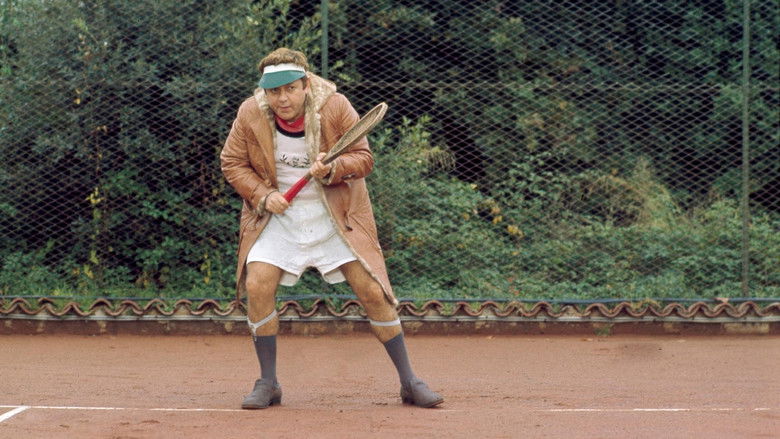
Organized by his equally hapless colleague Filini, Fantozzi's free time is no less calamitous, filled with dreadful company outings, freezing 6 a.m. tennis matches, and humiliating New Year's Eve parties. Each attempt to assert himself or find a moment of joy results in catastrophic failure and public disgrace. He is a man perpetually at odds with the world, a symbol of the downtrodden white-collar worker crushed by a dehumanizing system and his own profound ineptitude.

Core Meaning

The core meaning of "Fantozzi" is a sharp, satirical critique of the alienation and dehumanization of the middle-class worker in 1970s Italy. Director Luciano Salce and creator Paolo Villaggio use grotesque comedy and surreal slapstick to expose the oppressive corporate hierarchy and the soul-crushing servility it demands. Fantozzi is not just a clumsy man; he is the product of a system that rewards sycophancy and punishes individuality. The film's message is a pessimistic yet poignant commentary on the loss of dignity in the face of bureaucratic power, where even rebellion is ultimately co-opted and neutralized by the very system it opposes. Fantozzi's endless cycle of humiliation serves as a tragic mirror for a society grappling with the false promises of the post-war economic boom.

Thematic DNA

Alienation and Dehumanization 35%
Social Hierarchy and Servility 30%
The Tragicomedy of the Everyman 25%
Failed Rebellion 10%

Alienation and Dehumanization

Fantozzi is treated less like a human and more like a number within the colossal "Megaditta." His invisibility is starkly illustrated when he is accidentally walled into an old bathroom for eighteen days without anyone noticing his absence. This theme is woven through every aspect of his life, from the mechanized, desperate morning rush to the way his superiors, like the "Galactic Mega-Director," view employees as mere objects—Fantozzi ultimately accepts becoming a human fish in the director's aquarium as a form of promotion.

Social Hierarchy and Servility

The film is a ruthless satire of Italy's rigid social and corporate structures. Characters are constantly jockeying for position through acts of extreme sycophancy. This is seen in the employees' fawning over superiors like Conte Catellani, deliberately losing to him at billiards for a promotion, or bowing to a statue of his mother. Fantozzi's own servility is both a survival mechanism and a source of his tragedy, as his attempts to play the game are always too clumsy to succeed. The film mocks the idea that loyalty and hard work are rewarded, suggesting instead that only cunning obsequiousness leads to advancement.

The Tragicomedy of the Everyman

Fantozzi is the ultimate anti-hero, an archetype of the average, perpetually frustrated man. His life is a series of failures, but they are presented with such surreal and exaggerated humor that they become comedic. Yet, beneath the slapstick lies a deep sadness. Whether it's the humiliation of his daughter at the company Christmas party or his doomed attempts to romance Signorina Silvani, his struggles are relatable, reflecting the quiet desperation of a life without satisfaction or success. We laugh at him, but also with a sense of empathy for the "Fantozzi" within everyone.

Failed Rebellion

In the film's final act, Fantozzi, influenced by a Marxist colleague, has a moment of political awakening. He rebels, smashing a window and decrying the company as exploitative. However, his rebellion is short-lived. Summoned by the god-like Galactic Mega-Director, he is easily placated with condescending rhetoric and convinced to return to his docile state, accepting his place as an ornamental fish in the corporate aquarium. This theme underscores the film's pessimistic view that true change is impossible, as the system is powerful enough to absorb and neutralize any threat.

Character Analysis

Ugo Fantozzi

Paolo Villaggio

Archetype: Antihero / The Everyman
Key Trait: Servile

Motivation

His primary motivations are survival within the oppressive company, the desperate pursuit of the unattainable Signorina Silvani, and a pathetic, deeply buried desire for a shred of human dignity.

Character Arc

Fantozzi's path is tragically circular. He begins and ends as a powerless, humiliated cog in the corporate machine. His arc is a series of desperate attempts to achieve small victories—a date with Silvani, a promotion, a moment of dignity—that invariably end in catastrophic failure. A brief, politically-charged rebellion near the end offers a glimmer of change, but he is swiftly and easily manipulated back into a state of willing submission, ultimately accepting a life as the Mega-Director's pet fish.

Signorina Silvani

Anna Mazzamauro

Archetype: The Unattainable Temptress
Key Trait: Opportunistic

Motivation

Her motivation is purely self-interest. She seeks social status, material comfort, and the attention of men she deems worthy, a category to which Fantozzi clearly does not belong.

Character Arc

Signorina Silvani does not have a significant arc. She remains a manipulative, opportunistic, and ultimately disdainful object of Fantozzi's affections. She uses his infatuation to her advantage, accepting his invitations only to humiliate him or abandon him for more appealing prospects like the slick Geometra Calboni. She represents the social and romantic success that is forever beyond Fantozzi's grasp.

Ragionier Filini

Gigi Reder

Archetype: The Bumbling Sidekick / Agent of Misfortune
Key Trait: Meticulously Disorganized

Motivation

Filini is motivated by a desperate need to create and participate in organized social events, believing them to be markers of a fulfilling life, despite the fact they are always catastrophic failures.

Character Arc

Filini is a static character who serves as the primary catalyst for many of Fantozzi's disasters. As the obsessive organizer of the company's miserable recreational activities, he is a 'friend' who consistently leads Fantozzi into situations of extreme suffering and humiliation, from nightmarish New Year's parties to frozen tennis matches. He is as much a victim of the system as Fantozzi, but embraces his role with a pathetic, misguided enthusiasm.

Geometra Calboni

Giuseppe Anatrelli

Archetype: The Rival / The Sycophant
Key Trait: Smarmy

Motivation

Calboni is driven by ambition and a desire for social dominance within the office. He uses his charm and cunning to get ahead, often at Fantozzi's expense.

Character Arc

Calboni is another static character, acting as Fantozzi's direct rival for the affection of Signorina Silvani and for favor with their superiors. He is everything Fantozzi is not: slick, confident, and a master of sycophancy. He effortlessly wins over Silvani and ingratiates himself with management, representing the successful, albeit morally bankrupt, company man.

Symbols & Motifs

The "Megaditta" (Mega-company)

Meaning:

The Mega-company, with its faceless hierarchy culminating in a "Galactic Mega-Director," symbolizes the oppressive, dehumanizing nature of modern corporate capitalism. It is an all-encompassing entity that dictates every aspect of its employees' lives, both professional and personal, demanding total submission.

Context:

The entire film is set against the backdrop of the Megaditta. Its power is shown through the absurd rituals it imposes, such as the mandatory Christmas poems, the worship of a director's mother's statue, and the pseudo-events organized by Filini that are extensions of the corporate culture of suffering.

Fantozzi's Bianchina Car

Meaning:

The tiny, perpetually battered Autobianchi Bianchina represents Fantozzi's social status and his fragile dignity. It is a symbol of the lower-middle class, constantly being crushed and abused by the larger, more powerful forces of the world, much like its owner.

Context:

The car appears in multiple scenes where it suffers immense damage, most notably when Fantozzi tries to impress Signorina Silvani and ends up in an altercation where his car is brutally dismantled by thugs. The destruction of his car mirrors the destruction of his hopes and pride.

The Office Attire (Beret and Suit)

Meaning:

Fantozzi's uniform of a tight-fitting suit, trousers pulled high above the waist, and a floppy beret symbolizes his identity as a conformist clerk (ragioniere). It's the visual representation of his meekness, his lack of style, and his complete absorption into his corporate role, making him a generic, forgettable figure.

Context:

This is Fantozzi's consistent look throughout the film and the entire saga. It defines him visually and socially, instantly placing him within a specific, powerless Italian social class of the 1970s.

The Company Outings (Calcio, Skiing)

Meaning:

The disastrous recreational events organized by Filini, such as the muddy soccer match or the catastrophic skiing trip in Courmayeur, symbolize the illusion of corporate camaraderie. They are presented as opportunities for fun but are, in reality, extensions of the workplace's misery, hierarchy, and suffering, mandated and inescapable.

Context:

In these episodes, Fantozzi and his colleagues endure freezing weather, physical injury, and extreme humiliation, all under the guise of leisure. The events are not escapes from work but rather grotesque parodies of freedom organized by the company culture itself.

Memorable Quotes

Per me... la Corazzata Kotiomkin... è una cagata pazzesca!

— Ugo Fantozzi

Context:

This quote is from the sequel, "Il secondo tragico Fantozzi." After being forced to miss a major Italy vs. England soccer match to attend a screening of Eisenstein's "Battleship Potemkin" for the umpteenth time, Fantozzi finally snaps during the post-film discussion and shouts this iconic line, leading to a 92-minute standing ovation from his colleagues and a short-lived office rebellion.

Meaning:

Translation: "For me... Battleship Potemkin... is a load of crazy crap!" This line, from the second film but capturing the spirit of the first, is Fantozzi's most famous act of rebellion. It's a cry of liberation against the pseudo-intellectual, mandatory corporate culture imposed by his boss, who forces employees to repeatedly watch the classic silent film. It became an iconic phrase in Italy for rejecting imposed, high-brow culture in favor of authentic, personal opinion.

Com'è umano, Lei!

— Ugo Fantozzi

Context:

Fantozzi uses this phrase multiple times throughout the saga when addressing his bosses. For instance, after being psychologically dismantled by the Galactic Mega-Director, he might utter this line as a sign of his complete submission and gratitude for the 'clemency' shown to him.

Meaning:

Translation: "How human you are, Sir!" This is Fantozzi's go-to phrase of fawning servility, uttered to superiors after they have inflicted some form of cruelty or minor concession upon him. It is dripping with irony, highlighting the complete lack of humanity in the corporate hierarchy. It has entered the Italian lexicon as a sarcastic way to comment on a false or condescending display of kindness from someone in power.

Allora, ragioniere, che fa? Batti? / Ma... mi dà del tu? / No, no! Dicevo: batti lei? / Ah, congiuntivo!

— Filini and Fantozzi

Context:

This dialogue occurs just before Fantozzi and Filini begin their disastrous tennis match at 6 a.m. in the freezing fog. The focus on grammatical correctness over the sheer misery of their situation is a hallmark of the film's satirical humor.

Meaning:

Translation: "So, accountant, your serve? / But... are you using the informal 'you'? / No, no! I was saying: is it your serve, sir? / Ah, the subjunctive!" This exchange perfectly encapsulates the pedantic, overly formal, and ultimately ridiculous communication style between the characters. Their attempt to maintain a veneer of professional, educated decorum (by worrying about verb conjugations) during a freezing, miserable tennis match highlights the absurdity of their condition.

Philosophical Questions

What is the nature of dignity in a dehumanizing system?

The film constantly questions whether an individual can retain dignity when placed in a system designed to strip it away. Fantozzi's every action is a struggle for a shred of self-respect. He lies about being a national ski champion, tries to impress a woman who despises him, and attempts to stand up for his daughter. His most poignant moment of dignity comes when he quietly rescues his daughter from the mockery of his bosses at Christmas. Yet, his ultimate submission to the Mega-Director, choosing to become an office pet for a semblance of security, suggests that in his world, true dignity is an unaffordable luxury, ultimately sacrificed for survival.

Is servility a choice or a survival mechanism?

"Fantozzi" explores the fine line between choosing to be obsequious and being forced into it by circumstance. The characters, especially Fantozzi and Calboni, demonstrate different approaches. Calboni's servility is a calculated, successful tool for advancement. Fantozzi's, however, is a clumsy, ingrained response to constant fear and intimidation. The film asks whether he is responsible for his own debasement or if the corporate structure leaves him no other option. The ending suggests the latter, as even his revolutionary spark is easily extinguished, implying that the system itself shapes individuals into the servile beings it requires.

Where is the line between comedy and tragedy?

The film deliberately blurs this line. The audience laughs at Fantozzi's extreme physical comedy and absurd misfortunes, which are often presented in a surreal, cartoonish manner. However, the underlying reality is one of profound sadness, loneliness, and despair. Paolo Villaggio himself stated the character wasn't just comedic but reflected a sad condition. The film forces the viewer to confront their own laughter: are we laughing at a clown's antics, or are we laughing at the painful, relatable humiliation of a broken man? This tension makes the comedy deeply unsettling and memorable.

Alternative Interpretations

While on the surface "Fantozzi" is a slapstick comedy, it can be interpreted through a more critical, socio-political lens as a profound critique of class struggle. Some analysts view Fantozzi not merely as a loser, but as a tragic figure in a Marxist sense: a worker completely alienated from his labor and his own humanity. His failed rebellion at the end is seen not just as a comedic punchline, but as a deeply pessimistic statement on the inability of the working class to overcome the ideological power of capitalism. The Galactic Mega-Director's patronizing rhetoric successfully co-opts Fantozzi's anger, convincing him that being part of the system, even in the most humiliating way (as an aquarium fish), is the highest aspiration.

Another interpretation views the film as an existential comedy. Fantozzi's struggles are not just social, but metaphysical. He is a modern Sisyphus, doomed to repeat his failures in an absurd universe. His suffering is constant, and his brief moments of hope only serve to make the subsequent disasters more painful. In this reading, the "Megaditta" is not just a company but a metaphor for life itself—a bureaucratic, illogical, and fundamentally cruel system against which the individual is powerless.

Cultural Impact

"Fantozzi" had a monumental cultural impact in Italy, far transcending its status as a comedy film. The character of Ugo Fantozzi became a national icon, a tragicomic symbol of the Italian everyman crushed by the impersonal forces of corporate bureaucracy and societal expectations in the 1970s. The film's portrayal of the "Megaditta" was a powerful satire of the hierarchical and alienating work culture that emerged from Italy's post-war "economic miracle."

The film's influence permeated the Italian language itself. Phrases like "Com'è umano, Lei!" (How human you are!), and the adjective "fantozziano" (Fantozzi-like) became ingrained in the national lexicon to describe situations of pathetic servility or comically tragic misfortune. The name Fantozzi became shorthand for a loser or a clumsy, unlucky person. The film spawned a saga of ten movies, cementing the character in Italy's collective memory for decades. Critics have re-evaluated the film over time, recognizing it not just as a series of slapstick gags but as a sharp, almost cruel, social critique with literary influences ranging from Kafka to Gogol, making it one of the most significant works of modern Italian comedy.

Audience Reception

Audiences in Italy embraced "Fantozzi" enthusiastically upon its 1975 release, making it a phenomenal box office success that topped the charts for months. Viewers connected deeply with the character's tragicomic struggles, seeing a reflection of their own frustrations with bureaucracy and the anxieties of modern life. The film's slapstick humor and iconic, quotable lines made it immensely popular and led to a long-running franchise. While some viewers may have found the humor crude or the situations too grotesque, the overwhelming response was positive. Over the decades, it has achieved cult status, with generations of Italians knowing the scenes and dialogue by heart, viewing it as a timeless and painfully accurate satire of the Italian workplace and social dynamics.

Interesting Facts

  • The character of Ugo Fantozzi was created by Paolo Villaggio based on his own experiences working as a clerk for the Italsider steel company in Genoa.
  • Initially, Paolo Villaggio did not want to play the main character and offered the role to renowned actors Ugo Tognazzi and Renato Pozzetto, both of whom declined.
  • The actress who played Fantozzi's famously unattractive daughter, Mariangela, was actually a male actor named Plinio Fernando.
  • The term "fantozziano" has officially entered the Italian dictionary, defined as describing a situation or person that is clumsy, submissive, and comically tragic.
  • The film was a massive box office success in Italy, remaining the top-grossing film for eight months after its release in March 1975.
  • The first film adapts stories from two of Villaggio's bestselling books: "Fantozzi" (1971) and "Il secondo tragico libro di Fantozzi" (1974).
  • In the original books, Fantozzi's main companion in misfortune was a character named Fracchia (another of Villaggio's creations), who was replaced by Ragionier Filini in the film series.

⚠️ Spoiler Analysis

Click to reveal detailed analysis with spoilers

Frequently Asked Questions

Explore More About This Movie

Dive deeper into specific aspects of the movie with our detailed analysis pages

Comments (0)

Leave a comment

No comments yet. Be the first to share your thoughts!