霸王别姬
"The passionate triangle of two lifelong friends and the woman who comes between them!"
Farewell My Concubine - Symbolism & Philosophy
Symbols & Motifs
The Sword
The ornate sword symbolizes multiple concepts. Primarily, it represents the ideal of unwavering loyalty and the bond between the King and his Concubine in the opera. It embodies the pinnacle of artistic and personal devotion that Dieyi strives for. It also signifies masculinity, power, and, ultimately, the tragic finality of death, as seen in both the opera's and the film's climax.
The sword first appears when the boys admire it as apprentices. It later comes into the possession of the powerful patron, Master Yuan, who gifts it to Dieyi. Dieyi then gives it to Xiaolou as a wedding present, an act loaded with jealousy and meaning. Juxian later returns the sword to Dieyi just before her suicide. In the final scene, Dieyi uses the sword to take his own life, mirroring the actions of Concubine Yu and making his art and life one.
Peking Opera Makeup
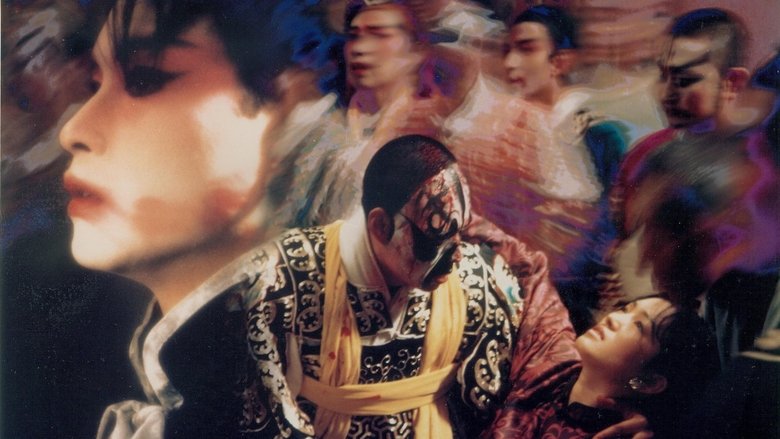
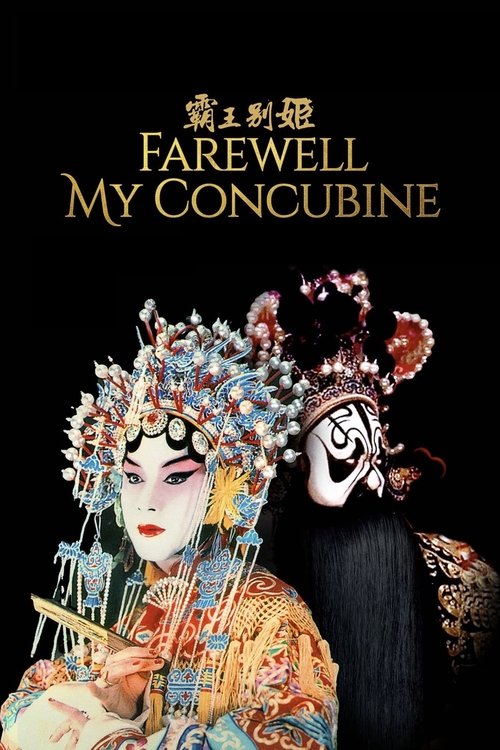
The application of makeup is a ritual of transformation, symbolizing the blurring of identity between the actor and the role. For Dieyi, putting on the concubine's makeup is not just preparation for a performance but an act of becoming his true self. The bold, painted faces represent a world of art and order that contrasts sharply with the chaos and drabness of the real world, especially during the Cultural Revolution.
The film features numerous scenes of the actors meticulously applying their makeup. Dieyi's face, once painted, becomes a mask of feminine beauty and tragic devotion that he rarely takes off emotionally. During the Cultural Revolution, the actors are forced to remove their makeup and wear plain clothes, symbolizing the destruction of their art and identities. The final scene sees them applying the makeup one last time, a return to their shared world before the final tragedy.
The Sixth Finger
Douzi's (young Dieyi's) sixth finger represents a natural abnormality that prevents him from being accepted into the rigid, perfect world of the opera. Its brutal removal by his mother symbolizes a forced conformity and the first of many painful "castrations"—physical and psychological—that shape his identity and force him into his female role.
At the beginning of the film, Dieyi's mother, a prostitute, brings him to the opera school. The master refuses him because of his extra finger. In an act of desperate cruelty, his mother chops off the finger in the snow, allowing him to be accepted into the troupe. This violent act marks his definitive break from his past and the beginning of his painful journey into the world of performance.
Philosophical Questions
Is identity inherent or is it a performance?
The film explores this question through Cheng Dieyi. From the moment his mother chops off his sixth finger to make him "fit" the opera school, his identity is shaped by external forces. He is brutally conditioned to embody a female role to the point where it consumes his sense of self. The film suggests that identity can be a fluid, constructed performance, yet it also shows that this performance has real, profound consequences on one's inner life and desires. Dieyi is most himself when he is performing as the concubine, blurring the very line between being and acting.
Can art survive in the face of totalitarian politics?
"Farewell My Concubine" charts the precarious existence of the Peking Opera through successive oppressive regimes. The art form is first co-opted by patrons and invaders, and later condemned and nearly eradicated by the Communists during the Cultural Revolution. Dieyi believes in the transcendent power of art, willing to perform for any audience. However, the film soberly concludes that art is not immune to politics. It can be suppressed, perverted into propaganda, and its practitioners can be broken. The final scene in the empty arena suggests that while the art form may have survived, its soul has been irrevocably damaged.
What is the cost of survival?
This question is primarily explored through Duan Xiaolou and Juxian. Both are pragmatists who make compromises to endure the horrific events they live through. Xiaolou's survival culminates in the ultimate compromise: betraying the people he loves most to save his own life. Juxian tries to survive by creating a small, private world away from politics, but it's not enough. The film argues that in times of extreme ideological fervor, the cost of survival can be one's own humanity, honor, and love, leaving the survivor as a hollow shell.
Core Meaning
The core meaning of "Farewell My Concubine" is an exploration of the devastating impact of historical and political upheaval on individual lives, art, and identity. Director Chen Kaige uses the intimate story of the three protagonists to paint a grand historical epic, suggesting that personal identity and relationships are fragile constructs, easily shattered by the forces of ideology and societal change. The film questions the nature of identity itself—whether it is innate or performed—by blurring the lines between the stage and reality. Ultimately, it is a profound commentary on the endurance of art, the consuming nature of love and obsession, and the tragedy of lives caught in the crossfire of history, where loyalty and humanity are sacrificed for survival.