Full spoilers follow.
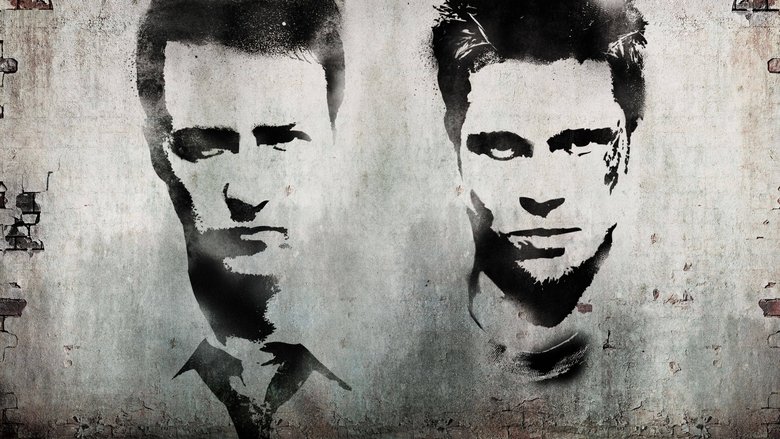
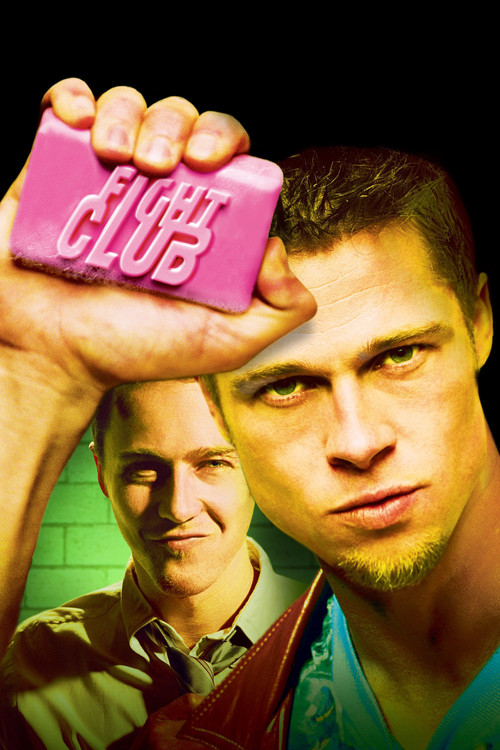
The twist. Tyler Durden does not exist. He is a dissociative projection of the narrator, generated by chronic insomnia, self-hatred and rage. Every act attributed to Tyler was performed by the narrator himself: he blew up his own condo, he founded fight club by beating himself in a parking lot, he slept with Marla, he made the soap, he built Project Mayhem. The revelation arrives when the narrator, chasing Tyler across the country, finds that fight club members everywhere greet him as Tyler — followed by the confrontation in the hotel room where Tyler lays it out and the film replays earlier scenes with Tyler removed: the narrator alone, throwing himself down a staircase, shouting at empty air in front of his horrified boss.
What re-reads. The single-frame splices of Tyler at the photocopier, outside the doctor's office, at the support groups — Fincher showed us the delusion before the delusion arrived. Marla's constant confusion at his behaviour, her comment that he keeps changing personality, the phone call the narrator makes to his own house from a payphone, Tyler's claim to have been created because the narrator wanted to change his life, the recurring line about people you meet on a plane being 'single-serving friends.' Tyler's job splicing pornography into family films is Fincher describing his own technique. Bob's line 'his name is Robert Paulson' after death is the movement finally granting a name only to a corpse — the exact inverse of its own doctrine.
The final act. Realising Project Mayhem intends to detonate the headquarters of the major credit card companies and erase everyone's debt record, the narrator tries to stop it. The space monkeys obey Tyler's prior orders, not his current ones — he has built an organisation immune to his own second thoughts. In the tower, with Marla brought to him by Tyler's men, he understands that killing Tyler requires an act performed on himself: he puts the gun in his own mouth and fires through his cheek, an act of self-destruction that finally acknowledges the gun was always in his own hand. Tyler collapses with an exit wound. The narrator survives, wounded but singular.
The ending. Bleeding, he takes Marla's hand and tells her he is okay, that she met him at a very strange time in his life. Through the window, the credit-company skyscrapers detonate and collapse in sequence, scored to the Pixies' 'Where Is My Mind?'. The victory is deliberately partial: he has reintegrated his psyche and chosen intimacy, but he cannot undo what that psyche built, and the world's financial memory burns anyway. A single frame of pornography flickers over the image before the cut to black — the projectionist's joke, and the film's last reminder that you have been watching a story told by someone who splices things into the reel.
Hidden meaning. The story is not about whether Tyler was right; it is about a man who could not say 'I want' without inventing someone else to say it for him. Every ideology in the film is a detour around a sentence he finally manages in the last thirty seconds.