Fight Club
"Mischief. Mayhem. Soap."
Overview
"Fight Club" follows an unnamed Narrator (Edward Norton), an insomniac automobile recall specialist who is unfulfilled by his white-collar job and consumerist lifestyle. To cope with his emptiness, he begins attending support groups for illnesses he doesn't have, finding a strange sense of release in the presence of genuine suffering. His world is turned upside down when he meets Marla Singer (Helena Bonham Carter), another "tourist" whose presence shatters his therapeutic illusion, and the enigmatic soap salesman Tyler Durden (Brad Pitt).
Following the destruction of his perfectly curated apartment, the Narrator moves in with Tyler, and together they form an underground "fight club" as a radical form of therapy. These bare-knuckle brawls offer a primitive release for men disillusioned with modern society. The concept spirals into a nationwide movement that evolves into the anarchic and anti-corporate "Project Mayhem," pushing the Narrator into a moral crisis as he confronts the escalating chaos and the true nature of his relationship with Tyler.
Core Meaning
The core meaning of "Fight Club" is a satirical critique of consumer culture and the crisis of masculinity in contemporary society. Director David Fincher presents a world where men, emasculated by corporate jobs and a society of "shopping," have lost their sense of purpose and identity. The film explores the rebellion against this sterile existence, questioning the values of a society that defines individuals by their possessions. It posits that the modern man is trapped between the superficial comfort of materialism and a primal yearning for authentic experience, even if that experience is violent and self-destructive. However, the film is not a glorification of this rebellion; it is a cautionary tale about the dangers of unchecked nihilism and fascism, showing how a movement born from a desire for freedom can devolve into a destructive cult. Ultimately, it suggests that true self-knowledge requires confronting and integrating one's own inner darkness, rather than letting it run rampant.
Thematic DNA
Anti-Consumerism and Anti-Capitalism
The film relentlessly critiques the hollowness of a life defined by material possessions. The Narrator's obsession with his IKEA-furnished apartment symbolizes this empty pursuit of happiness through consumption. Tyler Durden's philosophy directly attacks this value system, with Project Mayhem's ultimate goal being the destruction of credit card company headquarters to erase the debt record and reset society. The film argues that advertising creates artificial desires, leaving people in unfulfilling jobs—"slaves with white collars"—to buy things they don't need.
Crisis of Masculinity
"Fight Club" explores the feeling of emasculation experienced by men in a post-industrial, corporate society. Characters feel disconnected from traditional masculine roles like hunting and fighting, reduced to a "generation of spectators." Fight club itself is a way to reclaim a primitive sense of manhood through pain, risk, and physical confrontation. The film examines what happens when this repressed male aggression is unleashed, questioning whether violence is a valid path to reclaiming identity or simply another destructive trap.
Identity, Duality, and Self-Destruction
The film's central theme revolves around the fractured identity of the Narrator, who is so disconnected from himself that he creates an alternate personality, Tyler Durden. Tyler represents everything the Narrator wishes he could be: free, confident, and rebellious. This duality explores the conflict between societal conformity and primal urges. The journey of the film is one of self-discovery, culminating in the Narrator's realization that he must confront his own inner darkness—his "shadow self"—to become whole. The act of fighting is a form of self-destruction that paradoxically leads to a feeling of being alive.
Rebellion and Anarchy vs. Fascism
The film portrays a rebellion against societal norms that begins with individual acts of defiance and escalates into an organized anarchist movement, Project Mayhem. However, it also serves as a cautionary tale. Tyler's leadership becomes increasingly authoritarian, and Project Mayhem's members become mindless followers, trading one form of conformity (consumerism) for another (fascism). The film leaves the message ambiguous, suggesting that while the desire to tear down oppressive systems is understandable, it can easily lead to a new, equally dangerous form of control.
Character Analysis
The Narrator
Edward Norton
Motivation
His primary motivation is to find meaning and feel alive in a world he finds suffocating and inauthentic. He is desperate to escape the numbness of his life and his chronic insomnia, which leads him to support groups and eventually to creating Tyler Durden.
Character Arc
The Narrator begins as a disaffected, emasculated corporate drone trapped in a cycle of insomnia and consumerism. His creation of Tyler Durden allows him to explore his repressed desires for freedom and rebellion. Initially liberated, he becomes horrified by the escalating chaos of Project Mayhem. His arc is about reclaiming his identity by confronting and ultimately rejecting the extremist ideology of his alter ego, culminating in a moment of self-actualization where he 'kills' Tyler to gain control of his own mind.
Tyler Durden
Brad Pitt
Motivation
Tyler is motivated by a desire to destroy modern civilization, which he sees as a soul-crushing machine of consumerism and conformity. He wants to liberate humanity by forcing a return to a more primitive, hyper-masculine state of existence through chaos and destruction.
Character Arc
Tyler Durden is not a real person but a psychological projection of the Narrator. He embodies everything the Narrator lacks: charisma, confidence, and a rebellious spirit. He starts as a liberating mentor figure, introducing the Narrator to a more authentic, visceral way of living. However, his ideology becomes increasingly nihilistic and fascistic as he transforms Fight Club into Project Mayhem. His arc is a descent from a symbol of freedom into a tyrannical figure who must be overcome by the protagonist.
Marla Singer
Helena Bonham Carter
Motivation
Marla is motivated by a raw, often self-destructive, will to survive. She seeks connection and to feel something real, much like the Narrator, but goes about it in a more abrasive and confrontational way. Her attendance at support groups is, as she says, "cheaper than a movie and there's free coffee."
Character Arc
Marla is another "faker" at the support groups whose presence disrupts the Narrator's fragile peace, acting as a catalyst for his psychological break. She is a nihilistic and cynical survivor who reflects the Narrator's own despair. Initially a source of conflict and an object of the Narrator's scorn (and Tyler's desire), she becomes a grounding force. By the end, the Narrator's desire to save her from Project Mayhem's destruction is a key factor in his decision to fight back against Tyler. She represents a connection to reality that he ultimately chooses.
Robert "Bob" Paulsen
Meat Loaf
Motivation
Bob is motivated by a desire to reconnect with his masculinity and find a sense of belonging and purpose after cancer has ravaged his body and identity. He finds in Fight Club a community and a way to feel powerful again.
Character Arc
Bob is a former bodybuilder with testicular cancer, which has caused him to grow large breasts (gynecomastia). The Narrator first meets him at a support group, where they share a moment of genuine emotional release. Bob later joins Fight Club, seeking to reclaim the masculinity he feels he has lost. His death during a Project Mayhem operation is a major turning point for the Narrator, forcing him to see the real, deadly consequences of Tyler's ideology and marking the moment he begins to turn against Project Mayhem.
Symbols & Motifs
Soap
Soap symbolizes a central duality in the film. On one hand, it represents the cleansing of the self from the filth of consumer society, a way to strip away superficiality to get to something real. On the other hand, it represents hypocrisy and the ugly truth behind consumerism, as Tyler makes his luxury soap from human fat liposuctioned from the wealthy—literally selling the rich their own fat asses back to them.
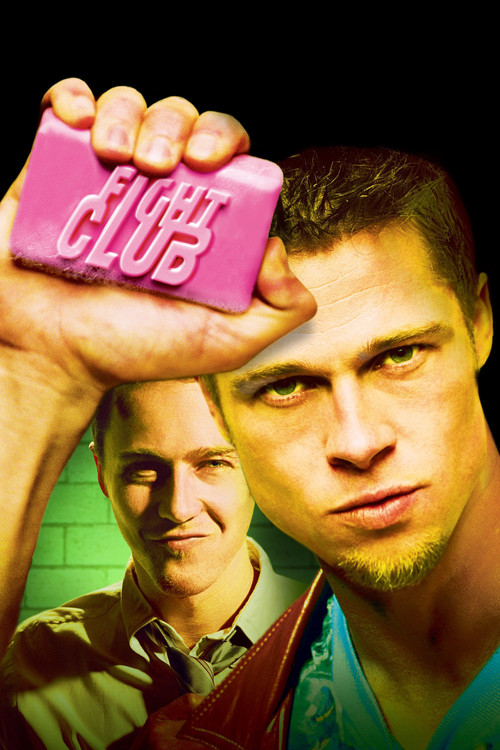
Tyler Durden is a soap salesman. He and the Narrator learn to make soap together, and the pink bar of soap with the "Fight Club" title embossed on it became the film's primary marketing image. Tyler's business, "Paper Street Soap Company," is the financial engine for Project Mayhem.
The Narrator's Apartment vs. Tyler's House
The Narrator's IKEA-filled apartment represents the sterile, conformist, and materialistic life he is trying to escape. It's a prison of consumer goods that promises happiness but provides none. Tyler's dilapidated house on Paper Street is the complete opposite: a symbol of decay, freedom from materialism, and a rejection of societal norms. It is a space of deconstruction where the characters can rebuild themselves.
The film opens with a sequence where the camera moves through the Narrator's apartment as his possessions are virtually cataloged. Its explosion is the inciting incident that forces him to connect with Tyler. He then moves into Tyler's decaying mansion, which becomes the headquarters for Fight Club and Project Mayhem.
Scars and Bruises
Physical pain, scars, and bruises are symbols of authentic experience and being alive in a world that numbs individuals. In the context of the club, they are badges of honor, proof that the members can feel something real, even if it's pain. The chemical burn scar on the Narrator's hand, inflicted by Tyler, serves as a permanent reminder of his connection to Tyler's philosophy and his journey toward enlightenment through pain.
The members of Fight Club return to their mundane jobs with black eyes and broken teeth, a visible sign of their secret rebellion. The scene where Tyler gives the Narrator a chemical burn using lye is a pivotal moment of initiation into his destructive philosophy.
Memorable Quotes
The first rule of Fight Club is: You do not talk about Fight Club. The second rule of Fight Club is: You DO NOT talk about Fight Club!
— Tyler Durden
Context:
Tyler Durden recites the eight rules of Fight Club to the new members in the basement of Lou's Tavern after the club begins to grow. This quote has become a widespread pop culture meme.
Meaning:
This is the film's most iconic line. It establishes the secrecy and sacredness of the club, creating an exclusive community for its members. On a deeper level, it reflects the repressed nature of the men involved; the one thing that gives them an outlet is the one thing they cannot speak about in their normal lives, highlighting the disconnect between their authentic selves and their societal roles.
It's only after we've lost everything that we're free to do anything.
— Tyler Durden
Context:
Tyler says this to the Narrator in Lou's Tavern after the Narrator's apartment, containing all his worldly possessions, has been destroyed in an explosion. It marks a pivotal moment in the Narrator's indoctrination.
Meaning:
This quote encapsulates Tyler's core philosophy of anti-materialism and liberation through destruction. It suggests that attachment to possessions, status, and one's personal history is a form of imprisonment. True freedom, in his view, can only be achieved by hitting rock bottom and letting go of all superficial attachments.
You're not your job. You're not how much money you have in the bank. You're not the car you drive. You're not the contents of your wallet. You're not your fucking khakis. You're the all-singing, all-dancing crap of the world.
— Tyler Durden
Context:
This is part of one of Tyler's philosophical speeches to the members of Fight Club, explaining the purpose of their rebellion against the emptiness of modern life.
Meaning:
This is a direct assault on the consumerist basis of modern identity. Tyler argues that people have become defined by external, material things rather than their intrinsic human worth. The speech is a call to reject these labels and embrace a more chaotic, primal, but perhaps more authentic, sense of self.
I am Jack's complete lack of surprise.
— The Narrator
Context:
The Narrator uses this phrase in his voice-over as he begins to uncover the true, nationwide scale of Project Mayhem and realizes how far out of his control the situation has become. The script name for the character is "Jack."
Meaning:
Throughout the film, the Narrator adopts the phrasing "I am Jack's..." from articles he reads, using it to express his profound sense of detachment and alienation. This particular line, used late in the film, shows his resignation and dawning awareness of the chaos he is embroiled in, signifying a loss of the innocence and shock he felt earlier.
Philosophical Questions
Does modern consumer society strip individuals of their identity and purpose?
The film relentlessly explores this question by portraying its protagonist as an "everyman" who has followed all the rules of society—get a job, buy furniture, build a home—yet feels completely empty and dead inside. Tyler Durden's entire philosophy is a reaction to this, arguing that consumerism has turned people into commodities and that true identity can only be found by destroying the artificial self built on material possessions. The film asks whether we control our possessions or if our possessions control us.
Is violence a legitimate path to self-discovery and authenticity?
"Fight Club" presents physical violence as a way for its characters to feel something real in a numbing world. The pain and risk of the fights provide a visceral, immediate experience that contrasts with the sterile safety of their everyday lives. However, the film complicates this idea by showing how this outlet for violence evolves into the organized, destructive terrorism of Project Mayhem, questioning whether the initial, personal catharsis can be separated from its larger, socially destructive potential. It ultimately critiques violence as a solution, showing it leads to fascism and death.
What is the nature of the self?
The central plot twist—that the Narrator and Tyler are the same person—forces a deep exploration of identity. The film uses the concept of dissociative identity disorder as a metaphor for the fragmented nature of the modern psyche. It draws on Jungian ideas of the "shadow self"—the repressed, darker part of our personality. The film suggests that acknowledging and integrating this shadow is necessary for wholeness, but allowing it to take complete control leads to annihilation. The Narrator's final act of shooting himself to kill Tyler is a paradoxical act of self-destruction for the sake of self-preservation.
Alternative Interpretations
While the primary interpretation focuses on a critique of consumerism and a crisis of masculinity, several alternative readings of "Fight Club" exist.
- A Homoerotic Love Story: Some critics and viewers interpret the relationship between the Narrator and Tyler as having strong homoerotic undertones. The intense physical and psychological intimacy, the domesticity of their life together, and lines like Tyler's "I'm wondering if another woman is really the answer we need" are cited as evidence. In this reading, the film is about a man's struggle with his own repressed sexuality, with Tyler representing a queer desire that the Narrator's conscious mind cannot accept.
- A Critique of Feminism: Another interpretation, often from a critical perspective, sees the film as a backlash against feminism. In this view, the men in Fight Club are rebelling against a perceived societal "feminization" that has left them feeling powerless and obsolete. Marla Singer's character is sometimes seen as a disruptive force that threatens the homosocial male utopia of the club.
- Marla as another Alter Ego: A less common but intriguing theory suggests that Marla, like Tyler, is another personality of the Narrator. Proponents point out that she has very little interaction with other characters and that her self-destructive, cynical nature represents another facet of the Narrator's psyche—perhaps his repressed feminine side or his death drive—that he is also struggling to integrate.
- A Fascist Allegory: Some analyses view the film as an examination of the psychological appeal of fascism. Project Mayhem, with its charismatic leader, mindless followers in uniform, anti-intellectualism, and use of violence to achieve political ends, mirrors the rise of fascist movements. This interpretation sees the film not as an endorsement but as a warning about how easily disaffected individuals can be seduced by extremist ideologies that promise purpose and belonging.
Cultural Impact
Upon its release in 1999, "Fight Club" was a box office disappointment and polarized critics, with many condemning its perceived glorification of violence. However, it quickly found a massive following on DVD, becoming one of the defining cult classics of its generation. The New York Times later dubbed it the "defining cult movie of our time." The film tapped into the anxieties of Generation X, articulating a widespread dissatisfaction with consumerist culture and the corporate work environment at the turn of the millennium.
Its influence on cinema is significant, particularly in its visual style—gritty cinematography, fast-paced editing, and innovative use of CGI—which became a reference point for early 2000s thrillers. The narrative twist ending helped popularize similar plot structures in subsequent psychological films. The film's themes, especially its critique of masculinity and consumerism, have been the subject of extensive academic analysis and debate. While intended as a satire, the character of Tyler Durden has been unironically co-opted by some anti-establishment and men's rights groups, leading to ongoing discussions about the film's complex and sometimes misunderstood message.
Audience Reception
Audiences have had a much warmer and more enduring relationship with "Fight Club" than initial critics. Despite its box office failure, the film became a massive success on home video, achieving a prominent cult status. It holds a very high rating on user-driven sites like IMDb. Audiences praise its compelling story, witty and memorable dialogue, stylish direction, and the strong performances by Norton and Pitt. The film's philosophical undertones and critique of consumerism resonated deeply with many viewers who felt alienated by modern society. However, the film has also been criticized by some audience members for its brutal violence and has been controversial for its perceived misogyny and for being misinterpreted as a straightforward endorsement of toxic masculinity and nihilism, an interpretation that the film's satirical nature attempts to subvert.
Interesting Facts
- Brad Pitt and Edward Norton both actually learned how to make soap for the film.
- In the scene where the Narrator first hits Tyler Durden, Edward Norton was supposed to fake the punch, but director David Fincher secretly told him to actually hit Brad Pitt. Pitt's pained reaction is genuine.
- For his role as Bob, actor Meat Loaf wore a fat suit that weighed over 100 pounds and was filled with birdseed to simulate sagging flesh.
- Brad Pitt voluntarily went to a dentist to have his front teeth chipped for the role of Tyler Durden to better reflect the character's disdain for perfection.
- The film features several quick, single-frame flashes of Tyler Durden on screen before he is formally introduced, foreshadowing that he is a creation of the Narrator's mind.
- The controversial line Marla says after sex with Tyler was originally "I want to have your abortion." A studio executive objected, so director David Fincher agreed to change it on the condition he only had to change it once. He replaced it with the even more shocking "I haven't been fucked like that since grade school," which the executive instantly regretted.
- The breath you see in the cave scene where the Narrator finds his 'power animal' is reportedly recycled footage of Leonardo DiCaprio's breath from "Titanic".
Easter Eggs
A Starbucks coffee cup is visible in nearly every single scene of the film.
Director David Fincher stated this was meant to be a subtle commentary on consumer culture's pervasiveness. According to Fincher, he wanted to show that Starbucks, as a symbol of corporate branding and consumerism, was on its way to taking over every corner of society.
In the opening credits and just before the finale, a single frame of male genitalia is spliced into the film.
This is a direct reference to Tyler Durden's job as a film projectionist, where he would splice single frames of pornography into family films. It acts as a meta-commentary and a subliminal jolt to the audience, mirroring Tyler's disruptive and subversive actions within the film's world.
Tyler Durden's flashes on screen before his introduction.
Before the Narrator formally meets Tyler on a plane, Tyler appears in four single-frame flashes: at the Narrator's office copier, at the doctor's office, at a support group meeting, and as Marla leaves a meeting. These subliminal appearances are a major clue to the film's big twist, suggesting that Tyler is a product of the Narrator's own mind, breaking through into his consciousness.
⚠️ Spoiler Analysis
Click to reveal detailed analysis with spoilers
Frequently Asked Questions
Explore More About This Movie
Dive deeper into specific aspects of the movie with our detailed analysis pages
Comments (0)
No comments yet. Be the first to share your thoughts!