
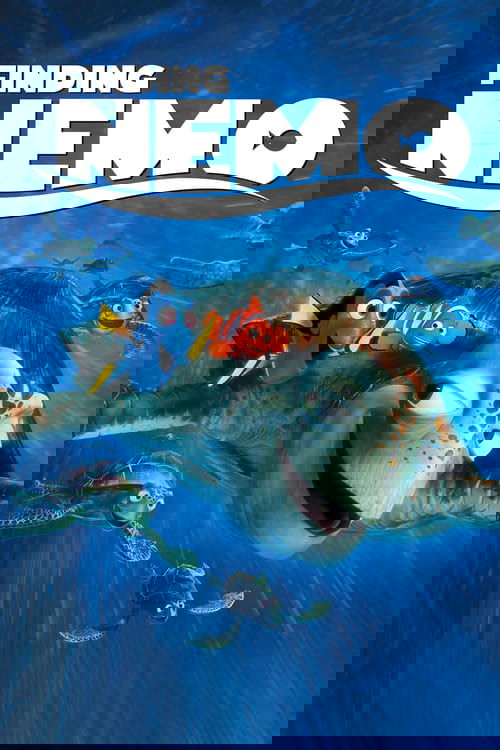
"There are 3.7 trillion fish in the ocean. They're looking for one."
Finding Nemo - Symbolism & Philosophy
Symbols & Motifs
Nemo's 'Lucky Fin'
Symbolizes perceived limitations and the resilience required to overcome them. It represents the scars of the past that Marlin fears but Nemo eventually treats as a badge of courage.
Introduced in the opening scene as a result of the barracuda attack; later used to block the tank filter, proving that his "weakness" is actually a source of strength.
The 'Butt' (Boat)
Symbolizes rebellion and the threshold between childhood and the adult world. It represents the dangerous allure of independence that children seek and parents fear.
Nemo touches the boat as an act of defiance against Marlin's caution, serving as the catalyst for the entire adventure.
The Glass Fish Tank
Represents stagnation and artificial safety. It is a sterile environment that offers protection from the ocean's predators but denies the inhabitants their freedom and natural purpose.
The setting for the B-plot, where Gill and the Tank Gang plot their escape back to the chaotic but authentic ocean.
The EAC (East Australian Current)
Symbolizes letting go and going with the flow of life. It represents the shift from rigid control to trusting the journey.
Marlin must literally dive into a chaotic vortex to make progress, guided by the laid-back wisdom of the sea turtles.
Philosophical Questions
Does total safety negate the meaning of life?
The film explores the existential trade-off between security and experience. Marlin's desire to 'not let anything happen' to Nemo is shown to be equivalent to not letting Nemo 'live' at all, suggesting that risk is the price of meaning.
Is memory the foundation of identity?
Through Dory, the film asks if one can have a soul and a sense of belonging without a past. Dory's identity is forged through her current actions and kindness rather than her history, challenging the idea that we are only the sum of our memories.
Core Meaning
The core of the film explores the transformative power of vulnerability and trust. Director Andrew Stanton sought to illustrate that while the world is undeniably dangerous, overprotection is its own kind of prison. The movie suggests that true love involves empowering those we care about to face the world on their own terms, rather than shielding them from every possible harm. It is a meditation on the five stages of grief, as Marlin must move from the trauma of his past to an acceptance of life's inherent uncertainties.