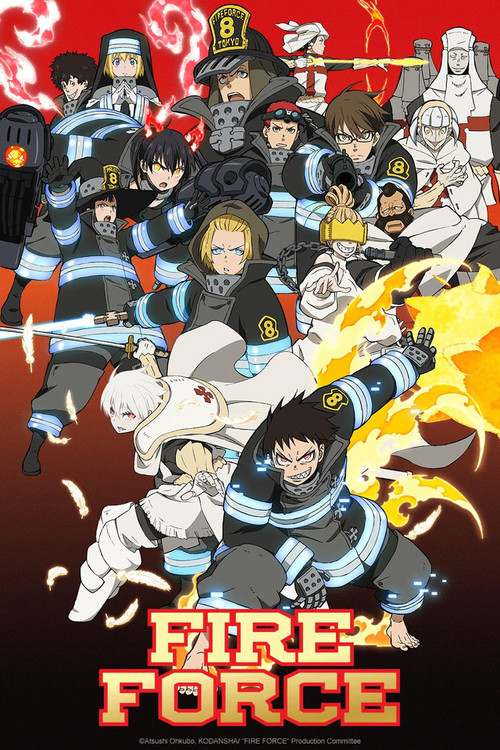
炎炎ノ消防隊
Fire Force - Symbolism & Philosophy
Symbols & Motifs
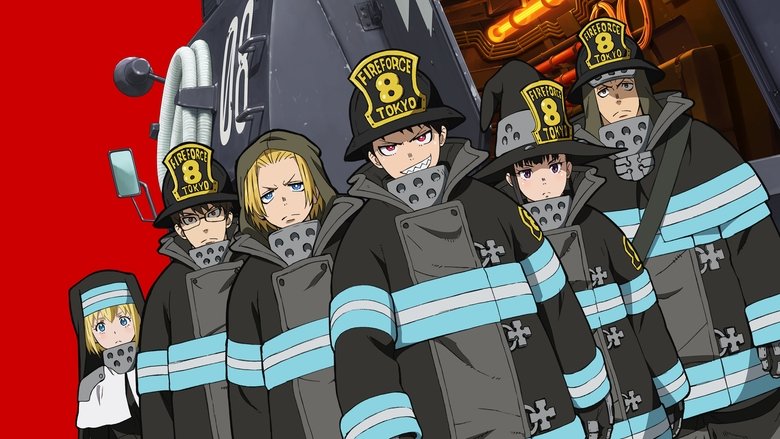
Blue Stripes (Fire Force Uniform)
They symbolize the bonds between teammates and the line between life and death. The glowing blue represents the high temperature of purity and the solidarity required to face the inferno.
Captain Obi emphasizes that the stripes connect them in the smoke; they are a visual anchor in the chaotic, dark visuals of the Nether and battle scenes.
Látom
A prayer word (equivalent to "Amen") used to sanctify the souls of Infernals. It represents the mercy shown to victims who have lost their humanity.
Spoken by Sisters (like Iris) during the exorcism of Infernals, turning a violent act of killing into a sacred rite of passage.
The Smiling/Grinning Moon
A symbol of madness and a direct visual connection to the creator's previous work, Soul Eater. It represents the intrusion of the surreal into reality.
It appears frequently in the sky during key Adolla Link moments and becomes a permanent fixture in the sky during the series' climax.
Amaterasu
The source of all energy in Tokyo, symbolizing the sacrifice required to maintain order. It represents the false idol of the current civilization.
A giant thermal power plant worshipped by the Holy Sol Temple, later revealed to be powered by a human sacrifice (the First Pillar).
Philosophical Questions
Does faith require truth to be valuable?
The series reveals the Holy Sol Temple is built on a lie, yet the comfort it provides is real. Characters like Iris struggle with whether to maintain the rituals that give people hope or to destroy the institution because of its corrupt origins.
Is a world of order preferable to a world of chaotic freedom?
The Evangelist seeks a unified, still world of death (Adolla), while Shinra fights for a world that is messy, dangerous, but alive. The ending explicitly chooses 'madness' (chaos/individuality) over the sterile 'order' of the villains.
What defines a hero?
Shinra is naturally feared, while the corrupt captains are revered. The series argues that heroism is an internal moral action—saving others at personal cost—rather than a social status or public image.
Core Meaning
At its heart, Fire Force is a story about redefining the value of life in the face of despair. It posits that human will and imagination have the power to shape reality. By contrasting the destructive nature of fire with its capacity to provide warmth and light, the series explores how humanity constructs faith and heroism to cope with the absurdity of death. Ultimately, it suggests that a world built on rigid dogma and suffering should be dismantled and reimagined into something more chaotic, free, and uniquely human—a creative act that literally births a new universe.