HANA-BI
"Work is all I've ever known."
Fireworks - Symbolism & Philosophy
Symbols & Motifs
Paintings
The paintings (created by Kitano himself) symbolize the subconscious processing of trauma and the potential for creation amidst destruction. They often feature flowers with animal heads, reinforcing the Hana-bi duality.
Horibe paints these surreal images after being paralyzed. They appear as full-screen inserts, interrupting the narrative flow to provide emotional commentary.
Fireworks
They represent the ephemeral nature of life—brilliant, beautiful, and vanishing in an instant. They serve as a metaphor for the couple's final journey.
Nishi and Miyuki watch fireworks on a beach; later, a painting depicts a family watching them, cementing the theme of transient beauty.
The Sea
A recurring motif in Kitano's films, the sea represents the final destination, the void, and the site of death/transcendence.
Both Horibe (in his suicide contemplation) and the couple (in the final scene) are drawn to the ocean's edge.
Sunglasses
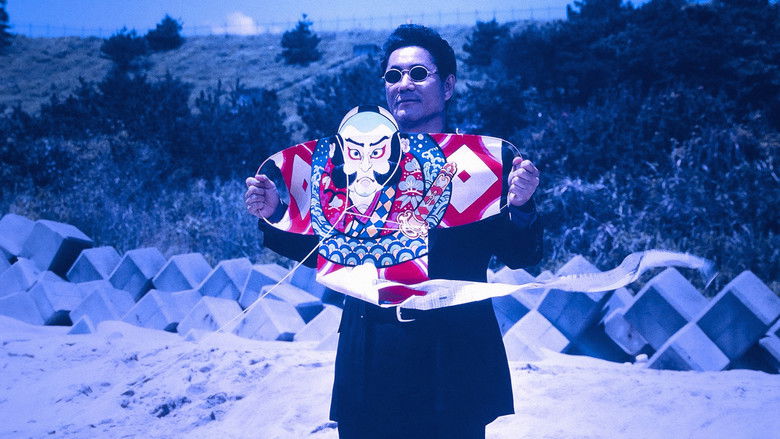
A shield against the world and a mask for Nishi's emotions. They allow him to observe without being read, maintaining his stoic facade.
Nishi wears dark sunglasses throughout most of the film, removing them only in moments of vulnerability or finality.
Philosophical Questions
Does the inevitability of death render life meaningless or beautiful?
The film argues for the latter. Through the symbol of fireworks, it suggests that beauty is defined by its impermanence. Nishi's efforts to give his wife a few final days of happiness are portrayed as the ultimate meaningful act, despite their tragic end.
Can violence be an act of love?
Nishi uses extreme violence not for malice, but to carve out a protective space for his wife. The film challenges the viewer to reconcile his brutality with his tenderness, asking if moral absolutes apply when one is facing the end of the world.
Core Meaning
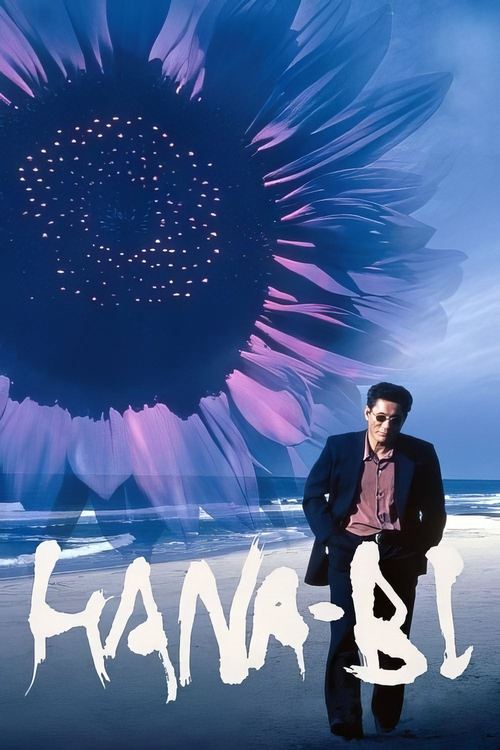
At its heart, Hana-bi explores the duality of existence encapsulated in its title: Hana (flower/life/love) and Bi (fire/gunfire/death). Kitano posits that life and death are not opposites but inseparable counterparts. The film suggests that even in a life marred by brutality and tragedy, moments of profound beauty and tenderness can exist. It is a study of fatalism and redemption, asking whether one can find peace by accepting the inevitability of death on one's own terms.