Fireworks
A poetic meditation on the proximity of violence and beauty, where a stoic ex-detective embarks on a final, fatal journey with his dying wife. Silence and sudden brutality intertwine like the flowers and fire of the title.
Fireworks

Fireworks

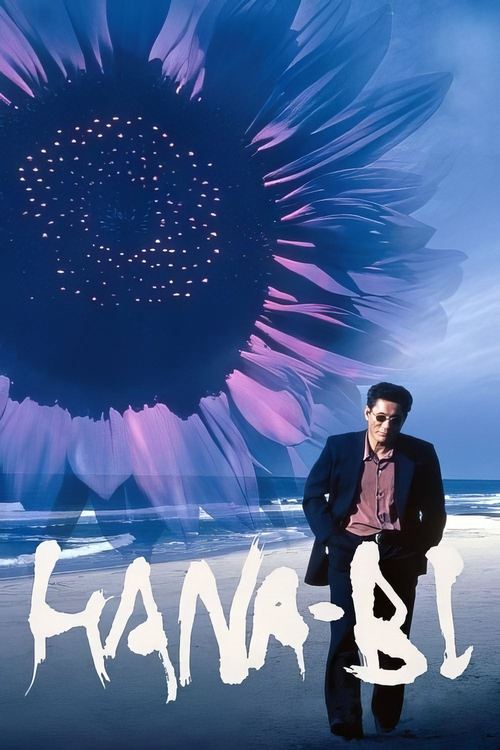
HANA-BI

"Work is all I've ever known."

30 October 1997 Japan 103 min ⭐ 7.7 (748)
Director: Takeshi Kitano
Cast: Takeshi Kitano, Kayoko Kishimoto, Ren Osugi, Susumu Terajima, Tetsu Watanabe
Drama Crime
Duality of Life and Death Silence as Communication Redemption through Art and Sacrifice Sudden, Unflinching Violence

Overview

Hana-bi (Fireworks) tells the story of Yoshitaka Nishi, a taciturn police detective whose life is unravelling. After a botched stakeout leaves his partner Horibe paralyzed and another colleague dead, Nishi retires from the force consumed by guilt. His personal life is equally tragic, as his wife, Miyuki, is suffering from terminal leukemia, and they have recently lost a young child.

Burdened by insurmountable debts to the yakuza and a desire to provide for his wife's final days, Nishi resorts to desperate measures. He modifies a scrap car to look like a police cruiser and robs a bank. With the stolen money, he pays off his debts, sends art supplies to his paralyzed friend Horibe, and takes Miyuki on a final, sentimental road trip across Japan.

As they travel, Nishi fiercely protects their quiet moments from yakuza pursuers with bursts of shocking violence. Meanwhile, Horibe finds a new purpose in painting, creating surreal images that mirror the film's themes. The narrative converges on a seaside beach where Nishi and Miyuki face their inevitable fate, leaving the audience with a haunting, off-screen conclusion.

Core Meaning

At its heart, Hana-bi explores the duality of existence encapsulated in its title: Hana (flower/life/love) and Bi (fire/gunfire/death). Kitano posits that life and death are not opposites but inseparable counterparts. The film suggests that even in a life marred by brutality and tragedy, moments of profound beauty and tenderness can exist. It is a study of fatalism and redemption, asking whether one can find peace by accepting the inevitability of death on one's own terms.

Thematic DNA

Duality of Life and Death 30%
Silence as Communication 25%
Redemption through Art and Sacrifice 25%
Sudden, Unflinching Violence 20%

Duality of Life and Death

Represented by the title Hana-bi, the film constantly juxtaposes life-affirming imagery (flowers, painting, playing cards) with sudden destruction (gunshots, violence). The characters exist on the thin line between these two states, suggesting that death gives life its intensity.

Silence as Communication

Nishi and his wife barely speak, yet their bond is the film's emotional core. Their silence represents a deep, non-verbal understanding and intimacy that transcends the need for words, contrasting sharply with the noisy, chaotic violence of the criminal world.

Redemption through Art and Sacrifice

While Nishi seeks redemption through sacrifice (caring for his wife, paying debts), his partner Horibe finds it through art. The film draws a parallel between Nishi's violent path and Horibe's creative one as two different ways to cope with tragedy.

Sudden, Unflinching Violence

Violence in the film is never stylized or choreographed; it is abrupt, messy, and shocking. This realistic portrayal emphasizes the fragility of the peaceful moments Nishi tries to protect.

Character Analysis

Yoshitaka Nishi

Takeshi Kitano (Beat Takeshi)

Archetype: Tragic Antihero / Stoic Protector
Key Trait: Explosive Stoicism

Motivation

To atone for the guilt of his partner's paralysis and to give his terminally ill wife a final, beautiful memory before they die.

Character Arc

Starts as a burnt-out detective consumed by guilt; transforms into a desperate outlaw to secure peace for his dying wife; ends as a man who accepts his fate with dignity.

Miyuki Nishi

Kayoko Kishimoto

Archetype: The Silent Muse
Key Trait: Childlike Innocence

Motivation

To spend her remaining time with her husband, communicating love through presence rather than words.

Character Arc

She remains a constant, quiet presence. Despite her terminal illness, she finds childish joy in the journey Nishi provides, ultimately accepting their shared end.

Horibe

Ren Osugi

Archetype: The Broken Survivor / The Artist
Key Trait: Resilience

Motivation

To find meaning in a life that has been stripped of its former purpose (police work).

Character Arc

Devastated by paralysis and abandonment by his family, he contemplates suicide but eventually finds a new reason to live through painting, acting as a spiritual mirror to Nishi.

Symbols & Motifs

Paintings

Meaning:

The paintings (created by Kitano himself) symbolize the subconscious processing of trauma and the potential for creation amidst destruction. They often feature flowers with animal heads, reinforcing the Hana-bi duality.

Context:

Horibe paints these surreal images after being paralyzed. They appear as full-screen inserts, interrupting the narrative flow to provide emotional commentary.

Fireworks

Meaning:

They represent the ephemeral nature of life—brilliant, beautiful, and vanishing in an instant. They serve as a metaphor for the couple's final journey.

Context:

Nishi and Miyuki watch fireworks on a beach; later, a painting depicts a family watching them, cementing the theme of transient beauty.

The Sea

Meaning:

A recurring motif in Kitano's films, the sea represents the final destination, the void, and the site of death/transcendence.

Context:

Both Horibe (in his suicide contemplation) and the couple (in the final scene) are drawn to the ocean's edge.

Sunglasses

Meaning:

A shield against the world and a mask for Nishi's emotions. They allow him to observe without being read, maintaining his stoic facade.

Context:

Nishi wears dark sunglasses throughout most of the film, removing them only in moments of vulnerability or finality.

Memorable Quotes

Gomen ne... Arigatou.

— Miyuki Nishi

Context:

Spoken softly near the end of the film during their road trip, breaking her long silence.

Meaning:

"I'm sorry... Thank you." These are the only words Miyuki speaks to her husband in the entire film. They carry the weight of their entire relationship—acknowledging his sacrifice and expressing profound gratitude.

Pisutoru, choudai.

— Nishi

Context:

Nishi says this to the yakuza gun dealer when procuring the weapon for the bank robbery.

Meaning:

"Give me the pistol." A demand that signifies Nishi's transition from lawman to outlaw. It shows his willingness to use violence to achieve his ends.

Kill me if you can.

— Yakuza Boss

Context:

Spoken during a confrontation before Nishi violently dispatches the gang.

Meaning:

A challenge that underestimates Nishi's resolve and desperation, highlighting the arrogance of the criminals compared to Nishi's nihilistic determination.

Philosophical Questions

Does the inevitability of death render life meaningless or beautiful?

The film argues for the latter. Through the symbol of fireworks, it suggests that beauty is defined by its impermanence. Nishi's efforts to give his wife a few final days of happiness are portrayed as the ultimate meaningful act, despite their tragic end.

Can violence be an act of love?

Nishi uses extreme violence not for malice, but to carve out a protective space for his wife. The film challenges the viewer to reconcile his brutality with his tenderness, asking if moral absolutes apply when one is facing the end of the world.

Alternative Interpretations

The Suicide Dream: Some critics interpret the entire film as Nishi's dying dream or purgatory state after the initial stakeout accident, suggesting he never actually survived to go on the road trip.

Art vs. Action: The film can be read as an internal debate within Kitano himself—between his public persona as a violent man of action (Nishi) and his private desire to be a contemplative artist (Horibe). The ending suggests the 'death' of the action persona to allow the artist to live, or perhaps the tragic impossibility of reconciling both.

Cultural Impact

Hana-bi was a watershed moment for Japanese cinema in the 90s. It effectively reintroduced Takeshi Kitano to the West not just as 'Beat Takeshi' the comedian, but as a world-class filmmaker comparable to Akira Kurosawa and Yasujirō Ozu. The film's victory at Venice (Golden Lion) legitimized the 'yakuza' genre as a vessel for high art and existential philosophy. It influenced a generation of filmmakers to explore the 'violent silence' aesthetic and cemented the 'Kitano Blue' color palette as an iconic cinematic style. It challenged the Western perception of Japanese action movies by prioritizing stillness and editing rhythm over choreography.

Audience Reception

Critics: Universally acclaimed as a masterpiece. Critics praised the 'editing rhythm', the juxtaposition of violence and tranquility, and Joe Hisaishi's melancholic score. Roger Ebert and other Western critics lauded it for its emotional depth.

Audiences: Generally regarded as Kitano's best film. Some viewers find the pacing slow or the violence jarring, but most appreciate the emotional payoff. It holds high ratings (approx. 7.7/10 on IMDb, 96% on Rotten Tomatoes) and is considered a quintessential entry in Japanese cinema.

Interesting Facts

  • The paintings shown in the film were actually painted by director Takeshi Kitano while he was recovering from a near-fatal motorcycle accident in 1994.
  • The film won the Golden Lion at the 1997 Venice Film Festival, establishing Kitano as a serious auteur globally.
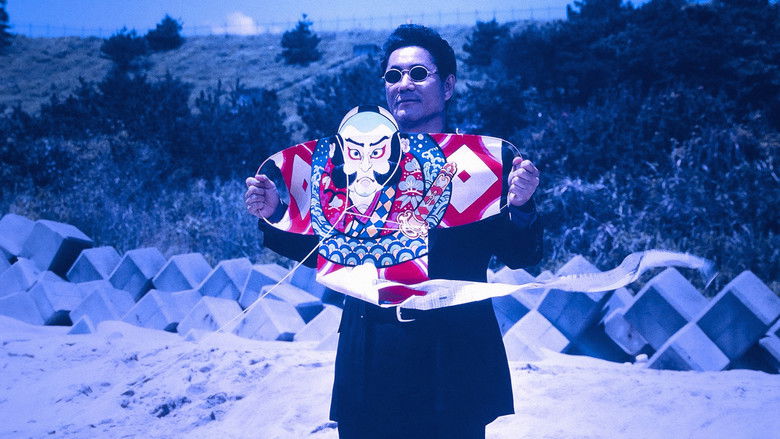
  • Kitano's daughter, Shoko Kitano, has a cameo in the final scene as the young girl flying a kite.
  • The script had very little dialogue; Kitano instructed actors to 'act with their eyes' and improvised many scenes.
  • The title is officially stylized as 'HANA-BI' to emphasize the separation and connection of 'Flower' and 'Fire'.
  • In the bank robbery scene, the police car Nishi uses is an old scrap car that the production team modified; they had to be careful not to be arrested for impersonating police.
  • This was the first film Kitano made after his motorcycle accident, and his character's facial tic was a real residual effect of his injuries.

Easter Eggs

Horibe's Paintings

The paintings evolve from amateurish to surreal pointillism, mirroring Kitano's real-life artistic evolution during his recovery. One painting explicitly spells out 'Suicide' in kanji hidden within flowers.

The Kite Scene

The girl with the kite at the end is played by Kitano's real daughter. The kite represents the fragility of life—tethered but struggling against the wind—just before the final 'snap'.

⚠️ Spoiler Analysis

Click to reveal detailed analysis with spoilers

Frequently Asked Questions

Explore More About This Movie

Dive deeper into specific aspects of the movie with our detailed analysis pages

Comments (0)

Leave a comment

No comments yet. Be the first to share your thoughts!