"You never forget your first love."
Flipped - Symbolism & Philosophy
Symbols & Motifs
The Sycamore Tree
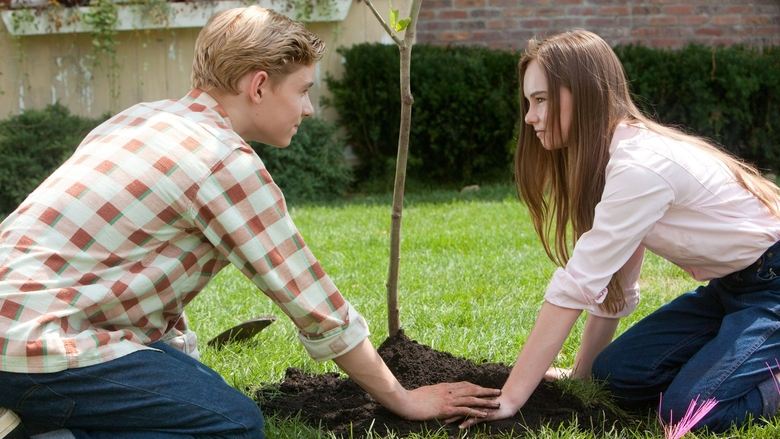
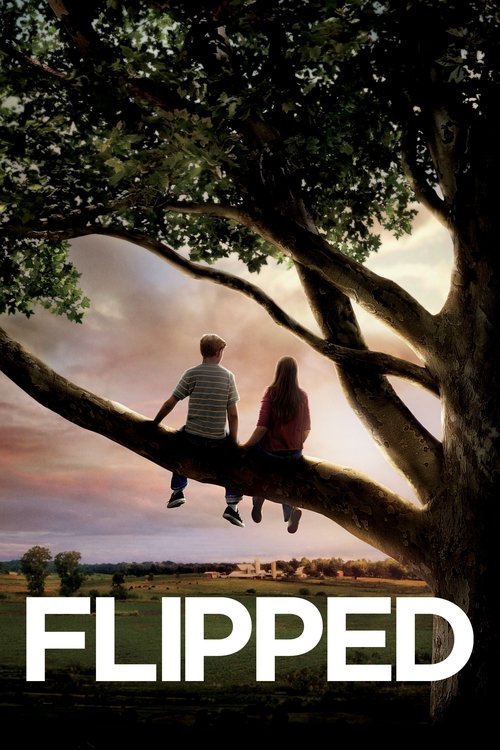
The sycamore tree symbolizes Juli's unique perspective and her ability to see the world from a higher, more enlightened viewpoint. It represents beauty, interconnectedness, and a source of profound joy and understanding for her. Its destruction signifies a loss of innocence and a pivotal moment in her emotional development. For Bryce, the tree he plants at the end symbolizes his growth, his apology, and his hope for a new beginning with Juli, finally seeing the world from her perspective.
Juli loves to climb the sycamore tree to watch the sunrise and feel connected to the world. When it's threatened to be cut down, she stages a protest, an event Bryce fails to support. Her father later paints her a picture of the tree to keep its memory and meaning alive. The film concludes with Bryce planting a new sycamore sapling in Juli's yard, a gesture of deep understanding and reconciliation.
Eggs
The eggs from Juli's chickens symbolize her generosity, her nurturing spirit, and her simple, honest character. Bryce's secret disposal of the eggs represents his cowardice, his family's prejudice, and the initial chasm between their values. His rejection of her gift is a major turning point, causing Juli to re-evaluate her feelings for him.
Juli begins raising chickens and proudly sells the fresh eggs to her neighbors, but she gives them to the Loskis for free as a kind gesture. Bryce, afraid of salmonella and pressured by his father, throws them away for weeks. When Juli discovers this, she is deeply hurt, which marks the beginning of her disillusionment with him.
The Yard
The state of the Baker family's front yard represents the difference in values between the two families. The Loskis, particularly Bryce's father, see the unkempt yard as a sign of laziness and lower class, judging them on appearances. For the Bakers, it's a low priority compared to caring for family, like Juli's disabled uncle. When Juli and Chet work to fix the yard, it symbolizes bridging the gap between the families and seeing true value beyond superficial tidiness.
Bryce's father frequently complains about the Baker's messy yard. When Bryce uses the yard as an excuse for why they throw away Juli's eggs, a shamed Juli decides to fix it herself. Bryce's grandfather, Chet, sees her hard work and decides to help her, forming a bond and showing Bryce a different, more compassionate perspective.
Philosophical Questions
How do our family's values shape our own perception of the world and others?
The film directly explores this by contrasting the Loski and Baker households. Bryce initially adopts his father's judgmental and superficial views, seeing the Bakers' messy yard and assuming they are lesser people. Juli, conversely, absorbs her family's values of integrity and looking for deeper meaning, as taught by her father's "sum of the parts" lesson. The film suggests that while family is our primary influence, true maturity involves critically examining these inherited values and choosing our own path, as Bryce eventually does with the guidance of his grandfather.
What is the difference between infatuation and genuine love or respect?
"Flipped" dissects this question through Juli's emotional journey. Her initial feelings for Bryce are pure infatuation, based solely on his "dazzling eyes." The narrative forces her to confront the reality of his character—his cowardice and cruelty. Her love "flips" when she realizes he is not the person she imagined. The film posits that true appreciation for another person is not based on a single trait but on an understanding of their entire character, their actions, and their integrity. Bryce's journey is the reverse; he moves from annoyance to genuine respect once he starts to see Juli's true, "iridescent" character.
Is it possible to truly see an event or person from another's perspective?
The film's entire narrative structure is an experiment in this question. By showing the same scenes from two different viewpoints, Reiner demonstrates how profoundly personal biases and emotional states color our reality. Events that Bryce barely registers are monumental for Juli, and his attempts at avoidance are interpreted by her as shyness. The film argues that while achieving a perfectly objective viewpoint is impossible, the act of trying to understand another's perspective—as Bryce finally does at the end—is the foundation of empathy and meaningful connection.
Core Meaning
At its heart, "Flipped" is a story about perspective and the journey of seeing beyond superficial first impressions to understand the true character of another person. Director Rob Reiner explores the idea that love and understanding are not instantaneous but are processes of growth, re-evaluation, and seeing the "whole landscape" rather than just individual parts. The film posits that our perceptions are shaped by our families and experiences, but true maturity comes from developing our own values and recognizing the "iridescent" qualities in others that make them unique.