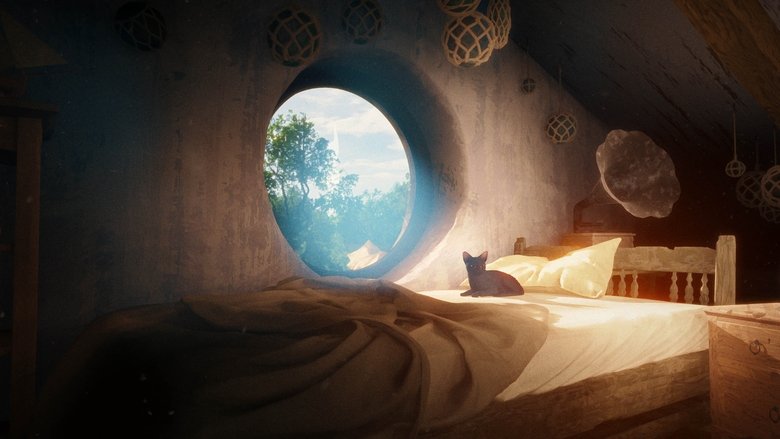
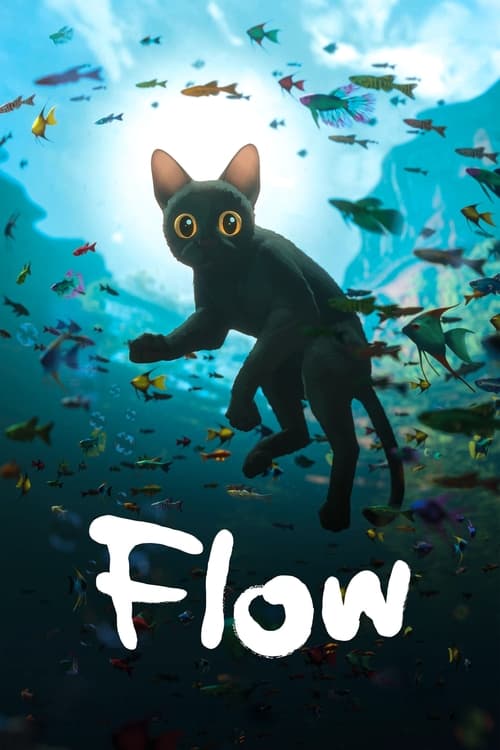
"Flow" follows a solitary Cat whose world is destroyed by a massive flood. After its home, filled with sculptures of itself, is submerged, the Cat takes refuge on a sailboat with a calm Capybara. They are soon joined by a spirited Lemur, a friendly Labrador who has left its pack, and a protective white Secretary Bird. The group learns to coexist, with the Capybara teaching the Cat to swim and the Bird acting as a navigator.
A major turning point occurs when the Secretary Bird defends the group from its hostile former flock. In the ensuing battle, the bird is wounded and cast out. Later, during a violent storm near colossal stone pillars, the bird, seemingly accepting its fate, flies up into a portal of light in the sky and vanishes, a moment interpreted as a spiritual ascension or transcendence. The boat is damaged, and the Cat is thrown overboard.
After the storm passes, the floodwaters rapidly drain away into massive chasms opening in the earth. The Cat finds itself on solid ground and reunites with the Lemur and the dogs. They find the boat precariously hanging from a giant tree. They work together to save the Capybara just before the boat and tree collapse into a ravine. The final scene shows the reunited group—Cat, Capybara, Lemur, and Labrador—gazing at their shared reflection in a puddle, a symbol of their newly forged, solid community. A post-credits scene reveals that the giant whale, which had helped them earlier but was later stranded by the receding water, is now swimming freely in the ocean, confirming the renewal of life.