
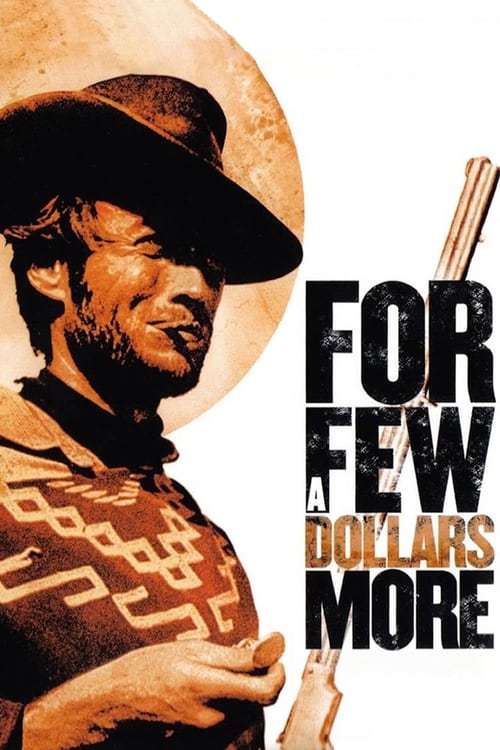
Per qualche dollaro in più
"The man with no name is back... the man in black is waiting... a walking arsenal - he uncoils, strikes and kills!"
For a Few Dollars More - Symbolism & Philosophy
Symbols & Motifs
The Musical Pocket Watch
The pocket watch is the film's most powerful symbol, representing memory, trauma, and the fateful connection between hunter and prey. For El Indio, it is a constant, haunting reminder of the woman he violated, triggering PTSD-like flashbacks. For Colonel Mortimer, the identical watch is a memento of his murdered sister and the catalyst for his revenge. The shared melody symbolizes their intertwined destinies, destined to conclude in a final, deadly duel orchestrated by its chimes.
El Indio uses his watch to time his duels, forcing his victims to listen to the chimes that represent his own traumatic past before he kills them. The existence of a second, identical watch is revealed late in the film, with Manco using it to even the odds in the final showdown between Mortimer and Indio, allowing vengeance to be served to the same tune that scored the original crime.
Colonel Mortimer's Arsenal
Colonel Mortimer's collection of specialized, long-range firearms symbolizes his methodical, patient, and strategic approach to revenge. Unlike Manco's quick-draw pistol, Mortimer's weapons require preparation and distance. They represent a more calculated, almost intellectual form of violence, reflecting his background as a former army officer and his single-minded, long-planned quest for vengeance.
Throughout the film, Mortimer utilizes a variety of guns from his saddlebag, each chosen for a specific purpose, from a long-barreled pistol to a rifle with a scope. This contrasts sharply with Manco's reliance on his standard Colt Peacemaker, highlighting their different philosophies as bounty hunters.
The Bank of El Paso
The Bank of El Paso symbolizes the ultimate prize of greed in the film. Its cleverly disguised safe, holding "almost a million dollars," is the target that unites the criminals and draws the attention of the bounty hunters. It represents a corrupting honeypot, a test of loyalty and a catalyst for the film's central conflict, proving that the allure of immense wealth is the force that sets all the violence in motion.
El Indio's entire plan revolves around robbing this bank. The heist sequence is a centerpiece of the film, and the subsequent plan to hide and later divide the money leads directly to the breakdown of the gang and the final confrontation.
Philosophical Questions
Can true justice be achieved through personal revenge?
The film contrasts two forms of justice: the state-sanctioned justice of bounties and the deeply personal justice of revenge. Colonel Mortimer's quest is entirely outside the law's concern for why El Indio is wanted; he seeks retribution for a personal tragedy. The film's climax validates his quest, allowing him to be the executioner in a ritualistic duel. However, after achieving his revenge, Mortimer simply leaves, taking no money. This raises the question of whether his act brought him peace or simply closure, and whether this form of personal vengeance can ever be considered true justice, or if it is merely a separate, more primal force.
What is the true cost of a life dedicated to violence?
Both Manco and Mortimer are masters of violence, but the film subtly explores its toll. Manco's detached professionalism suggests a man who has had to suppress his humanity to survive in his trade. Mortimer, on the other hand, has dedicated years of his life to a single, violent goal, his life defined by a past trauma. El Indio, the most violent character, is literally haunted by his actions, unable to escape the memory of his cruelty. The film suggests that while violence may be a necessary tool for survival or justice in this world, it inevitably scars and defines those who wield it.
Core Meaning
At its heart, For a Few Dollars More explores the ambiguous nature of justice and the corrupting influence of both greed and revenge. Director Sergio Leone moves beyond the simpler narrative of its predecessor to contrast two different motivations for violence. Manco is driven by professionalism and profit, a cynical but relatively straightforward goal. In contrast, Colonel Mortimer is driven by a deeply personal vendetta, revealing that the pursuit of revenge can be just as obsessive and all-consuming as the pursuit of wealth. The film suggests that in the lawless West, the lines between hero and villain, lawman and outlaw, are dangerously blurred. Leone presents a world where morality is a luxury, and survival depends on skill, wit, and a clear understanding of one's own motivations, be they for money or for blood.