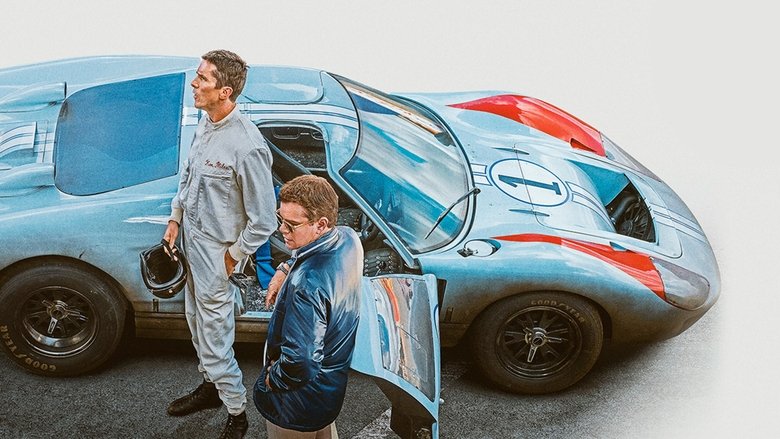
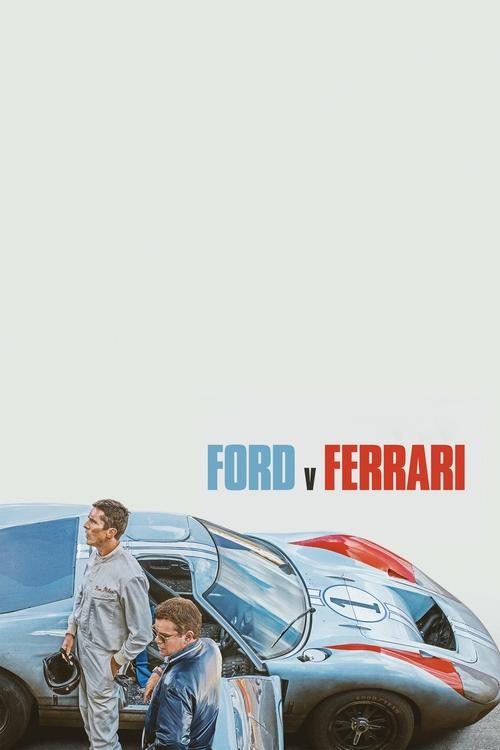
"They took the American dream for a ride"
Director: James Mangold
Cast: Matt Damon, Christian Bale, Jon Bernthal, Caitríona Balfe, Josh Lucas
Ford v Ferrari — Characters & Cast
Character Analysis
Ken Miles
Christian Bale
Motivation
Miles is motivated by an intrinsic desire to push the limits of automotive engineering and driving. His primary goal is not fame or money, but the pure, unadulterated pursuit of the "perfect lap"—a state of flawless harmony between man and machine. He is driven by a need to prove his and the car's capabilities against any challenge, be it Ferrari or the bureaucracy of his own team.
Character Arc
Ken Miles begins as a brilliant but abrasive and financially struggling mechanic, whose uncompromising nature makes him a liability in the corporate world. Through his collaboration with Shelby and Ford, he is given the resources to fully express his genius. His arc is tragic; he achieves the pinnacle of his abilities at Le Mans, demonstrating his superiority, but is denied the official win by the very corporation he helped succeed. He learns to temper his pride for the sake of the team, only to have his sacrifice be for naught. His ultimate arc is one of integrity in the face of compromise, culminating in his tragic death while pursuing the next level of perfection.
Carroll Shelby
Matt Damon
Motivation
Shelby's primary motivation is to win, initially to build his brand and prove his genius as a designer. Having been the only American driver to win Le Mans, he is driven by a deep-seated need to beat Enzo Ferrari, who he views as a true competitor. Critically, he is also motivated by his loyalty to Ken Miles, whom he recognizes as the key to victory and a kindred spirit. He fights to give Miles the recognition he deserves.
Character Arc
Forced to retire from racing due to a heart condition, Shelby channels his competitive fire into car design and team management. He starts as a savvy salesman and designer who must navigate the treacherous waters between his rebellious driver and his corporate overlords. His arc involves repeatedly compromising his own principles to play the corporate game, only to realize the human cost. He evolves from a pragmatist trying to win at all costs to a man who recognizes the moral failure of the victory at Le Mans, ultimately choosing to honor his friend's pure spirit over corporate loyalty.
Lee Iacocca
Jon Bernthal
Motivation
Iacocca is motivated by ambition and a desire to innovate within the Ford Motor Company. He sees winning Le Mans as the ultimate marketing tool to sell more cars to a younger generation. He wants to make a name for himself within the company by achieving something no one thought possible: making the Ford brand synonymous with high-performance racing.
Character Arc
Iacocca is the ambitious Ford executive who conceives the plan to beat Ferrari to revitalize the Ford brand. He acts as the initial bridge between the corporate world of Dearborn and the racing world of Shelby and Miles. While he understands the need for their talent, he is ultimately part of the corporate machine. His arc shows him as a well-intentioned executive who champions the project but is eventually overruled by higher-ups like Henry Ford II and Leo Beebe, demonstrating the limits of his influence within the rigid corporate hierarchy.
Henry Ford II
Tracy Letts
Motivation
Ford's motivation is born purely out of ego and revenge. After Enzo Ferrari spurns his buyout offer and personally insults him and his company, he becomes obsessed with humiliating Ferrari on the world stage. His goal is not just to win, but to achieve total, crushing dominance over his rival, using the full might of his industrial empire to do so.
Character Arc
Henry Ford II, or "The Deuce," is portrayed as a powerful industrial titan living in the shadow of his famous grandfather. Initially disconnected from the world of racing, his interest is piqued only when his personal pride is wounded by Enzo Ferrari's insults. His arc is one of awakening; after Shelby gives him a terrifying, exhilarating ride in the GT40, he gains a visceral understanding of what his men are doing. However, this newfound respect is ultimately subsumed by his overriding desire for a perfect corporate image, leading him to approve the photo-finish idea that costs Miles the win.
Cast
Explore More About This Movie
Dive deeper into specific aspects of the movie with our detailed analysis pages