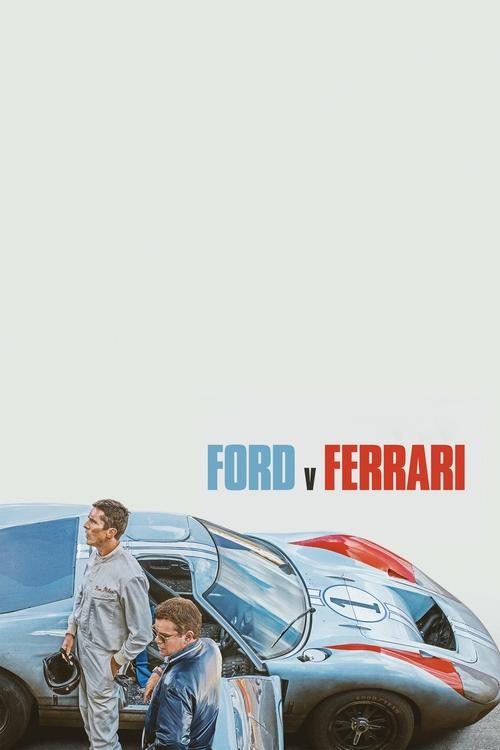
Ford v Ferrari
A high-octane historical drama fueled by raw passion, capturing the relentless pursuit of perfection against a backdrop of corporate machinery and visceral, thunderous speed.
Ford v Ferrari

Ford v Ferrari

"They took the American dream for a ride"

13 November 2019 United States of America 153 min ⭐ 8.0 (8,525)
Director: James Mangold
Cast: Matt Damon, Christian Bale, Jon Bernthal, Caitríona Balfe, Josh Lucas
Drama History Action
Individualism vs. Corporate Bureaucracy The Pursuit of Perfection Friendship and Loyalty Artistry vs. Commerce
Budget: $97,600,000
Box Office: $225,508,210

Overview

Set in the 1960s, "Ford v Ferrari" chronicles the intense effort by the Ford Motor Company to challenge the perennial dominance of Enzo Ferrari's racing team at the prestigious 24 Hours of Le Mans in France. After a business deal to buy Ferrari falls through, a slighted Henry Ford II tasks his team with building a car that can beat the Italians at their own game.

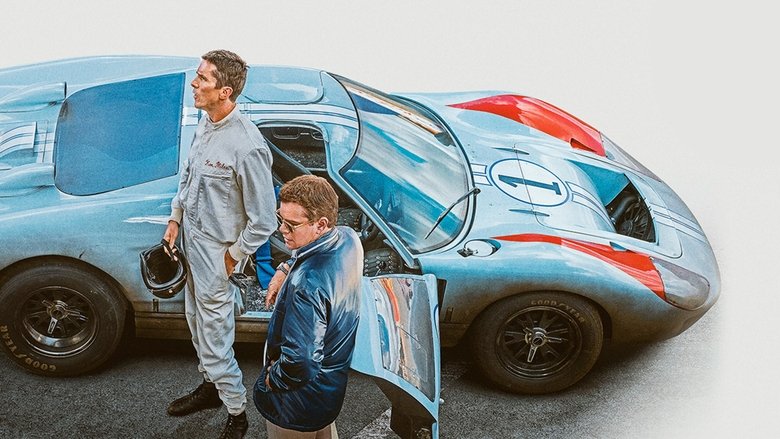
To achieve this monumental feat, Ford enlists visionary American car designer Carroll Shelby (Matt Damon), a former Le Mans winner himself forced into retirement by a heart condition. Shelby, in turn, knows that the only driver with the raw talent and mechanical intuition to develop and pilot their revolutionary car, the Ford GT40, is the hot-tempered and brilliant British racer Ken Miles (Christian Bale).

The film follows their turbulent collaboration as they battle not only the laws of physics and the formidable Ferrari team but also the interference of Ford's corporate bureaucracy. It's a story of friendship, rebellion, and the unwavering dedication of two mavericks who risk everything for a single shot at creating the perfect lap.
Core Meaning

The core meaning of "Ford v Ferrari" revolves around the conflict between individual passion and corporate interference. Director James Mangold explores the idea that true innovation and greatness are born from the obsessive dedication of individuals like Ken Miles and Carroll Shelby, who operate on instinct and a pure love for their craft. This artistic spirit is constantly at odds with the risk-averse, marketing-driven mindset of the Ford executives, who see the race not as a feat of engineering and human endurance, but as a public relations opportunity. The film champions the idea that genius cannot be managed by committee and that the pursuit of perfection, symbolized by Miles' quest for the "perfect lap," is a deeply personal and uncompromising endeavor that transcends corporate branding and victory itself.

Thematic DNA

Individualism vs. Corporate Bureaucracy 40%
The Pursuit of Perfection 30%
Friendship and Loyalty 20%
Artistry vs. Commerce 10%

Individualism vs. Corporate Bureaucracy

This is the central theme of the film. Ken Miles and Carroll Shelby represent individual genius, passion, and instinct. They are constantly hindered by Ford's corporate executives, particularly Leo Beebe, who prioritize marketing, image, and control over the raw, unpredictable talent needed to win. The conflict is highlighted in scenes where Miles is initially barred from racing at Le Mans due to his abrasive personality, which is deemed not "the Ford way," and in the final, tragic decision at the 1966 race, where a corporate-mandated photo finish robs Miles of his deserved individual victory.

The Pursuit of Perfection

Ken Miles is driven by an obsession to find the "perfect lap"—a flawless execution where car and driver become one. This theme is articulated in his monologue to his son, Peter, where he describes a state of pure focus and connection with the machine. Carroll Shelby echoes this sentiment in his opening narration about reaching 7,000 RPM, a point where "everything fades" and one's true self is revealed. The film posits that this pure pursuit is the true victory, more so than the trophy, a concept that the Ford executives cannot comprehend.

Friendship and Loyalty

The bond between Carroll Shelby and Ken Miles is the emotional core of the story. Despite their clashing personalities and a memorable physical fight, they share a deep mutual respect and loyalty. Shelby consistently goes to bat for Miles against the Ford bureaucracy, risking his own company and reputation to ensure Miles gets to drive. Their friendship is built on a shared understanding of what it takes to win and a rebellion against the "suits" who try to control them.

Artistry vs. Commerce

The film draws a stark contrast between the artisans (Shelby and Miles) and the industrialists (Ford executives). Shelby and his team build cars with passion and intuition, treating it as a craft. For Henry Ford II and his lieutenants, the entire Le Mans project is a commercial enterprise—an act of revenge and a massive marketing campaign. This theme is visually represented by contrasting the grimy, hands-on workshop of Shelby American with the sterile, hierarchical boardrooms of Ford's headquarters.

Character Analysis

Ken Miles

Christian Bale

Archetype: The Maverick Genius
Key Trait: Uncompromising

Motivation

Miles is motivated by an intrinsic desire to push the limits of automotive engineering and driving. His primary goal is not fame or money, but the pure, unadulterated pursuit of the "perfect lap"—a state of flawless harmony between man and machine. He is driven by a need to prove his and the car's capabilities against any challenge, be it Ferrari or the bureaucracy of his own team.

Character Arc

Ken Miles begins as a brilliant but abrasive and financially struggling mechanic, whose uncompromising nature makes him a liability in the corporate world. Through his collaboration with Shelby and Ford, he is given the resources to fully express his genius. His arc is tragic; he achieves the pinnacle of his abilities at Le Mans, demonstrating his superiority, but is denied the official win by the very corporation he helped succeed. He learns to temper his pride for the sake of the team, only to have his sacrifice be for naught. His ultimate arc is one of integrity in the face of compromise, culminating in his tragic death while pursuing the next level of perfection.

Carroll Shelby

Matt Damon

Archetype: The Mentor / The Mediator
Key Trait: Pragmatic

Motivation

Shelby's primary motivation is to win, initially to build his brand and prove his genius as a designer. Having been the only American driver to win Le Mans, he is driven by a deep-seated need to beat Enzo Ferrari, who he views as a true competitor. Critically, he is also motivated by his loyalty to Ken Miles, whom he recognizes as the key to victory and a kindred spirit. He fights to give Miles the recognition he deserves.

Character Arc

Forced to retire from racing due to a heart condition, Shelby channels his competitive fire into car design and team management. He starts as a savvy salesman and designer who must navigate the treacherous waters between his rebellious driver and his corporate overlords. His arc involves repeatedly compromising his own principles to play the corporate game, only to realize the human cost. He evolves from a pragmatist trying to win at all costs to a man who recognizes the moral failure of the victory at Le Mans, ultimately choosing to honor his friend's pure spirit over corporate loyalty.

Lee Iacocca

Jon Bernthal

Archetype: The Visionary Bureaucrat
Key Trait: Ambitious

Motivation

Iacocca is motivated by ambition and a desire to innovate within the Ford Motor Company. He sees winning Le Mans as the ultimate marketing tool to sell more cars to a younger generation. He wants to make a name for himself within the company by achieving something no one thought possible: making the Ford brand synonymous with high-performance racing.

Character Arc

Iacocca is the ambitious Ford executive who conceives the plan to beat Ferrari to revitalize the Ford brand. He acts as the initial bridge between the corporate world of Dearborn and the racing world of Shelby and Miles. While he understands the need for their talent, he is ultimately part of the corporate machine. His arc shows him as a well-intentioned executive who champions the project but is eventually overruled by higher-ups like Henry Ford II and Leo Beebe, demonstrating the limits of his influence within the rigid corporate hierarchy.

Henry Ford II

Tracy Letts

Archetype: The Imperious King
Key Trait: Authoritative

Motivation

Ford's motivation is born purely out of ego and revenge. After Enzo Ferrari spurns his buyout offer and personally insults him and his company, he becomes obsessed with humiliating Ferrari on the world stage. His goal is not just to win, but to achieve total, crushing dominance over his rival, using the full might of his industrial empire to do so.

Character Arc

Henry Ford II, or "The Deuce," is portrayed as a powerful industrial titan living in the shadow of his famous grandfather. Initially disconnected from the world of racing, his interest is piqued only when his personal pride is wounded by Enzo Ferrari's insults. His arc is one of awakening; after Shelby gives him a terrifying, exhilarating ride in the GT40, he gains a visceral understanding of what his men are doing. However, this newfound respect is ultimately subsumed by his overriding desire for a perfect corporate image, leading him to approve the photo-finish idea that costs Miles the win.

Symbols & Motifs

The Perfect Lap

Meaning:

The "perfect lap" symbolizes an unattainable state of perfection and a spiritual connection between man and machine. It represents a goal that is pure and personal, detached from the external reward of winning a race. It is the ultimate expression of a driver's skill and passion, something only true racers can understand.

Context:

Ken Miles explains the concept to his son, Peter, while looking out at the Willow Springs track. He describes it as a moment of flawless execution that most people don't even know exists. This idea becomes his driving motivation throughout the film, elevating his quest from a mere competition to an almost spiritual pursuit.

7,000 RPM

Meaning:

Reaching 7,000 RPM is a metaphor for a transcendent state of being, where the noise and distractions of the world disappear, leaving only pure focus and existence. It's a moment of truth where a person confronts their fundamental identity—"Who are you?" It symbolizes the zen-like clarity that comes from pushing oneself to the absolute limit.

Context:

Carroll Shelby describes this phenomenon in the film's opening and closing narration. For both Shelby and Miles, it's the ultimate experience that racing provides, a feeling that no corporate mandate or trophy can replicate. Miles achieves this state during his win at Daytona, pushing the car beyond its engineered limits on Shelby's command.

The Wrench

Meaning:

The wrench symbolizes both creation and destruction, control and rebellion. It is the tool of the mechanic and engineer, used to build and perfect the racing machine. However, it also becomes a weapon of frustration, representing the characters' volatile and passionate natures when their artistry is threatened.

Context:

Early in the film, a frustrated Ken Miles throws a wrench at Carroll Shelby during a heated argument. The tool, meant for building, becomes a symbol of their fiery relationship. Later, Miles uses a hammer to "adjust" the car's hood to fit regulations after a frustrating technical inspection, signifying his hands-on, often blunt, approach to problem-solving in defiance of rigid rules.

Memorable Quotes

There's a point at 7,000 RPM where everything fades. The machine becomes weightless, just disappears. And all that's left is a body moving through space and time... It asks you a question, the only question that matters: 'Who are you?'

— Carroll Shelby

Context:

This line bookends the film, appearing in Shelby's narration at the beginning and end. It establishes the film's core theme and provides a poignant reflection on what Ken Miles lived for, especially after his death.

Meaning:

This quote encapsulates the film's central philosophy about the transcendent, almost spiritual, nature of pushing limits. It defines the core motivation for characters like Shelby and Miles, suggesting that racing is not about winning, but about a profound form of self-discovery.

Look out there. Out there is the perfect lap. No mistakes. Every gear change, every corner, perfect. You see it? Most people can't.

— Ken Miles

Context:

Miles says this to his son, Peter, at the Willow Springs racetrack. It is a quiet, intimate moment that provides a window into his soul, explaining why he is so uncompromising and passionate about his work. It frames his entire journey as a quest for this ideal.

Meaning:

This quote reveals Miles's motivation as an artist and a purist. He is not just a driver; he is a craftsman in pursuit of an abstract ideal of perfection. It highlights the difference between his intrinsic drive and the extrinsic, results-oriented goals of the Ford corporation.

We're lighter, we're faster, and if that don't work, we're nastier.

— Carroll Shelby

Context:

Shelby says this to his pit crew and drivers before a race, rallying them with a clear and aggressive mission statement. It demonstrates his leadership style and the tough-minded philosophy he instills in his team.

Meaning:

This line perfectly captures Shelby's competitive, win-at-all-costs attitude. It's a pragmatic and slightly rebellious statement that defines his approach: use superior engineering, but be prepared to fight dirty if necessary. It embodies the underdog spirit of his team.

If you're going to push a piece of machinery to the limit, and expect it to hold together, you have to have some sense of where that limit is.

— Ken Miles

Context:

Miles explains this to his son Peter, articulating the fine balance required in endurance racing. It underscores his expertise and justifies why he is so critical of other drivers and resistant to corporate directives that ignore the car's physical realities.

Meaning:

This quote showcases Miles's deep mechanical empathy and intelligence. It explains that his skill is not just about being fearless, but about having an intuitive understanding of the machine he is piloting. It's a blend of art and science, feeling and engineering.

Philosophical Questions

What is the true nature of victory?

The film constantly questions whether victory is defined by a trophy and public recognition or by personal achievement and integrity. Ken Miles wins the race on his own terms, setting lap records and dominating the competition. However, he is denied the official title due to a corporate decision. His quiet satisfaction in proving he was the best, followed by the hollowness of the staged finish, forces the audience to consider if the internal knowledge of one's own success is more valuable than external validation. The film suggests true victory lies in the perfect execution of one's craft—the "perfect lap"—a personal triumph that no committee can award or take away.

Can true genius and creativity thrive under corporate control?

"Ford v Ferrari" explores the inherent friction between maverick creators and the structured, risk-averse environment of a large corporation. Shelby and Miles can only build the revolutionary GT40 with Ford's immense resources, yet those same resources come with strings attached in the form of bureaucratic oversight and marketing-driven decisions that stifle their progress. The film suggests that while corporations can fund innovation, they cannot manufacture genius. It portrays a constant battle where creativity flourishes in spite of, not because of, the corporate structure, posing the question of whether brilliant individuals are ultimately doomed to be either co-opted or crushed by the systems that employ them.

Is the pursuit of perfection a noble goal or a destructive obsession?

Ken Miles's relentless drive for perfection makes him a brilliant driver but also a difficult and uncompromising man. His obsession fuels his greatness but also puts him at odds with his employers and arguably contributes to his tragic end, as he dies while testing a new, experimental vehicle, once again pushing the limits. The film presents this pursuit as a double-edged sword: it is the source of his profoundest moments of clarity and achievement, but it also isolates him and leads him down a dangerous path. The film asks whether such an all-consuming passion is ultimately life-affirming or a form of self-destruction.

Alternative Interpretations

One alternative interpretation focuses on the ending as a critique of the "American dream." While on the surface it's a story of American ingenuity triumphing over European prestige, the conclusion is deeply cynical. Miles, the individualistic hero who embodies skill and passion, is ultimately sacrificed for a contrived image of corporate teamwork. This reading suggests the film is less about a victory and more about the soul-crushing nature of corporate capitalism, where individual achievement is devalued in favor of a marketable narrative. The "win" for Ford is a hollow one, achieved at the cost of its most valuable asset's integrity and spirit.

Another perspective views Leo Beebe not as a simple villain but as a tragic figure representing pragmatic corporate duty. From this viewpoint, Beebe's actions, while antagonistic to Miles, are logically sound from a corporate standpoint. He is tasked with protecting the Ford brand and its multi-million dollar investment. His distrust of the volatile Miles is a calculated business decision, not personal malice. This interpretation sees the film as a tragedy of conflicting, irreconcilable worlds—the passionate, risk-taking world of racing and the cautious, image-conscious world of big business—where neither side is entirely wrong, but they are incapable of coexisting harmoniously.

A third interpretation suggests the film is a metaphor for the filmmaking process itself. Director James Mangold has mentioned seeing parallels between the story and his own experiences in Hollywood. In this reading, Shelby and Miles are the creative forces (the director and actors) battling the "suits" (studio executives) who interfere with their artistic vision for commercial reasons. The quest for the "perfect lap" is analogous to creating a perfect, uncompromised film, and the corporate mandate for a photo finish is akin to a studio forcing a nonsensical ending for marketing purposes.

Cultural Impact

"Ford v Ferrari" was a critical and commercial success upon its release in 2019, praised for its direction, performances (especially from Bale and Damon), thrilling racing sequences, and classic Hollywood storytelling. The film received four Academy Award nominations, including for Best Picture, and won for Best Film Editing and Best Sound Editing, highlighting its technical achievements in realistically portraying the visceral intensity of motorsports.

It successfully brought a significant moment in automotive history to a mainstream audience, many of whom were unfamiliar with the story of Carroll Shelby and Ken Miles. By focusing on the human drama of passion versus corporate control, the film transcended the niche genre of racing movies, appealing to a broad demographic and drawing comparisons to other character-driven sports dramas like "Rush" (2013) and "Moneyball" (2011).

Critically, the film was lauded as a well-crafted, old-fashioned studio picture—a type of movie many felt was becoming rare in an era dominated by franchises and superhero films. While some critics found it formulaic, most agreed that its execution was exceptional. The movie sparked renewed interest in the legacies of Ken Miles and Carroll Shelby, celebrating the often-overlooked, brilliant driver who was instrumental to Ford's success but was tragically denied his crowning achievement.

Audience Reception

Audiences overwhelmingly praised "Ford v Ferrari," which holds a high audience score on platforms like Rotten Tomatoes and IMDb. Viewers celebrated it as a compelling, character-driven story that was thrilling even for those with no prior interest in motorsports. The performances of Christian Bale and Matt Damon were frequently cited as a major strength, with their on-screen chemistry being a highlight.

The racing sequences were lauded for their visceral intensity, practical effects, and masterful sound design, which made audiences feel as if they were in the driver's seat. Many viewers appreciated the film's classic, straightforward storytelling, finding it a refreshing change from more complex or franchise-heavy blockbusters. The emotional core of the film—the friendship between Shelby and Miles and Miles' relationship with his family—resonated strongly.

Minor criticisms were aimed at the film's lengthy runtime of 152 minutes, which some viewers felt could have been trimmed. A few also pointed out historical inaccuracies, though most accepted them as necessary for dramatic storytelling. The primary point of contention, mirroring the film's plot, was the injustice of the Le Mans finish, which evoked strong emotional reactions of anger and frustration from the audience, demonstrating the film's success in making them care deeply for Ken Miles.

Interesting Facts

  • The project was in development for years, with actors like Tom Cruise and Brad Pitt once attached to star in a version titled "Go Like Hell."
  • Christian Bale lost 70 pounds (about 32 kilograms) for the role of Ken Miles after having gained weight for his previous role as Dick Cheney in "Vice."
  • To prepare for the role, Christian Bale took racing lessons at the Bondurant High Performance Driving School, whose founder was a friend of the real Ken Miles.
  • The film's realistic racing sequences used minimal CGI. Stunt coordinator Robert Nagle used custom-built, track-capable replicas of the Ford GT40s and Ferrari 330 P3s, along with specially designed camera cars to capture the action at high speeds.
  • The real Le Mans circuit could not be used for extended filming, so the crew shot the race sequences across five different locations in Georgia and California, which were meticulously dressed to look like the iconic French track of 1966.
  • Ken Miles' son, Peter Miles, who was 15 when his father died, was a consultant on the film and provided Christian Bale with personal stories and details about his father.
  • Matt Damon stated that one of the primary reasons he took the role of Carroll Shelby was the opportunity to work with Christian Bale.
  • The thrilling fight scene between Shelby and Miles was choreographed and rehearsed in about 20 minutes, with both actors having fun with the physicality of it.
  • Director James Mangold, not a racing enthusiast himself, was drawn to the project because he saw parallels between the creative battles of Shelby and Miles against corporate interference and the struggles of a filmmaker against studio "suits."

Easter Eggs

American racing driver Dan Gurney is portrayed in the film by his own son, Alex Gurney, who is also a professional racing driver.

This is a subtle and authentic nod to the real history of the 1966 Le Mans race. Having a real driver, and the son of the actual historical figure, play the part adds a layer of realism and honors the Gurney family's racing legacy.

During a scene at the 1966 Le Mans, a reporter can be heard over the PA system mentioning the filming of the movie "Grand Prix," starring James Garner.

This is a historically accurate detail, as the classic racing film "Grand Prix" was indeed being filmed during the actual 1966 Le Mans race. The film's visual style was also heavily inspired by "Grand Prix."

The car Ken Miles drives at the beginning of the film, a Shelby Cobra, is designated with the number 98.

This is a reference to the number of the Shelby Cobra that Ken Miles famously drove in many of his real-life races in the 1960s, establishing his connection to the Shelby brand long before the GT40 project.

⚠️ Spoiler Analysis

Click to reveal detailed analysis with spoilers

Frequently Asked Questions

Explore More About This Movie

Dive deeper into specific aspects of the movie with our detailed analysis pages

Comments (0)

Leave a comment

No comments yet. Be the first to share your thoughts!