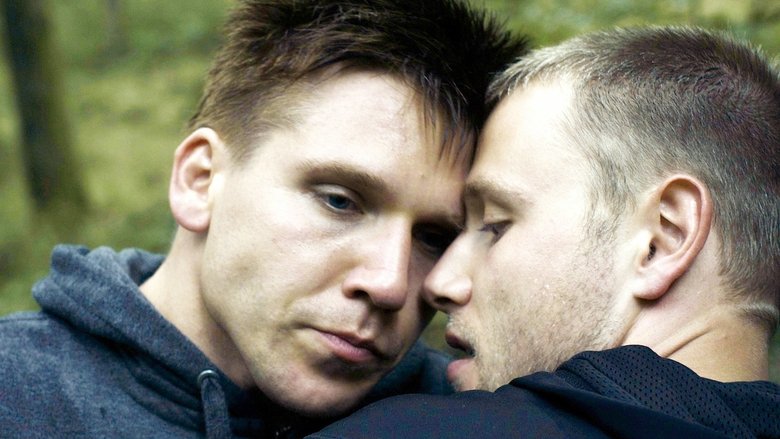

Freier Fall
Free Fall - Symbolism & Philosophy
Symbols & Motifs
Jogging and Running
Running serves as a metaphor for escaping reality, struggling to keep up with societal expectations, and eventually finding one's own pace and freedom.
It frames the entire film. Initially, Marc struggles to keep up with his peers. He and Kay bond over jogging in the woods. The film ends with a tracking shot of Marc jogging, but this time he outpaces the rest of the squad and runs ahead alone.
The Forest
The forest acts as a locus amoenus—an idyllic, secluded sanctuary where societal rules and heteronormative pressures do not apply.
It is the primary setting for Marc and Kay's clandestine sexual encounters and moments of emotional intimacy, far removed from the watchful eyes of their colleagues and families.
Enclosed Domestic Spaces
Represent the suffocating, claustrophobic nature of Marc's socially mandated, heteronormative life.
Scenes with Bettina and his parents are often shot in cluttered, enclosed rooms, visually contrasting with the expansive, airy scenes Marc shares with Kay outdoors.
Philosophical Questions
Is it possible to pursue one's authentic truth without causing irreparable harm to those anchored to your false identity?
The film explores this through Marc's devastating love triangle. His journey to self-discovery is inextricably linked to the betrayal and heartbreak of his pregnant girlfriend, raising questions about the moral cost of personal liberation.
How much of human desire and identity is shaped by the environment rather than the individual?
By placing the romance within the hypermasculine, heteronormative confines of a police riot squad, the film questions whether Marc would have repressed his sexuality so deeply had he not been surrounded by an institution that strictly punishes deviance.
Core Meaning
The core message of Free Fall revolves around the destructive nature of societal expectations and the agonizing cost of living a lie. Director Stephan Lacant highlights how the pressure to conform to heteronormative ideals—especially within a hypermasculine environment like the police force—forces individuals to suppress their authentic selves. The film suggests that true liberation requires tearing down the comfortable but false structures of one's life, even if the resulting transition causes profound collateral damage and heartbreak to everyone involved.