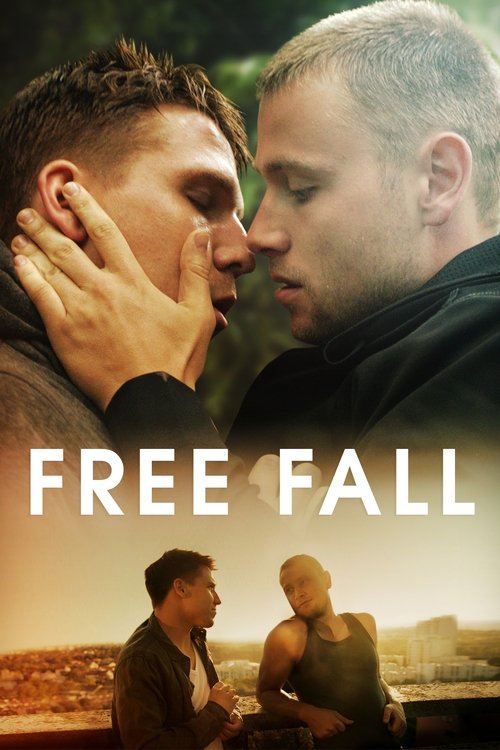
Free Fall
An intense, atmospheric romantic drama where a man's rigidly structured life collapses like a house of cards, forcing him out of societal conformity into a devastating but liberating emotional free fall.
Free Fall

Free Fall

Freier Fall

27 May 2013 Germany 97 min ⭐ 7.7 (828)
Director: Stephan Lacant
Cast: Hanno Koffler, Max Riemelt, Katharina Schüttler, Maren Kroymann, Luis Lamprecht
Drama Romance
Conformity vs. Authentic Identity Latent Homophobia and Hypermasculinity The Destructive Power of Secrets The Cyclical Nature of Awakening
Box Office: $599,721

Overview

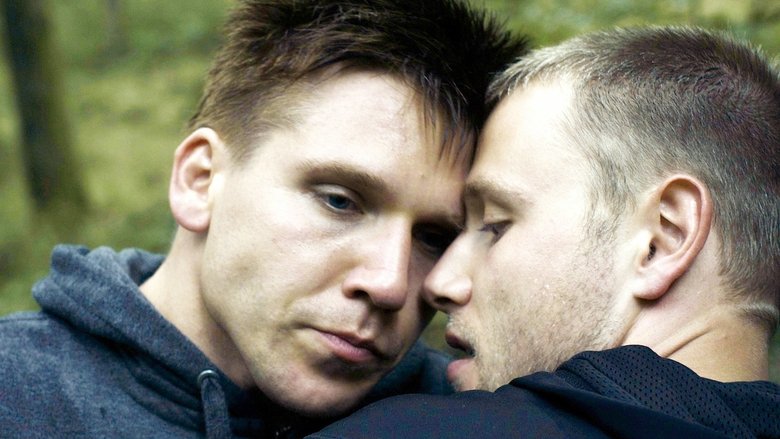
Free Fall (2013) follows Marc Borgmann, a young and promising police officer whose life seems perfectly mapped out. He is living in suburban Germany, advancing in his career at the riot control unit, and expecting a baby with his longtime girlfriend, Bettina. However, Marc's structured existence is thrown into turmoil when he meets Kay Engel, a new, rebellious roommate at the police training academy.

What begins as a tense rivalry during physical training soon blossoms into an intense, clandestine romance after the two men start jogging together in the woods. As their secret affair deepens, Kay is unexpectedly transferred to Marc's unit, forcing Marc's hidden and public lives to collide. Torn between his genuine love for Bettina, his fear of losing his family, and his overwhelming desire for Kay, Marc finds himself trapped in a devastating spiral where he cannot make anyone happy, least of all himself.

Core Meaning

The core message of Free Fall revolves around the destructive nature of societal expectations and the agonizing cost of living a lie. Director Stephan Lacant highlights how the pressure to conform to heteronormative ideals—especially within a hypermasculine environment like the police force—forces individuals to suppress their authentic selves. The film suggests that true liberation requires tearing down the comfortable but false structures of one's life, even if the resulting transition causes profound collateral damage and heartbreak to everyone involved.

Thematic DNA

Conformity vs. Authentic Identity 35%
Latent Homophobia and Hypermasculinity 30%
The Destructive Power of Secrets 20%
The Cyclical Nature of Awakening 15%

Conformity vs. Authentic Identity

This theme is central to Marc's character arc. He is torn between the safe, socially acceptable life he has built with his pregnant girlfriend and his parents, and the raw, authentic desires he discovers with Kay. The film illustrates the paralyzing fear of abandoning the status quo.

Latent Homophobia and Hypermasculinity

Set against the backdrop of a police riot control unit, the film exposes the toxic masculinity and casual homophobia that permeate institutional environments. This is heavily manifested through the violent character of Limpinski and the locker-room banter that keeps Marc firmly in the closet.

The Destructive Power of Secrets

Marc's inability to choose a path leads him to lie to both Bettina and Kay. The film demonstrates how living a double life creates a web of deceit that eventually collapses, causing deep emotional trauma to all parties in the love triangle.

The Cyclical Nature of Awakening

The narrative suggests that coming to terms with one's sexuality is an ongoing social cycle. At the beginning, Kay is the self-assured outsider who has already accepted who he is, while Marc is the frightened novice. By the end, Marc has taken the difficult first steps of his own awakening.

Character Analysis

Marc Borgmann

Hanno Koffler

Archetype: The Conflicted Protagonist
Key Trait: Repressed

Motivation

Initially driven by a desire to maintain the perfect facade of a family man and a tough cop, his motivation shifts to an uncontrollable yearning for his authentic desires, causing internal paralysis.

Character Arc

Marc evolves from a complacent, closeted man blindly following the path laid out for him by society and his family, to a man whose world is completely shattered by self-discovery. He loses everything but ultimately takes his first steps toward a solitary, authentic life.

Kay Engel

Max Riemelt

Archetype: The Catalyst / Rebel Lover
Key Trait: Unapologetic

Motivation

Driven by genuine affection and a desire to pull Marc out of his closeted, performative life so they can be together openly.

Character Arc

Kay enters the story as a confident, openly rebellious figure who knows what he wants. As he falls deeply in love with Marc, he becomes vulnerable, ultimately deciding to leave when he realizes Marc cannot protect him or commit to him.

Bettina Bischoff

Katharina Schüttler

Archetype: The Betrayed Partner
Key Trait: Loyal

Motivation

Driven by the desire to build a stable, loving family, and later, the need to uncover the truth about Marc's emotional distance.

Character Arc

Bettina goes from a trusting, loving, and expecting partner to a deeply suspicious and ultimately devastated woman who must find the strength to leave a toxic marriage for the sake of her child and her own dignity.

Symbols & Motifs

Jogging and Running

Meaning:

Running serves as a metaphor for escaping reality, struggling to keep up with societal expectations, and eventually finding one's own pace and freedom.

Context:

It frames the entire film. Initially, Marc struggles to keep up with his peers. He and Kay bond over jogging in the woods. The film ends with a tracking shot of Marc jogging, but this time he outpaces the rest of the squad and runs ahead alone.

The Forest

Meaning:

The forest acts as a locus amoenus—an idyllic, secluded sanctuary where societal rules and heteronormative pressures do not apply.

Context:

It is the primary setting for Marc and Kay's clandestine sexual encounters and moments of emotional intimacy, far removed from the watchful eyes of their colleagues and families.

Enclosed Domestic Spaces

Meaning:

Represent the suffocating, claustrophobic nature of Marc's socially mandated, heteronormative life.

Context:

Scenes with Bettina and his parents are often shot in cluttered, enclosed rooms, visually contrasting with the expansive, airy scenes Marc shares with Kay outdoors.

Memorable Quotes

Breathe evenly.

— Kay Engel

Context:

Kay says this to Marc multiple times while they are jogging together in the woods during their academy training.

Meaning:

While literally referring to pacing oneself during a physical run, it metaphorically highlights the need for Marc to find balance and control in his spiraling personal life.

What are you? / I don't know.

— Bettina Bischoff and Marc Borgmann

Context:

Spoken during the emotional climax when Bettina confronts Marc about his secret life and sexuality after discovering the truth.

Meaning:

This exchange perfectly encapsulates Marc's complete loss of identity. He can no longer claim to be the straight family man he thought he was, but he is not yet ready to define himself otherwise.

Are you crazy?

— Marc Borgmann

Context:

This is Marc's immediate, defensive reaction the first time Kay kisses him while they are sharing a joint in the woods.

Meaning:

A display of Marc's internalized homophobia and panic when confronted with unexpected same-sex affection.

Philosophical Questions

Is it possible to pursue one's authentic truth without causing irreparable harm to those anchored to your false identity?

The film explores this through Marc's devastating love triangle. His journey to self-discovery is inextricably linked to the betrayal and heartbreak of his pregnant girlfriend, raising questions about the moral cost of personal liberation.

How much of human desire and identity is shaped by the environment rather than the individual?

By placing the romance within the hypermasculine, heteronormative confines of a police riot squad, the film questions whether Marc would have repressed his sexuality so deeply had he not been surrounded by an institution that strictly punishes deviance.

Alternative Interpretations

The final shot of the film—Marc running on the track, pushing past his peers to run ahead alone—is highly debated and intentionally ambiguous. The Liberation Interpretation: Many view this ending as an optimistic triumph. At the start of the film, Marc struggled to keep up with the pack (societal expectations). By running ahead, he is finally breaking free from conformity, setting his own pace, and embracing his authentic self, even if it means doing it alone. The Tragic Isolation Interpretation: Conversely, others read the ending as profoundly bleak. Having lied to and alienated both his fiancée and his lover, Marc is left with absolutely no one. His sprint ahead is not a victory, but a frantic manifestation of his complete isolation and the devastating cost of his indecision. The Cyclical Interpretation: Some critics argue the ending mirrors Kay's position at the beginning of the film. Marc has now become the distinct, solitary outsider that Kay once was, suggesting that sexual awakening and societal alienation operate in an ongoing, repeating cycle.

Cultural Impact

Free Fall made a significant impact on contemporary German queer cinema by moving away from traditional 'coming out' narratives to focus on the darker, more destructive elements of late-in-life self-discovery within rigid institutional structures. Premiering at the Berlinale, the film sparked important cultural conversations regarding the stark contrast between Germany's outwardly liberal, progressive society and the latent homophobia that still exists within rural communities and hypermasculine professions like the police force. Its release coincided with real-world discussions about homosexuality in sports, notably following the coming out of German soccer player Thomas Hitzlsperger. The film resonated globally, drawing immediate, widespread comparisons to Ang Lee's Brokeback Mountain, and cultivated a highly dedicated international fanbase that successfully crowdfunded a sequel project.

Audience Reception

Audience reception for Free Fall has been highly positive, particularly within the LGBTQ+ community. Viewers frequently praise the palpable, natural chemistry between Hanno Koffler and Max Riemelt, noting that their intimate scenes feel remarkably authentic and emotionally grounded. The film's refusal to sugarcoat the destructive consequences of infidelity and internalized homophobia is often highlighted as its strongest asset. However, the film is not without its critics. Some audience members found the plot too derivative, pointing out the heavy-handed parallels to Brokeback Mountain. Additionally, the bleak, ambiguous ending proved controversial, frustrating viewers who hoped for a definitive romantic resolution rather than a depiction of tragic isolation.

Interesting Facts

  • The script was largely inspired by co-writer Karsten Dahlem's real-life experiences with homophobia and discrimination among police officers.
  • The film is frequently referred to by critics and international distributors as the 'German Brokeback Mountain' due to its themes of forbidden love in a hypermasculine profession.
  • Actors Hanno Koffler and Max Riemelt previously worked together on a shoot in Morocco, where they became close friends. They credited this pre-existing bond for their strong on-screen chemistry and trust during intimate scenes.
  • The film had its successful premiere at the Berlin International Film Festival (Berlinale) in 2013, opening the 'Perspektive Deutsches Kino' section.
  • Due to the film's passionate cult following and ambiguous ending, a crowdfunding campaign was launched in 2017 to finance a sequel, 'Free Fall 2', which successfully raised over €150,000 to fund the script development.

⚠️ Spoiler Analysis

Click to reveal detailed analysis with spoilers

Frequently Asked Questions

Explore More About This Movie

Dive deeper into specific aspects of the movie with our detailed analysis pages

Comments (0)

Leave a comment

No comments yet. Be the first to share your thoughts!