
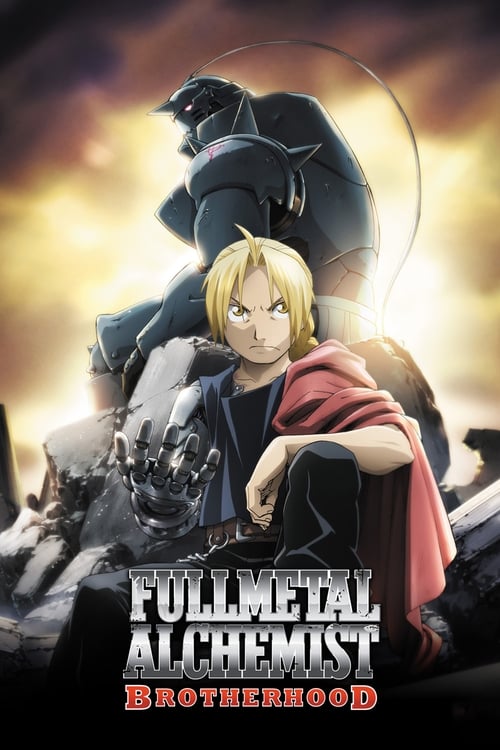
The central conspiracy of "Fullmetal Alchemist: Brotherhood" is orchestrated by a centuries-old Homunculus named Father. Originally the "Dwarf in the Flask," he was created from the blood of Van Hohenheim (the Elric brothers' father) in the ancient city of Xerxes. Father manipulated the king of Xerxes into creating a nationwide transmutation circle, sacrificing the entire city to create two powerful Philosopher's Stones, making himself and Hohenheim immortal. Father's ultimate plan is to repeat this on the scale of the entire country of Amestris, which he himself designed as a giant transmutation circle, to absorb the souls of millions and pull the entity known as 'God' from The Gate of Truth, thereby becoming a perfect being.
The State Military is secretly controlled by Father. The highest-ranking general, Führer King Bradley, is the Homunculus Wrath. The other Homunculi (Lust, Gluttony, Envy, Greed, Sloth, and Pride) are all manifestations of Father's own sins, which he purged from himself. The various wars and conflicts in Amestris's history, including the Ishvalan War of Extermination, were all engineered by Father to create the necessary 'crests of blood' to power his nationwide transmutation. The Philosopher's Stone, the object the Elrics initially seek, is revealed to be made from condensed human souls, forcing them to reject it as a means to restore their bodies.
In the finale, Father successfully activates the circle on the "Promised Day," but Hohenheim has a counter-measure prepared, releasing the Amestrian souls. In the ensuing battle, Alphonse sacrifices his own soul to restore Edward's arm. Edward then defeats Father, who is dragged back into the Gate of Truth from which he came. To rescue Alphonse, Edward performs one last human transmutation. He realizes the ultimate truth: he doesn't need alchemy to be happy as long as he has his friends and family. He sacrifices his ability to perform alchemy—his Gate of Truth—in exchange for Alphonse's body and soul. The series ends with the brothers fully restored, Hohenheim dying peacefully at his wife's grave, Mustang (who was forcibly made to open a Gate and lost his sight) planning to rebuild the nation, and Edward and Winry starting a family together.