Fullmetal Alchemist: Brotherhood
A steampunk-infused odyssey where brotherly love confronts cosmic law, forging a saga of sacrifice and redemption etched in steel and soul.
Fullmetal Alchemist: Brotherhood

Fullmetal Alchemist: Brotherhood

鋼の錬金術師 FULLMETAL ALCHEMIST

05 April 2009 — 04 July 2010 Japan 1 season 64 episode Ended ⭐ 8.7 (2,263)
Cast: Rie Kugimiya, Romi Park, Shin-ichiro Miki, Fumiko Orikasa, Megumi Takamoto
Animation Sci-Fi & Fantasy Action & Adventure Comedy
Sacrifice and Redemption The Nature of Humanity Family and Brotherhood Science, Power, and Morality

Overview

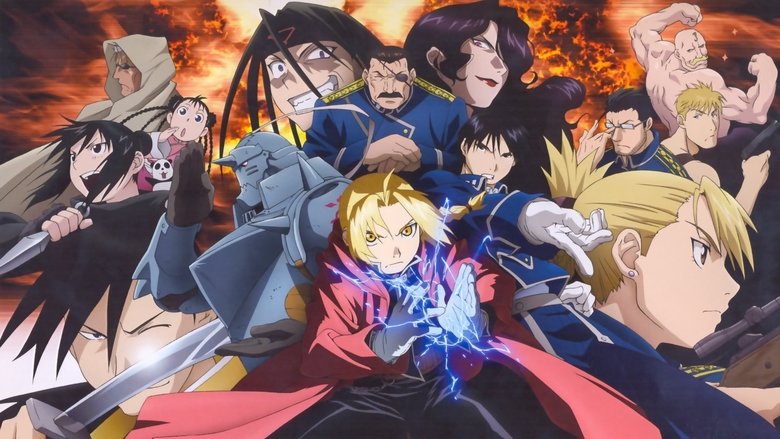
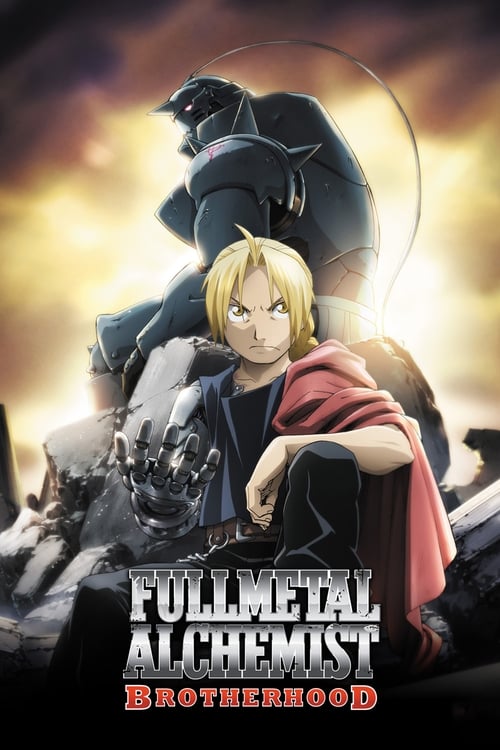
"Fullmetal Alchemist: Brotherhood" tells the story of two brothers, Edward and Alphonse Elric, gifted alchemists living in the country of Amestris. After their mother's tragic death, they attempt the forbidden alchemical practice of human transmutation to bring her back, a choice that costs Edward his left leg and right arm, and Alphonse his entire physical body. Edward manages to bond his brother's soul to a suit of armor, and the two embark on a perilous journey to find the legendary Philosopher's Stone, believing it holds the power to restore their bodies.

Their quest leads them to become State Alchemists, working for a military that harbors dark secrets. As they delve deeper, they uncover a nationwide conspiracy orchestrated by enigmatic beings known as Homunculi. The brothers find themselves entangled in a conflict that spans centuries, involving the history of their nation, the dark origins of the Philosopher's Stone, and the ambitions of a shadowy figure who seeks to achieve godhood. Their personal mission to regain their bodies becomes intertwined with a desperate struggle to save their country and all of humanity from a cataclysmic fate.

Core Meaning

The core meaning of "Fullmetal Alchemist: Brotherhood" revolves around the idea that humanity's strength lies in its imperfections, connections, and the acceptance of loss. The series repeatedly explores the concept of "Equivalent Exchange," initially as a rigid law of alchemy, but ultimately reveals its deeper, more philosophical meaning: one cannot gain anything without first giving something in return, and the value of what is given and received is often intangible. The story posits that striving for perfection or godhood, as the antagonist does, leads to ruin because it requires severing the very human connections that give life meaning. Ultimately, the series champions the idea that true strength is found not in absolute power, but in love, friendship, resilience in the face of suffering, and the courage to move forward despite being 'small, insignificant humans.'

Thematic DNA

Sacrifice and Redemption 35%
The Nature of Humanity 30%
Family and Brotherhood 20%
Science, Power, and Morality 15%

Sacrifice and Redemption

This is the central theme, beginning with the Elrics' initial, misguided sacrifice to resurrect their mother, which leads to their quest for redemption. Throughout the series, characters constantly make sacrifices, big and small. Edward sacrifices his limbs for his brother, and later, his ability to perform alchemy to restore Alphonse's body completely. This contrasts with the villains' use of sacrifice, where human lives are treated as mere ingredients. The series argues that true, meaningful sacrifice is a selfless act for others, and it is through these acts that characters find redemption and growth.

The Nature of Humanity

The series constantly questions what it means to be human. Alphonse, a soul in a suit of armor, grapples with his identity, while the Homunculi, artificial humans who embody the seven deadly sins, ironically display human-like desires and flaws. The story explores themes of prejudice, war, and genocide through the Ishvalan conflict, revealing humanity's capacity for both great cruelty and profound kindness. It concludes that being human is not about physical form but about having a soul, forming bonds, and embracing the cycle of life and death.

Family and Brotherhood

The unbreakable bond between Edward and Alphonse is the emotional core of the narrative. Their unwavering support for one another drives the entire plot. This theme extends to found families, such as the relationship the Elrics have with Winry and Pinako Rockbell, and the loyalty among Colonel Mustang's subordinates. The series contrasts this with the dysfunctional and abusive family of the Homunculi and their creator, Father, highlighting that true family is built on love and mutual respect, not power and fear.

Science, Power, and Morality

Alchemy is treated as a science in the series, governed by the Law of Equivalent Exchange. The story explores the ethical responsibilities of scientists and the corrupting nature of power. Characters like Shou Tucker represent the horrifying consequences of knowledge without morality. The State Alchemist system itself raises questions about science being used as a weapon of war. The series ultimately suggests that knowledge and power must be tempered with humility and a strong moral compass to avoid catastrophe.

Character Analysis

Edward Elric

Romi Park

Archetype: The Determined Hero
Key Trait: Unyielding Determination

Motivation

Edward's primary motivation is to restore his brother Alphonse's body. This goal remains constant, but its context evolves. Initially, it's a personal quest for redemption. Over time, it becomes intertwined with a desire to protect his loved ones and save his country from the Homunculi's plot. He learns that his personal goal cannot be achieved without fighting for a better world for everyone.

Character Arc

Edward begins as a prideful and hot-headed prodigy, driven by guilt and a single-minded determination to fix his mistake. Initially, his motivation is selfish, focused only on restoring his and Al's bodies. As he confronts the horrors of the world—government corruption, the truth of the Philosopher's Stone, and the Ishvalan War—his perspective broadens. He evolves from an arrogant boy who believes alchemy can solve everything into a mature young man who understands that true strength comes from relying on others and accepting his own limitations. His final act of sacrificing his own alchemy, the core of his identity, for his brother's sake represents the culmination of his growth from pride to humility.

Alphonse Elric

Rie Kugimiya

Archetype: The Gentle Heart
Key Trait: Compassion

Motivation

Like Edward, Alphonse's main goal is to regain his original body. However, he is also deeply motivated by a desire to help others and prevent them from suffering. His inherent kindness often leads him to protect people, even strangers, at his own risk. He wants to feel human again not just for himself, but so he can properly connect with the people he cares about.

Character Arc

Alphonse starts as the more passive and dependent of the two brothers, his existence as a soul bound to armor defining his experience of the world. His arc is a journey of asserting his own identity and independence. He battles with the fear that he isn't real and learns to find strength in his unique situation, often acting as the moral compass and calming influence for the hot-headed Edward. He grows from a boy following his brother's lead into a courageous individual who makes his own sacrifices, culminating in his willingness to give up his own soul to help Edward in the final battle. His restoration to a human body signifies not just a physical return, but the completion of his journey to selfhood.

Roy Mustang

Shin-ichiro Miki

Archetype: The Ambitious Mentor
Key Trait: Strategic Ambition

Motivation

Mustang's core motivation is to ascend to the top of the military hierarchy to change the nation for the better, ensuring that tragedies like the Ishvalan war never happen again. This long-term goal is fueled by a more immediate and personal desire to protect his subordinates, whom he views as his family, and to avenge the death of Maes Hughes.

Character Arc

Roy Mustang is introduced as an arrogant and ambitious careerist, known as the "Flame Alchemist." His outward demeanor masks a deep self-loathing stemming from his role as a "human weapon" in the Ishvalan War of Extermination. His arc is about channeling his guilt and rage into a structured ambition: to become the leader of Amestris and reform the corrupt system from within. He is repeatedly tested, particularly by the murder of his best friend Maes Hughes, which nearly sends him down a path of pure revenge. He ultimately learns to temper his ambition with reliance on his trusted comrades, recognizing that a true leader protects their people rather than using them as pawns.

Symbols & Motifs

Ouroboros

Meaning:

The Ouroboros, a snake eating its own tail, symbolizes the endless cycle of life, death, and rebirth. For the Homunculi who bear this tattoo, it represents their cyclical regeneration and their false sense of immortality. It also signifies their self-contained, unnatural existence, as they are unable to truly grow or change beyond the sin they embody.

Context:

Each of the seven Homunculi has the Ouroboros tattoo somewhere on their body. Its placement often corresponds to where their Philosopher's Stone is housed. The symbol is a constant visual reminder of their non-human nature and their connection to their creator, Father.

The Gate of Truth

Meaning:

The Gate is a metaphysical portal that represents the universe's total knowledge and the ultimate source of alchemical power. It is also a reflection of the individual alchemist's own soul and understanding of the world. To see The Gate is to learn a profound, often painful, 'Truth' about oneself and the world, and it exacts a physical and mental toll as payment for that knowledge.

Context:

The Gate appears whenever an alchemist performs the taboo of human transmutation. Edward, Alphonse, Izumi Curtis, and Roy Mustang all see The Gate and lose something in return for the knowledge they gain. The final antagonist, Father, seeks to absorb the entity within The Gate to become a perfect being.

Flamel's Cross

Meaning:

This symbol, worn by Edward on his coat and tattooed on his teacher Izumi, is a cross with a crowned snake wrapped around it and wings at the top. It is based on the symbol of Nicolas Flamel, a real-world alchemist. It alludes to the Rod of Asclepius, representing healing and medicine, which aligns with the Elrics' goal to heal their bodies. The crucified snake can also symbolize fixing the volatile, or overcoming a deadly poison, reflecting the brothers' quest to overcome their past mistakes.

Context:

Edward wears the symbol prominently on the back of his red coat throughout the series. It serves as a visual identifier for the Fullmetal Alchemist and a constant reminder of his and his master's shared philosophy and goals.

Automail

Meaning:

The prosthetic automail limbs that Edward and others use symbolize both loss and resilience. They are a constant, physical reminder of a past sacrifice or trauma. However, they also represent the ability to overcome that loss, to stand up again, and to continue moving forward. They are a fusion of technology and humanity, blurring the lines of what it means to be whole.

Context:

Edward's right arm and left leg are automail, a constant presence in his life and fights. His childhood friend, Winry Rockbell, is his mechanic, making his automail a symbol of their deep bond. The maintenance and repair of the limbs provide key moments for character interaction and reflection on their journey.

Memorable Quotes

A lesson without pain is meaningless. That's because no one can gain without sacrificing something. But by enduring that pain and overcoming it, he shall obtain a powerful, unmatched heart… A heart made fullmetal.

— Edward Elric (Narrating)

Context:

This is part of the final narration in the last episode, "Journey's End" (Episode 64). Edward reflects on his entire journey and the profound lessons he and his brother have learned, summarizing the core message of the entire series.

Meaning:

This quote encapsulates the series' central philosophy of Equivalent Exchange applied to personal growth. It posits that true strength and understanding cannot be achieved without experiencing hardship and loss. The pain is not gratuitous; it's a necessary catalyst for developing resilience and empathy—a "heart made fullmetal."

Stand up and walk. Keep moving forward. You've got two good legs. So get up and use them. You're strong enough to make your own path.

— Edward Elric

Context:

Edward says this to Rose Thomas in Liore in Episode 2, "The First Day," after shattering her faith in the charlatan Father Cornello. He forces her to confront a harsh reality but also empowers her to find her own strength rather than relying on false hope.

Meaning:

This quote embodies Edward's philosophy of self-reliance and relentless forward momentum. Despite the world's cruelty and his own losses, he refuses to succumb to despair. It's a tough-love message about taking responsibility for one's own life and having the strength to overcome adversity without waiting for a miracle.

The power of one man doesn't amount to much. But, however little strength I'm capable of, I'll do everything humanly possible to protect the people I love, and in turn they will protect the ones they love. It seems like the least we tiny humans can do for each other.

— Roy Mustang

Context:

Roy Mustang says this during his fierce battle with the Homunculus Envy in Episode 53, "Flame of Vengeance." He is explaining his motivation to Riza Hawkeye, connecting his grand ambitions to the simple, human desire to protect those he cares for.

Meaning:

This quote reflects a shift in perspective for the typically arrogant Mustang, showcasing his underlying protective nature. It speaks to the theme of interconnectedness, suggesting that humanity's collective strength is built from a chain of personal loyalties and affections. It's a humble acknowledgment of individual limitation but a powerful statement on the strength of community.

Episode Highlights

An Alchemist's Anguish

S1E4

The Elric brothers meet State Alchemist Shou Tucker, renowned for creating a talking chimera. They bond with his young daughter, Nina, and their dog, Alexander. As Tucker's assessment looms, he grows desperate and, in a horrifying reveal, transmutes Nina and Alexander into a new chimera to save his career. The episode ends with the chimera being euthanized by Scar.

Significance:

This is arguably the most infamous and emotionally devastating episode. It serves as a brutal lesson for the Elrics about the depths of human depravity and the horrific misuse of science. It solidifies their moral compass and reinforces their understanding that there are lines that must never be crossed, profoundly impacting their worldview for the rest of the series.

Death of the Undying

S1E19

Roy Mustang and his subordinates lure the Homunculus Lust into a trap. After she critically wounds Mustang and Havoc, she reveals her true power and seemingly kills Mustang. However, Roy, having carved a transmutation circle onto his hand, repeatedly incinerates her with his flame alchemy until her Philosopher's Stone is exhausted, killing her permanently.

Significance:

This episode is a major turning point, proving for the first time that the seemingly immortal Homunculi can be killed. It establishes the sheer power and terrifying resolve of Roy Mustang, elevating him from a manipulative superior to a formidable force against the series' main antagonists.

The Dwarf in the Flask

S1E40

Through a flashback, the origin of both Van Hohenheim and the primary antagonist, Father, is revealed. Hohenheim was once a slave in the ancient city of Xerxes, known as "Slave Number 23." He meets a being created from his blood, the "Dwarf in the Flask." The Dwarf tricks the king of Xerxes into creating a nationwide transmutation circle, sacrificing the entire population to grant itself and Hohenheim immortal bodies powered by Philosopher's Stones.

Significance:

This episode provides crucial exposition, explaining the backstory of the series' most important and mysterious characters. It unveils the villain's ultimate plan and his profound connection to the Elrics' father, reframing the entire conflict and raising the stakes to a cosmic level.

He Who Would Swallow God

S1E61

On the Promised Day, Father succeeds in activating the nationwide transmutation circle, absorbing the souls of Amestris and activating the Gate of the planet to absorb the entity known as "God." He transforms into a powerful, youthful new being. However, Hohenheim reveals his counter-plan: he had spent centuries placing fragments of his own Philosopher's Stone across the country, which allows him to reverse the transmutation and return the souls to the people of Amestris.

Significance:

This is the climax of the central conflict. It's the moment the villain achieves his ultimate goal, only to have it immediately challenged. The episode showcases the culmination of centuries of planning by both the hero (Hohenheim) and the villain (Father), representing the ultimate confrontation between their opposing philosophies.

The Other Side of the Gateway

S1E63

With Father defeated, Edward must find a way to bring back Alphonse, whose soul is trapped with his original body inside the Gate of Truth. Rejecting the use of a Philosopher's Stone, Ed performs a final human transmutation on himself. He sacrifices his own Gate of Truth—his ability to perform alchemy—as the toll. In doing so, he proves to the entity Truth that he doesn't need alchemy to be whole, and is allowed to bring Alphonse back, body and soul.

Significance:

This episode is the emotional and philosophical climax of the Elric brothers' journey. Edward's ultimate sacrifice is not his life, but the very talent that defined him. It's the final, most profound application of the "Equivalent Exchange" principle, demonstrating that his love for his brother is more valuable than his immense power, bringing their story to a deeply satisfying conclusion.

Philosophical Questions

What is the true meaning of 'Equivalent Exchange'?

The series begins with a rigid, scientific definition of Equivalent Exchange: "to obtain, something of equal value must be lost." This is the law of alchemy. However, as the Elric brothers journey, they discover this law is insufficient to explain human experience. The pain of losing their mother is not equivalent to the components of a human body. The series explores this question by showing that the most important exchanges are not alchemical but emotional and moral. In the end, Edward redefines the principle. When proposing to Winry, he offers half his life for half of hers, but she rejects the premise, offering her whole life. The final, and truest, 'exchange' is Edward sacrificing his alchemy—his power—for his brother's soul, proving that the value of human connection transcends any quantifiable exchange.

What does it mean to be human?

This question is central to the series, explored through multiple characters. Alphonse is a human soul without a body, constantly questioning his own existence. The Homunculi are artificial beings with human forms and emotions but no soul, driven by singular sins. Chimeras like Nina Tucker are fusions of human and animal, trapped between identities. The series suggests that humanity is not defined by a physical body, but by the capacity for love, sacrifice, growth, and the acceptance of mortality. Father, who seeks to become a 'perfect being' by shedding his human limitations, is ultimately defeated because he cannot understand the strength found in these very 'flaws'.

Can one be redeemed from past sins?

Many characters in the series are haunted by their past actions. Roy Mustang and Riza Hawkeye grapple with their roles as 'human weapons' in the Ishvalan genocide. Scar begins as a vengeful killer, driven by the murder of his people. The Elric brothers' entire journey is a quest for redemption for their taboo act. The series suggests that redemption is possible, but not through simple atonement. It requires acknowledging one's sins, taking responsibility, and actively working to create a better future. Scar finds redemption by helping to rebuild Ishval, and Mustang seeks to lead the country towards peace. Redemption is portrayed as a difficult, ongoing process of changing oneself for the better.

Alternative Interpretations

One alternative interpretation focuses on the nature of 'Truth'. While presented as a neutral, cosmic arbiter of Equivalent Exchange, some view Truth as a more malicious entity. It punishes hubris with cruel irony (taking Ed's leg to stand on and Al's body to feel a mother's warmth), suggesting a punitive nature rather than a balanced one. This reading frames the story not as learning to work within a fair system, but as a struggle against a capricious, god-like being, with Ed's final rejection of alchemy being the only way to truly 'win' by refusing to play the game.

Another interpretation views the story as a political allegory. Amestris, a militaristic state with a history of genocide (the Ishvalan War) and a secret cabal controlling the government from the shadows, can be seen as a critique of 20th-century fascism and imperialism. Father's plan to absorb the souls of the nation to achieve power is a metaphor for how totalitarian regimes consume their populace for their own ends. The heroes' victory is therefore not just personal but a triumph of individual will and morality over a corrupt, all-consuming state.

Cultural Impact

"Fullmetal Alchemist: Brotherhood" is widely regarded by fans and critics as one of the greatest anime series of all time, frequently topping user-rated lists on websites like MyAnimeList. Its success cemented the global popularity of the shonen genre while simultaneously elevating expectations for it. Unlike many of its contemporaries, the series is lauded for its tight pacing, lack of filler episodes, and a definitive, satisfying conclusion that faithfully adapts its source material.

The series had a significant influence on television by demonstrating that a shonen anime could tackle incredibly mature and complex philosophical themes—such as theodicy, the ethics of science, war crimes, and existentialism—without sacrificing action and adventure. This blend of intellectual depth and accessible entertainment appealed to a broader audience beyond typical anime fans. Its well-developed characters, including strong and competent female characters like Riza Hawkeye and Izumi Curtis, were also noted as a refreshing departure from genre tropes. The series' legacy is its redefinition of what an action-adventure story can be, proving that narratives aimed at younger audiences can be emotionally resonant, morally complex, and philosophically rich.

Audience Reception

"Fullmetal Alchemist: Brotherhood" received near-universal acclaim from audiences and is consistently ranked as one of the best anime series of all time. Viewers overwhelmingly praised its faithful adaptation of the manga, resulting in a cohesive and well-paced story with no filler. The series is lauded for its compelling and emotionally complex characters, with the bond between the Elric brothers being a frequent highlight. The intricate plot, which seamlessly blends action, comedy, tragedy, and deep philosophical themes, was another major point of praise. Points of criticism are few and far between, but some viewers felt the early episodes moved too quickly, especially if they hadn't seen the 2003 anime which covered the beginning of the story in more detail. However, the overall verdict from audiences is that the series is a masterpiece of storytelling with a deeply satisfying and emotionally resonant conclusion that wraps up every major plotline effectively.

Interesting Facts

  • The creator of the manga, Hiromu Arakawa, grew up on a dairy farm in Hokkaido. Her background influenced the series' themes of hard work, the cycle of life and death, and the philosophy of "you reap what you sow," which is a parallel to Equivalent Exchange.
  • "Brotherhood" is the second anime adaptation of the manga. The first series, "Fullmetal Alchemist" (2003), was created while the manga was still ongoing and thus diverged into an original story. "Brotherhood" was created later to be a more faithful adaptation of the completed manga.
  • In a prototype version of the story, Alphonse Elric's soul was sealed into a flying squirrel, not a suit of armor, to contrast with Edward's height.
  • Many of the high-ranking military officers are named after World War II-era military aircraft and vehicles, such as Grumman, Mustang, and Hawkeye.
  • The country of Amestris, where the story is set, is heavily inspired by industrial revolution-era Europe, particularly Germany. The political climate and historical events like the Ishvalan War have parallels to real-world history, including World War II and the Holocaust.
  • The voice actor for Alphonse in the original Japanese version, Rie Kugimiya, is a famous voice actress known for her roles as fiery, petite female characters (a "tsundere" archetype), making her casting as the gentle, giant-armored Alphonse an interesting contrast.

⚠️ Spoiler Analysis

Click to reveal detailed analysis with spoilers

Frequently Asked Questions

Explore More About This Movie

Dive deeper into specific aspects of the movie with our detailed analysis pages

Comments (0)

Leave a comment

No comments yet. Be the first to share your thoughts!