
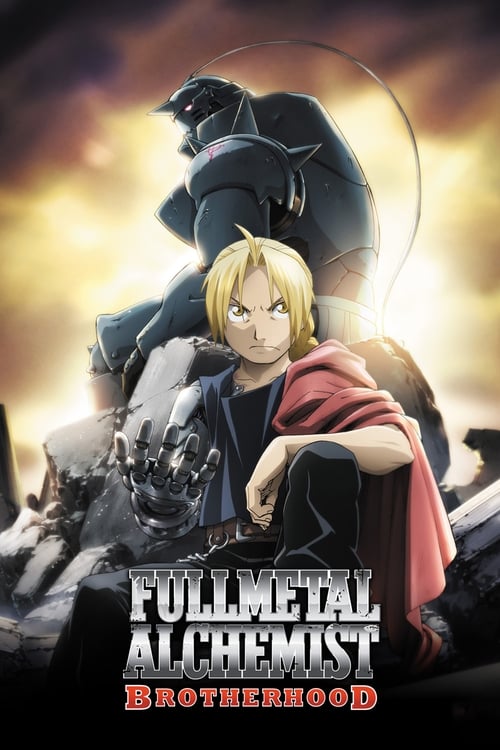
鋼の錬金術師 FULLMETAL ALCHEMIST
Cast: Rie Kugimiya, Romi Park, Shin-ichiro Miki, Fumiko Orikasa, Megumi Takamoto
Fullmetal Alchemist: Brotherhood — Episode Highlights
Episode Highlights
An Alchemist's Anguish
S1E4The Elric brothers meet State Alchemist Shou Tucker, renowned for creating a talking chimera. They bond with his young daughter, Nina, and their dog, Alexander. As Tucker's assessment looms, he grows desperate and, in a horrifying reveal, transmutes Nina and Alexander into a new chimera to save his career. The episode ends with the chimera being euthanized by Scar.
This is arguably the most infamous and emotionally devastating episode. It serves as a brutal lesson for the Elrics about the depths of human depravity and the horrific misuse of science. It solidifies their moral compass and reinforces their understanding that there are lines that must never be crossed, profoundly impacting their worldview for the rest of the series.
Death of the Undying
S1E19Roy Mustang and his subordinates lure the Homunculus Lust into a trap. After she critically wounds Mustang and Havoc, she reveals her true power and seemingly kills Mustang. However, Roy, having carved a transmutation circle onto his hand, repeatedly incinerates her with his flame alchemy until her Philosopher's Stone is exhausted, killing her permanently.
This episode is a major turning point, proving for the first time that the seemingly immortal Homunculi can be killed. It establishes the sheer power and terrifying resolve of Roy Mustang, elevating him from a manipulative superior to a formidable force against the series' main antagonists.
The Dwarf in the Flask
S1E40Through a flashback, the origin of both Van Hohenheim and the primary antagonist, Father, is revealed. Hohenheim was once a slave in the ancient city of Xerxes, known as "Slave Number 23." He meets a being created from his blood, the "Dwarf in the Flask." The Dwarf tricks the king of Xerxes into creating a nationwide transmutation circle, sacrificing the entire population to grant itself and Hohenheim immortal bodies powered by Philosopher's Stones.
This episode provides crucial exposition, explaining the backstory of the series' most important and mysterious characters. It unveils the villain's ultimate plan and his profound connection to the Elrics' father, reframing the entire conflict and raising the stakes to a cosmic level.
He Who Would Swallow God
S1E61On the Promised Day, Father succeeds in activating the nationwide transmutation circle, absorbing the souls of Amestris and activating the Gate of the planet to absorb the entity known as "God." He transforms into a powerful, youthful new being. However, Hohenheim reveals his counter-plan: he had spent centuries placing fragments of his own Philosopher's Stone across the country, which allows him to reverse the transmutation and return the souls to the people of Amestris.
This is the climax of the central conflict. It's the moment the villain achieves his ultimate goal, only to have it immediately challenged. The episode showcases the culmination of centuries of planning by both the hero (Hohenheim) and the villain (Father), representing the ultimate confrontation between their opposing philosophies.
The Other Side of the Gateway
S1E63With Father defeated, Edward must find a way to bring back Alphonse, whose soul is trapped with his original body inside the Gate of Truth. Rejecting the use of a Philosopher's Stone, Ed performs a final human transmutation on himself. He sacrifices his own Gate of Truth—his ability to perform alchemy—as the toll. In doing so, he proves to the entity Truth that he doesn't need alchemy to be whole, and is allowed to bring Alphonse back, body and soul.
This episode is the emotional and philosophical climax of the Elric brothers' journey. Edward's ultimate sacrifice is not his life, but the very talent that defined him. It's the final, most profound application of the "Equivalent Exchange" principle, demonstrating that his love for his brother is more valuable than his immense power, bringing their story to a deeply satisfying conclusion.
Explore More About This Movie
Dive deeper into specific aspects of the movie with our detailed analysis pages