
Generator Rex - Symbolism & Philosophy
Symbols & Motifs
Rex's Goggles
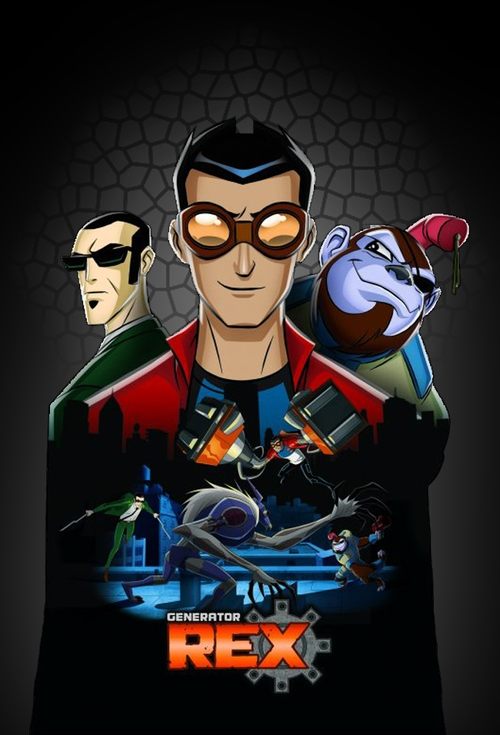
Rex's signature goggles symbolize his unique vision and perspective. They represent his ability to see the world differently, not just in terms of E.V.O.s and nanites, but also in his capacity for empathy. While others see monsters, Rex sees people who need to be cured. They are a classic visual shorthand for a youthful, adventurous hero, grounding his incredible powers in a relatable, slightly quirky accessory.
Rex wears his goggles in nearly every episode, especially during combat or while riding his motorcycle build. They are a constant part of his visual identity, linking his casual teenage persona with his superhero duties. They are often the last thing he puts on before heading into a fight, signifying his shift into his role as Providence's weapon.
The Nanites
The nanites are the central symbol of the series, representing technology's dual-edged nature. They are simultaneously a plague and a source of miracles. For most, they bring monstrous transformation and chaos, symbolizing uncontrolled scientific ambition. For Rex, they represent potential, power, and the ability to heal. Ultimately, they symbolize humanity's evolving relationship with technology, and the choice between using it for destruction or for the betterment of society.
Nanites are omnipresent throughout the entire series. They are the cause of every E.V.O. threat, the source of Rex's powers, and the subject of all scientific and military endeavors by both Providence and the villains. Their visual representation, often as glowing, microscopic machines, appears whenever Rex uses his powers or cures an E.V.O.
Abysus
Van Kleiss's kingdom of Abysus symbolizes a twisted utopia and the seductive danger of unchecked ambition. It is presented as a haven for E.V.O.s, a place where they can be free from Providence's persecution. However, it is built on the will of a single, tyrannical ruler, symbolizing how a search for freedom can lead to a different kind of imprisonment. It represents a corrupted path for E.V.O.s, one that embraces the monster rather than seeking to reclaim humanity.
Abysus is a recurring location, particularly in the first season. It is the site of several key confrontations between Rex and Van Kleiss. The kingdom itself is biomechanical, directly connected to Van Kleiss, visually representing how his will and the environment are one and the same.
Philosophical Questions
What defines humanity in a post-human world?
The series constantly explores this question through the existence of E.V.O.s. Are they still human? If a person's body is monstrous and their mind is gone, what remains of their identity? Rex's ability to cure them suggests that their humanity is dormant, not destroyed. The show challenges viewers to consider whether humanity is defined by physical form, memory, or the capacity for reason and emotion. Rex himself, a synthesis of human and machine, is the ultimate exploration of this, proving that humanity is not about biological purity but about one's actions and choices.
Is absolute security worth the price of individual freedom?
This question is central to the conflict between Rex and Providence, particularly under the leadership of White Knight. White Knight believes in control and security at any cost, keeping Rex under lockdown and advocating for extreme measures against the E.V.O. threat. Rex, on the other hand, constantly fights for his own freedom and believes in a more compassionate approach. The series uses this dynamic to explore the classic philosophical debate between security and liberty, ultimately siding with the idea that a life without freedom isn't worth living, and that true strength comes from trust and empathy, not just control.
Core Meaning
At its core, "Generator Rex" explores the themes of identity, control, and what it means to be human in a world saturated with technology. The series posits that the very thing that can destroy humanity—the nanites—is also the key to its salvation, embodied in Rex himself. It delves into the struggle of a young man trying to forge his own identity while being treated as both a weapon and a cure. Rex's journey is a powerful allegory for adolescence: grappling with a body that feels alien and uncontrollable, searching for a past to define his future, and learning to accept the monstrous parts of himself to become a hero. The show ultimately argues for a symbiotic relationship with technology, suggesting that true progress lies not in eradicating what we fear, but in understanding and controlling it with empathy and responsibility.