Germania anno zero
"A soldier can lose everything but his courage."
Germany, Year Zero - Symbolism & Philosophy
Symbols & Motifs
The Ruined Cityscape of Berlin
The bombed-out buildings symbolize the complete collapse of civilization, moral order, and the German psyche. The ruins act as an inescapable labyrinth of despair.
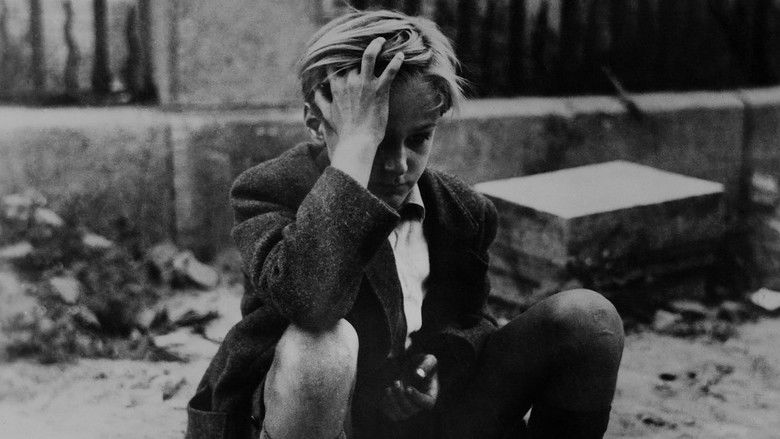
The ruins tower over Edmund throughout the film, most notably during the long, unbroken tracking shots where the environment physically dwarfs the child.
Hitler's Recorded Voice
It symbolizes the haunting, inescapable ghost of Germany's recent past, mocking the current state of absolute destitution with grandiose, hollow promises.
Edmund attempts to sell a record of the Führer's speech to Allied soldiers. When played on a gramophone in the ruined Chancellery, the booming voice creates a chilling juxtaposition against the surrounding devastation.
The Poisoned Tea
The tea represents the direct, fatal translation of social Darwinist theory into action. It is a perverted act of mercy driven by corrupted logic.
Edmund prepares the deadly brew for his ailing father, genuinely believing he is alleviating the family's burden based on the survival-of-the-fittest ideology taught by his mentor.
Philosophical Questions
Can an individual maintain a moral compass in a state of absolute deprivation?
The film explores how extreme starvation and the collapse of societal structure strip away traditional ethics. It asks whether morality is an inherent human trait or merely a luxury afforded by civilization.
Are children morally responsible for actions driven by the corrupted ideologies of their adult mentors?
Edmund commits patricide, but he does so under the ideological grooming of his former teacher. The film challenges the viewer to place the blame not on the child, but on the enduring toxicity of fascist doctrines.
Can a society truly reach a 'Year Zero' and rebuild itself, or is the poison of its history inescapable?
By showing Nazi sympathizers like Henning still operating in the ruins, the film questions the concept of a clean slate (Stunde Null), suggesting that physical destruction does not erase psychological and cultural rot.
Core Meaning
Roberto Rossellini masterfully confronts the lingering ideological poison of Nazism and the devastating human cost of war. The film suggests that the physical destruction of a city is secondary to the profound moral decay of its inhabitants. By making an impressionable child the protagonist, Rossellini demonstrates how toxic ideologies—like the survival of the fittest—outlive the regimes that created them and corrupt the most innocent among us.
The Year Zero of the title represents both the absolute obliteration of the old world and a terrifyingly blank slate. Rossellini asks a terrifying question: Is true rebirth possible when the roots of fascist ideology and absolute despair remain deeply embedded in the survivors?