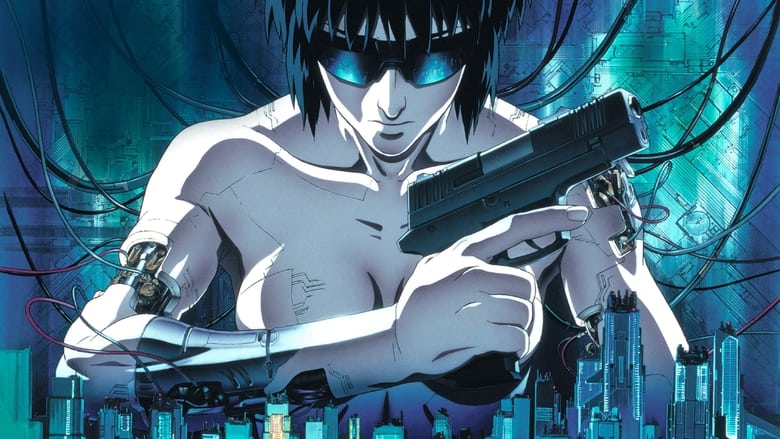

GHOST IN THE SHELL
"It found a voice... Now it needs a body."
Director: Mamoru Oshii
Cast: Atsuko Tanaka, Akio Otsuka, Iemasa Kayumi, Koichi Yamadera, Yutaka Nakano
Ghost in the Shell — Movie Quotes
Memorable Quotes
攻殻機動隊 (Kōkaku Kidōtai) - Ghost in the Shell
Context
Spoken in the Section 9 laboratory after the cybernetic shell containing the Puppet Master's ghost is brought in. When Batou dismisses it as a mere program, the shell activates and delivers this monologue, challenging the assumptions of everyone present.
Meaning
This quote comes when the Puppet Master, speaking through a cybernetic shell, declares itself a sentient being. It argues that DNA is also a self-preserving program and questions the definition of life itself. It's a pivotal moment that establishes the film's central philosophical conflict: what separates artificial life from organic life when both are based on information and self-perpetuation?
And where does the newborn go from here? The net is vast and infinite.
Context
Spoken by the new consciousness residing in a child-sized shell, just before she looks out over the city and disappears into the network. It is her final statement to Batou and the audience about her new state of existence.
Meaning
These are the final lines of the film. They signify Kusanagi's complete transformation and rebirth. No longer confined to a single "shell" or identity, she has become a new entity merged with the Puppet Master. The quote expresses a sense of limitless potential and freedom, as she now has access to the entirety of the global network as her new world and body. It's an optimistic, albeit unsettling, conclusion about the future of humanity and technology.
Just as there are many parts needed to make a human a human, there's a remarkable number of things needed to make an individual what they are. A face to distinguish yourself from others. A voice you aren't aware of yourself... All of that goes into making me what I am. Giving rise to a consciousness that I call 'me.'
Context
Kusanagi says this to Batou on a boat while they are on a mission. It's a moment of quiet introspection where she voices her deepest philosophical concerns about her own individuality and consciousness amidst the city's vastness.
Meaning
In this monologue, Kusanagi articulates her complex understanding of her own identity. She acknowledges that the self is a collection of countless components—physical traits, memories, experiences, and even access to data. It reflects her struggle with the concept of a singular, immutable soul, suggesting instead that identity is an emergent property of a complex system.
Explore More About This Movie
Dive deeper into specific aspects of the movie with our detailed analysis pages