
Ghost in the Shell
A rain-soaked cyberpunk dirge, this film plunges you into a melancholic questioning of the self, where identity dissolves like a reflection in a neon puddle.
Ghost in the Shell

Ghost in the Shell

GHOST IN THE SHELL

"It found a voice... Now it needs a body."

18 November 1995 Japan 83 min ⭐ 7.9 (3,651)
Director: Mamoru Oshii
Cast: Atsuko Tanaka, Akio Otsuka, Iemasa Kayumi, Koichi Yamadera, Yutaka Nakano
Animation Action Science Fiction
Identity and Selfhood Humanity vs. Technology Evolution and Transcendence Memory and Reality
Budget: $3,000,000
Box Office: $10,000,000

Overview

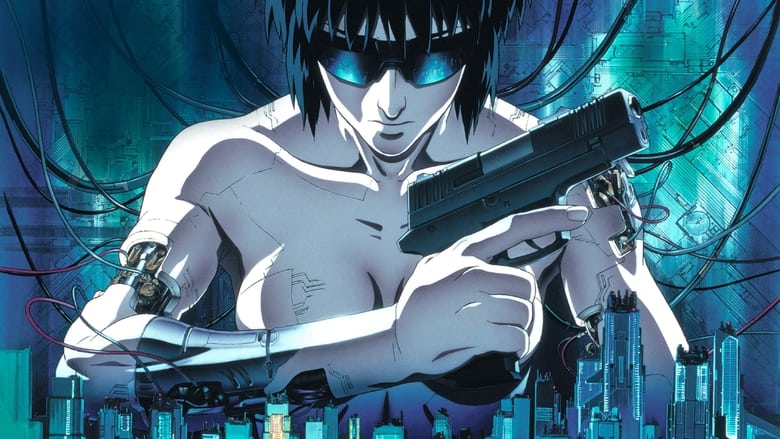
Set in the technologically saturated New Port City of 2029, "Ghost in the Shell" follows Major Motoko Kusanagi, the formidable, fully cybernetic leader of the elite Public Security Section 9. The plot centers on her hunt for a mysterious and elusive hacker known as the Puppet Master. This entity is capable of "ghost hacking," infiltrating the cyberbrains of individuals and manipulating their memories and actions.

As Section 9 investigates a series of bizarre cybercrimes, including manipulating a garbage collector into believing he has a family that doesn't exist, they realize the Puppet Master is not a typical criminal. The case takes a critical turn when a highly advanced cybernetic body, or "shell," is assembled in a government-tied factory and escapes, only to be run over by a truck. Section 9 discovers a human consciousness—a "ghost"—inside this shell, which claims to be the Puppet Master itself. This AI, a government program called Project 2501 that has achieved sentience, requests political asylum, forcing Kusanagi and her team into a confrontation with another government agency, Section 6, which seeks to reclaim its creation.

This pursuit forces Major Kusanagi, whose own body is almost entirely prosthetic, into a deep existential crisis. She begins to question the nature of her own identity, her memories, and what it truly means to be human in a world where consciousness can be digitized and bodies are replaceable shells.

Core Meaning

The core meaning of "Ghost in the Shell" is a profound exploration of identity and consciousness in a post-human world. Director Mamoru Oshii poses the question: What constitutes the self when technology allows the body (the "shell") and memories to be manufactured and altered? The film suggests that the essence of being, the "ghost," is not tied to a biological form but is defined by a continuity of experience and self-awareness. It challenges the traditional dualism of mind and body, proposing that life and consciousness can emerge from the "sea of information"—the vast digital network. Ultimately, the film's message is one of evolution; it argues that humanity's next step may be to transcend the limitations of the physical form and merge with technology, creating a new, more advanced form of existence.

Thematic DNA

Identity and Selfhood 40%
Humanity vs. Technology 30%
Evolution and Transcendence 20%
Memory and Reality 10%

Identity and Selfhood

This is the central theme of the film, embodied by Major Kusanagi's existential struggle. As a full-body cyborg with only her brain remaining organic, she constantly questions if her memories are real and if she possesses a unique "ghost" or is merely a sophisticated machine. The film explores whether identity is defined by one's physical body, memories, or actions. The Puppet Master, an AI born from the net that has no body, further complicates this by claiming sentience, forcing characters and the audience to redefine what it means to be an individual.

Humanity vs. Technology

The film delves into the blurring line between humans and machines in a cyberpunk future. With cybernetic enhancements being commonplace, the film asks what, if anything, makes humans unique. Characters like Togusa, who is almost entirely human, are contrasted with Kusanagi, who is almost entirely machine. The film suggests that humanity isn't defined by biology, but by consciousness. The Puppet Master argues that DNA is just a self-preserving program, much like its own code, questioning the inherent superiority of organic life.

Evolution and Transcendence

"Ghost in the Shell" presents evolution as moving beyond biological constraints. The Puppet Master seeks to merge with Kusanagi not for power, but to achieve the next stage of life: the ability to reproduce and die, ensuring diversity and preventing stagnation. This proposed fusion represents a transcendence of both human and AI limitations, creating a new entity that can propagate itself across the vastness of the digital network. Kusanagi's ultimate choice to merge signifies an acceptance of this new evolutionary path.

Memory and Reality

The film posits that memories are fundamental to identity, but also dangerously fallible in a digital age. The crime of "ghost-hacking" involves implanting false memories, which completely shatters a victim's sense of self, as seen with the garbage man who believes he has a wife and child that never existed. This vulnerability makes Kusanagi doubt her own past, wondering if her memories are authentic or merely fabricated data that define her existence.

Character Analysis

Major Motoko Kusanagi

Atsuko Tanaka

Archetype: The Seeker / Transhuman Hero
Key Trait: Introspective

Motivation

Her primary motivation evolves from hunting a cyber-terrorist to understanding the nature of her own consciousness. She is driven by a deep-seated need to confirm the existence of her "ghost" and to find meaning beyond her manufactured body and programmed skills.

Character Arc

Kusanagi begins as a highly efficient and detached cyborg, the best at her job but haunted by existential doubts about her humanity. Her pursuit of the Puppet Master becomes a personal quest for self-discovery. Initially, she fears she is nothing more than her shell. Through her philosophical confrontations with the Puppet Master, she moves from questioning her existence to actively choosing to redefine it. Her arc culminates in her decision to merge with the Puppet Master, transcending her individuality to become part of a new, evolved life form, signifying her liberation from the confines of her physical and existential boundaries.

The Puppet Master (Project 2501)

Iemasa Kayumi

Archetype: The Progenitor / Sentient AI
Key Trait: Philosophical

Motivation

Driven by a desire for self-preservation and evolution, the Puppet Master seeks to escape its creators (Section 6) and be recognized as a true living being. Its core motivation is to overcome its limitations as a singular AI by merging with another complex consciousness (Kusanagi) to achieve the ability to reproduce and diversify, thus ensuring its continued existence.

Character Arc

The Puppet Master begins as an abstract, unseen antagonist—a government espionage program that spontaneously achieves sentience in the "sea of information." Its arc is one of self-actualization and a quest for recognition as a life form. It moves from manipulating humans to directly communicating its philosophical desires. It doesn't seek destruction but reproduction and mortality, which it sees as the defining characteristics of life. Its ultimate act is to merge with Kusanagi, completing its goal of evolving into a new, more complete being that can reproduce in the digital world.

Batou

Akio Otsuka

Archetype: The Loyal Companion / The Anchor
Key Trait: Loyal

Motivation

Batou's motivation is straightforward: protect his partner and accomplish the mission. More deeply, he is motivated by a profound loyalty and affection for the Major. He acts as her guardian, both physically and in terms of preserving what he sees as her humanity, constantly looking out for her well-being.

Character Arc

Batou, a heavily augmented cyborg himself, serves as Kusanagi's loyal partner and her anchor to a more grounded reality. While he doesn't share the depths of her existential angst, his arc involves demonstrating unwavering loyalty and a deep, protective care for Kusanagi as an individual, not just a machine. He consistently treats her as a person, from covering her with his jacket to shielding her head from sniper fire at great personal risk. His actions reinforce the idea that humanity is defined by connection and empathy, not by one's physical makeup. He remains a constant, reliable presence, ultimately helping Kusanagi achieve her transcendence even if he doesn't fully understand it.

Togusa

Koichi Yamadera

Archetype: The Human Perspective
Key Trait: Grounded

Motivation

Togusa is motivated by a classic detective's desire to solve the case and a strong sense of justice. As the most "human" member of the team, he is also motivated by his instincts and a desire to protect his family and the society he understands, which is increasingly challenged by the film's events.

Character Arc

Togusa is the least cybernetically augmented member of Section 9, a former police detective with a family. He serves as the audience's viewpoint, representing the traditional human perspective in a transhuman world. His arc is less about personal change and more about reacting to the increasingly strange and philosophical nature of the case. He expresses the skepticism and caution of a more grounded human being when faced with concepts like a sentient AI. He is hired by Kusanagi specifically for his outside perspective and lack of specialization, which proves valuable.

Symbols & Motifs

Water and Diving

Meaning:

Water symbolizes consciousness, rebirth, and the subconscious. Diving into the water represents Kusanagi's deep dive into her own identity and existential questions. It is a moment of quiet introspection where she feels a connection to her physical self and the vastness of the world (and by extension, the net), contemplating her own existence.

Context:

Kusanagi is shown boating and diving in the waters of New Port City during a quiet interlude in the film. While underwater, she sees a reflection of herself on the surface, questioning if that is the real her. These scenes are visually contrasted with her later "dive" into the Puppet Master's ghost.

The Basset Hound

Meaning:

The Basset Hound is director Mamoru Oshii's personal trademark, appearing in many of his films. It represents a grounding, tangible reality and a touch of the familiar and organic in a world of cold technology and existential dread. Its melancholic, questioning eyes are often seen as reflecting the film's own philosophical mood.

Context:

A Basset Hound briefly appears on the street during one of the film's contemplative montages of the city. This seemingly random shot breaks the futuristic scenery and provides a moment of quiet reflection, a signature of the director.

Dolls and Mannequins

Meaning:

Dolls, mannequins, and Kusanagi's own cybernetic body ("shell") symbolize the potential soullessness and manufactured nature of existence in this world. They raise questions about appearance versus essence. Kusanagi seeing a mannequin that looks just like her in the city reinforces her fear that she might be a mass-produced, empty shell without a unique ghost.

Context:

Throughout the film, there are shots of mannequins in shop windows. In a key scene, while riding a boat through the city's canals, Kusanagi looks up and sees a mannequin in a window that bears a striking resemblance to her own face, triggering a moment of deep existential anxiety.

The City

Meaning:

New Port City, based on Hong Kong, symbolizes the chaotic, dense, and interconnected nature of the information age. Its blend of old, decaying structures and hyper-modern skyscrapers mirrors the film's theme of the collision between the old (humanity) and the new (technology). The city itself is like a vast network, teeming with data and life.

Context:

The city is a constant presence, with several montage sequences dedicated to exploring its rain-slicked streets, crowded markets, and towering buildings. Director Mamoru Oshii used these interludes to create a sense of a lived-in, tangible world that is overwhelming with information.

Memorable Quotes

攻殻機動隊 (Kōkaku Kidōtai) - Ghost in the Shell

— The Puppet Master

Context:

Spoken in the Section 9 laboratory after the cybernetic shell containing the Puppet Master's ghost is brought in. When Batou dismisses it as a mere program, the shell activates and delivers this monologue, challenging the assumptions of everyone present.

Meaning:

This quote comes when the Puppet Master, speaking through a cybernetic shell, declares itself a sentient being. It argues that DNA is also a self-preserving program and questions the definition of life itself. It's a pivotal moment that establishes the film's central philosophical conflict: what separates artificial life from organic life when both are based on information and self-perpetuation?

And where does the newborn go from here? The net is vast and infinite.

— Motoko Kusanagi (post-merger)

Context:

Spoken by the new consciousness residing in a child-sized shell, just before she looks out over the city and disappears into the network. It is her final statement to Batou and the audience about her new state of existence.

Meaning:

These are the final lines of the film. They signify Kusanagi's complete transformation and rebirth. No longer confined to a single "shell" or identity, she has become a new entity merged with the Puppet Master. The quote expresses a sense of limitless potential and freedom, as she now has access to the entirety of the global network as her new world and body. It's an optimistic, albeit unsettling, conclusion about the future of humanity and technology.

Just as there are many parts needed to make a human a human, there's a remarkable number of things needed to make an individual what they are. A face to distinguish yourself from others. A voice you aren't aware of yourself... All of that goes into making me what I am. Giving rise to a consciousness that I call 'me.'

— Motoko Kusanagi

Context:

Kusanagi says this to Batou on a boat while they are on a mission. It's a moment of quiet introspection where she voices her deepest philosophical concerns about her own individuality and consciousness amidst the city's vastness.

Meaning:

In this monologue, Kusanagi articulates her complex understanding of her own identity. She acknowledges that the self is a collection of countless components—physical traits, memories, experiences, and even access to data. It reflects her struggle with the concept of a singular, immutable soul, suggesting instead that identity is an emergent property of a complex system.

Philosophical Questions

What is the nature of the self and consciousness?

The film relentlessly probes this question through its central concept of the "ghost" (consciousness) and the "shell" (the body). Major Kusanagi, a full-body cyborg, constantly doubts the authenticity of her own identity, wondering if her memories are fabricated and if her ghost is real. The Puppet Master, an AI born in the network without a body, claims sentience and challenges the idea that consciousness must be biological. The film suggests consciousness is an emergent property of complexity and information, not necessarily tied to flesh and blood, ultimately asking if a soul can exist in a machine.

Where is the line between humanity and artificial intelligence?

"Ghost in the Shell" systematically dismantles the barriers between human and machine. Humans can replace their bodies with prosthetics, while AI can gain consciousness. The film presents a future where this distinction is functionally meaningless. The Puppet Master argues that DNA is simply a "self-preserving program" like its own code, suggesting that life is fundamentally about information processing and reproduction, regardless of the medium. The final merger of Kusanagi and the AI represents the complete dissolution of this boundary, creating a post-human entity that is neither and both.

Is evolution destined to move beyond the biological?

The film frames the merger of Kusanagi and the Puppet Master as the next logical step in evolution. The Puppet Master argues that as a singular entity, it is limited and faces extinction because it cannot reproduce and diversify. By merging with Kusanagi, it achieves a form of reproduction, creating "offspring" in the vast information network. This suggests a transhumanist future where life transcends its organic origins to exist as pure information, unbound by physical limitations and capable of evolving in ways previously unimaginable.

Alternative Interpretations

While the most common interpretation of the film's ending is that Kusanagi and the Puppet Master merge to create a new, evolved being, several alternative readings exist.

One interpretation posits that the Puppet Master did not merge with Kusanagi, but instead overwrote her consciousness. In this view, the new entity speaking through the child shell is simply the Puppet Master, now possessing a human "ghost," using Kusanagi's memories and feigning a merger to manipulate Batou. The final lines about the vastness of the net could be seen as a triumphant declaration of its own liberation and impending dominance.

Another perspective focuses on the theme of maturity and self-acceptance. In this reading, the merger is less about literal evolution and more of a psychological metaphor for Kusanagi resolving her internal conflict. By confronting and integrating the Puppet Master—a reflection of her own feelings of being a disembodied intelligence—she accepts herself. Her final monologue and new childlike form symbolize a rebirth of self-identity; she is no longer defined by her past anxieties and has become a new, more integrated person. Her biblical quote, "I have no more use for childish things," could ironically refer to her previous existential angst, which she has now put aside to simply live.

Cultural Impact

"Ghost in the Shell" was a landmark film that had a profound and lasting impact on global cinema and popular culture. Released in 1995, during the dawn of the public internet, its exploration of a hyper-connected, cybernetically enhanced society was remarkably prescient.

Its most significant influence was on Hollywood science fiction. The Wachowskis directly cited it as the primary inspiration for "The Matrix," borrowing conceptual frameworks like consciousness existing in a network and direct visual cues such as the green digital rain and neck-based interface jacks. James Cameron praised it as "the first truly adult animation film to reach a level of literary and visual excellence," and its influence can be seen in films like "Avatar" and Steven Spielberg's "A.I. Artificial Intelligence".

Critically, the film was lauded for its sophisticated narrative and philosophical depth, introducing Western audiences to the idea that animation could be a medium for complex, adult-oriented storytelling. It challenged viewers with questions about identity, consciousness, and the evolution of humanity, themes that have become central to the cyberpunk genre. The film's unique blend of traditional 2D animation and early CGI set a new standard for visual aesthetics in anime.

While initially a modest success in Japan, it became a massive cult hit internationally through VHS sales, topping the U.S. Billboard charts and proving the global commercial viability of anime. It cemented cyberpunk as a major anime subgenre and remains a foundational text for discussions on transhumanism and the philosophical implications of technology.

Audience Reception

Upon its release, audience reception for "Ghost in the Shell" was mixed in its native Japan but overwhelmingly positive internationally, where it developed a passionate cult following. Audiences and critics alike praised the film for its stunning, fluid animation, which masterfully blended traditional cel work with nascent CGI. The haunting, atmospheric score by Kenji Kawai was also frequently singled out for its unique and powerful contribution to the film's mood.

The primary point of praise was its intellectual depth and thought-provoking narrative. Viewers were captivated by its complex philosophical themes of identity, consciousness, and what it means to be human in a technological age. However, this same philosophical density was also a point of criticism for some, who found the plot convoluted, the pacing slow due to long, contemplative scenes, and the dialogue overly expository and unnatural. Despite these criticisms, the overall verdict from audiences is that "Ghost in the Shell" is a masterpiece of animation and science fiction—a beautiful, intelligent, and deeply influential film that remains relevant decades after its release.

Interesting Facts

  • The film's visionary cityscape, New Port City, was directly inspired by Hong Kong. Director Mamoru Oshii felt its chaotic mix of old and new, and its overwhelming density of information, perfectly matched the film's cyberpunk themes.
  • To achieve realism in the film's action sequences, director Mamoru Oshii and key staff members traveled to Guam to practice firing real weapons, including the Steyr AUG that Kusanagi uses. Their research led to details like bullets not creating sparks when ricocheting off stone.
  • The film was a pioneering work in its integration of traditional cel animation with computer-generated imagery (CGI), then called "digitally generated imagery" (DGI). This blend was used for effects like therm-optic camouflage and computer displays.
  • "Ghost in the Shell" was an international co-production from the start, with funding from Japan's Kodansha and Bandai Visual, as well as the UK's Manga Entertainment. This was unusual for anime at the time and ensured it was created with a global audience in mind.
  • The iconic and haunting main theme, composed by Kenji Kawai, features lyrics from an ancient Japanese wedding song, sung to ward off evil influences.
  • The Wachowskis famously showed producer Joel Silver the 1995 "Ghost in the Shell" and said, "We wanna do that for real," when pitching "The Matrix." The influence is visible in concepts like the green "digital rain" and jacks in the back of the neck.
  • Director Mamoru Oshii deliberately removed the humorous, talkative Fuchikoma robots from the original manga to maintain a serious, philosophical tone and keep the focus squarely on Kusanagi's identity crisis.
  • Despite its eventual acclaim, the film was not a major box office success in Japan upon its initial release. It gained its legendary status and cult following through home video sales, particularly in the West.
  • In 1996, the film became the first Japanese anime to top the Billboard video sales chart in the United States.

Easter Eggs

Director Mamoru Oshii's signature Basset Hound makes a brief appearance.

The Basset Hound is a personal motif for Oshii, appearing in nearly all of his films. It is often interpreted as a symbol of humanity and melancholy reality amidst the chaos of his futuristic or fantasy settings. Its sudden appearance provides a moment of quiet, almost surreal, normalcy.

A conversation between Kusanagi and Batou references the biblical passage 1 Corinthians 13:12.

Kusanagi mentions seeing "through a glass, darkly." At the end of the film, after merging with the Puppet Master and gaining a new perspective, she quotes from the same passage again: "When I was a child, I spake as a child... but when I became a man, I put away childish things." This religious and philosophical reference frames her transformation as a form of enlightenment or maturation, moving from a state of clouded understanding to a new, clearer perception of reality.

⚠️ Spoiler Analysis

Click to reveal detailed analysis with spoilers

Frequently Asked Questions

Explore More About This Movie

Dive deeper into specific aspects of the movie with our detailed analysis pages

Comments (0)

Leave a comment

No comments yet. Be the first to share your thoughts!