
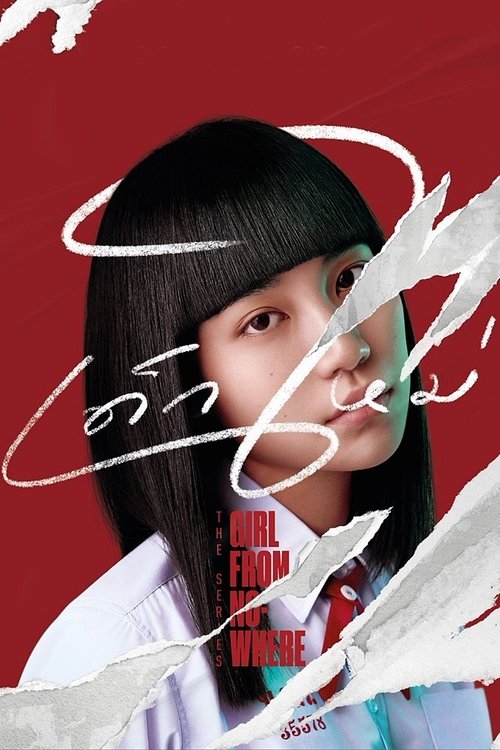
เด็กใหม่
"It's the victim's turn to teach you a lesson."
Girl from Nowhere - Symbolism & Philosophy
Symbols & Motifs
Nanno's Maniacal Laugh
It symbolizes the triumph of chaos and the absurdity of the situations she engineers. It is a sound of judgment, not mirth, often delivered when a character's downfall is complete. It signifies her detachment from human emotion and her amusement at the exposure of hypocrisy.
Used ubiquitously across both seasons, typically at the climax of an episode after a character has been fully ensnared by their own actions. The one notable time it is absent and replaced with a sad expression is at the end of Season 1's "Lost and Found," highlighting her fleeting connection with the character TK.
Yuri's Red Ribbon
The red ribbon, worn in Yuri's hair, symbolizes her identity and her brand of vengeance. Red is often associated with blood, violence, and passion, which aligns perfectly with Yuri's more aggressive and revenge-focused ideology, contrasting with Nanno's more clinical approach.
Introduced in Season 2, Episode 4, "Yuri." Yuri wears the ribbon consistently after her 'rebirth.' It becomes her visual signifier, distinguishing her from Nanno and marking her as a new, more volatile power in the series' universe.
School Uniform
The school uniform represents conformity and the facade of innocence and order. Nanno wears a different uniform in each episode, symbolizing her ability to seamlessly infiltrate any social structure. The uniform is a mask for the students and faculty, hiding the dark truths and moral decay that Nanno aims to expose.
Present in every episode. The pristine and orderly appearance of the uniforms often stands in stark contrast to the chaotic and violent events that unfold, underscoring the theme of hidden corruption beneath a veneer of respectability.
Philosophical Questions
What is the true nature of justice: is it a lesson or a punishment?
The series explores this question through the central conflict between Nanno and Yuri. Nanno's methods, while cruel, are often designed as elaborate, ironic lessons. She forces perpetrators to experience a twisted version of their own crimes, aiming to bring about self-realization and psychological collapse. Yuri, on the other hand, believes in punishment as pure retribution. Her approach is about inflicting pain and death, not enlightenment. The series doesn't provide a clear answer, instead leaving the audience to ponder whether justice should be corrective and psychological or simply a violent balancing of the scales.
Does absolute power to judge inevitably lead to corruption or fallibility?
In Season 1, Nanno is presented as an infallible, omnipotent judge. However, in Season 2, her power is shown to have consequences—namely, the creation of Yuri. Furthermore, Nanno's own judgment begins to waver as she experiences human-like emotions. Her hesitation in the final episode leads to her apparent demise. This arc explores the idea that no entity, not even a supernatural one, can wield the power of absolute judgment without being affected or corrupted by it. It suggests that the act of judging requires a detachment that is perhaps impossible to maintain indefinitely.
Are people inherently good, or simply restrained by consequences?
"Girl from Nowhere" operates on the deeply cynical premise that most people's morality is a thin veneer. Nanno's role is often not to create evil, but simply to remove the fear of consequences and observe what happens next. Students, teachers, and parents alike quickly descend into their worst impulses—greed, violence, jealousy—once they believe they can get away with it. The series constantly poses the question of whether the evil was inside them all along, merely waiting for an opportunity to be unleashed.
Core Meaning
The core meaning of "Girl from Nowhere" is a dark exploration of karma, hypocrisy, and the corruptibility of human nature. The series posits that everyone has a hidden, darker side, and it often takes only a slight push for it to emerge. Nanno acts as that push, a supernatural litmus test for the morality of those she encounters. The show serves as a stark social commentary, particularly on the pressures and hidden vices within the Thai educational system, tackling issues like abuse of authority, social hierarchies, and the destructive power of jealousy and greed. Ultimately, the series questions the nature of justice itself. While Nanno delivers punishment, her methods are often cruel and manipulative, blurring the line between good and evil. Season 2 further complicates this by asking whether absolute power to punish corrupts absolutely, suggesting that vengeance (personified by Yuri) is a dangerous and chaotic force compared to Nanno's more calculated form of karmic retribution.