Girl from Nowhere
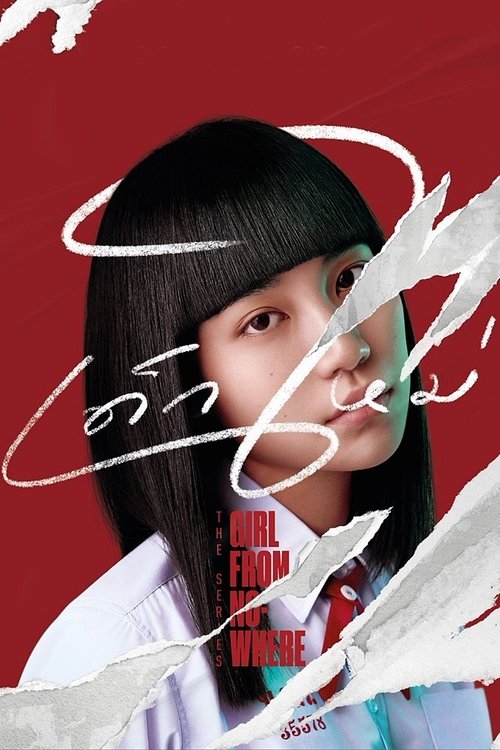
เด็กใหม่
"It's the victim's turn to teach you a lesson."
Overview
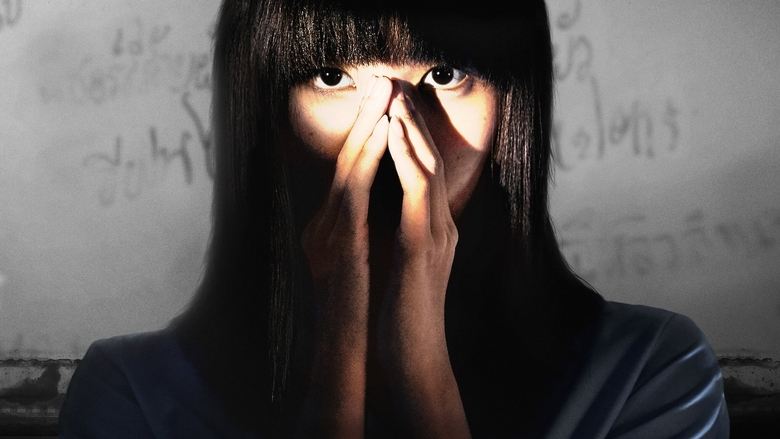
"Girl from Nowhere" is a Thai mystery-thriller anthology series revolving around Nanno, an enigmatic and seemingly immortal girl who transfers to a new school in each episode. Functioning as a catalyst, Nanno exposes the hidden hypocrisy, dark secrets, and malevolent desires of the students and faculty. She is not a straightforward hero; she often provokes and manipulates situations, pushing individuals to their breaking points and forcing them to confront the consequences of their actions. Each episode serves as a self-contained morality tale, exploring a different facet of human nature and societal ills within the Thai school system.
The first season establishes Nanno as an unstoppable force of karma, an entity who doles out judgment with a sinister smile and a chilling laugh. The second season complicates this formula with the introduction of Yuri, a former victim of Nanno's schemes who inadvertently gains similar powers by ingesting Nanno's blood. Yuri represents a more direct and brutal form of vengeance, challenging Nanno's methodical and psychological approach. Their ideological clash forms the central arc of the second season, culminating in a dramatic confrontation that questions Nanno's purpose and leaves her own immortality in doubt.

Core Meaning
The core meaning of "Girl from Nowhere" is a dark exploration of karma, hypocrisy, and the corruptibility of human nature. The series posits that everyone has a hidden, darker side, and it often takes only a slight push for it to emerge. Nanno acts as that push, a supernatural litmus test for the morality of those she encounters. The show serves as a stark social commentary, particularly on the pressures and hidden vices within the Thai educational system, tackling issues like abuse of authority, social hierarchies, and the destructive power of jealousy and greed. Ultimately, the series questions the nature of justice itself. While Nanno delivers punishment, her methods are often cruel and manipulative, blurring the line between good and evil. Season 2 further complicates this by asking whether absolute power to punish corrupts absolutely, suggesting that vengeance (personified by Yuri) is a dangerous and chaotic force compared to Nanno's more calculated form of karmic retribution.
Thematic DNA
Karma and Retribution
This is the central theme of the entire series. Nanno embodies a form of karmic justice, ensuring that individuals who commit misdeeds face repercussions. In Season 1, her punishments are tailored to the 'crime,' often in a darkly ironic fashion. She doesn't just punish; she orchestrates scenarios where people's own choices lead to their downfall. Season 2 evolves this theme by introducing Yuri, who offers a more immediate and violent form of 'eye-for-an-eye' revenge, contrasting with Nanno's psychological torment. This creates a conflict over the 'correct' way to administer retribution, questioning whether the goal is to teach a lesson or simply to inflict pain.
Hypocrisy and Hidden Vices
The series excels at peeling back the facades of seemingly normal schools, students, and teachers to reveal the ugliness underneath. Episodes tackle everything from a 'purest school of the year' hiding a predatory teacher to popular students masking deep-seated cruelty. Nanno's purpose is to expose the delta between a person's public image and their private sins. She acts as a mirror, reflecting the worst parts of her targets back at them until they can no longer hide.
Power and Corruption
"Girl from Nowhere" frequently examines how power, whether held by teachers, wealthy students, or social media influencers, corrupts. Episodes like "Minnie and the Four Bodies" and "Hi-So" directly critique how wealth and status are used to escape consequences. The series argues that unchecked power inevitably leads to abuse. This theme extends to Nanno herself in Season 2, as her actions are questioned and her own omnipotence is challenged, suggesting that even the arbiter of justice is not immune to fallibility and doubt.
Human Nature and Morality
The show presents a cynical view of human nature, suggesting that people are inherently selfish and easily tempted. Nanno rarely forces anyone to do evil; she simply provides the opportunity, and her targets willingly walk through the door. However, episodes like "Lost & Found" offer a glimpse of complexity, showing that Nanno might possess a sliver of empathy and that some individuals, like TK, are not purely malicious but are products of their circumstances. This questions whether anyone is truly good or evil, or if they exist in a morally gray area that Nanno and Yuri exploit.
Character Analysis
Nanno
Chicha Amatayakul
Motivation
Nanno's primary motivation is to expose the lies, secrets, and hypocrisy of humanity. She doesn't seem driven by a desire for good, but rather a fascination with human weakness and a compulsion to serve karma. In Season 2, her motivation is challenged by Yuri's methods; Nanno's goal appears to be about teaching a lesson, however cruel, while Yuri's is purely about revenge. Nanno's final question—"Am I really necessary anymore?"—suggests her motivation may shift from punishing individuals to questioning a world where everyone has the power to enact their own judgment.
Character Arc
In Season 1, Nanno is an enigmatic and seemingly invincible force of nature, an immortal entity punishing wrongdoers without emotional attachment. Her arc begins in Season 2, where the introduction of Yuri forces her to confront the consequences of her own power. She begins to show fleeting moments of doubt and even empathy, leading to a state of vulnerability and questioning her own purpose. This culminates in her apparent death in the finale, where she seems to become mortal as her judgment falters, only to reappear ambiguously, suggesting a potential evolution or rebirth.
Yuri
Chanya McClory
Motivation
Yuri is driven by a fervent desire for revenge, born from her own traumatic experiences. Unlike Nanno, who maintains a detached curiosity, Yuri's actions are fueled by rage and a belief that the oppressed should be given the power to overthrow their oppressors violently. She aims to dismantle Nanno's perceived monopoly on judgment and create a world where anyone can be an agent of karma, leading to widespread chaos.
Character Arc
Yuri is introduced in Season 2 as a victim who turns into Nanno's rival. Initially a poor student exploited by the wealthy, she is drowned but resurrected by Nanno's blood, granting her similar powers. Her arc is one of radicalization; she moves from a victim seeking justice to a being who believes in empowering victims to take bloody revenge themselves. She rejects Nanno's methods as too slow and methodical, opting for immediate, chaotic violence. By the end of Season 2, she succeeds in seemingly killing Nanno and anointing a new follower, Junko, positioning herself to usurp Nanno's role and unleash a new world order of decentralized vengeance.
Symbols & Motifs
Nanno's Maniacal Laugh
It symbolizes the triumph of chaos and the absurdity of the situations she engineers. It is a sound of judgment, not mirth, often delivered when a character's downfall is complete. It signifies her detachment from human emotion and her amusement at the exposure of hypocrisy.
Used ubiquitously across both seasons, typically at the climax of an episode after a character has been fully ensnared by their own actions. The one notable time it is absent and replaced with a sad expression is at the end of Season 1's "Lost and Found," highlighting her fleeting connection with the character TK.
Yuri's Red Ribbon
The red ribbon, worn in Yuri's hair, symbolizes her identity and her brand of vengeance. Red is often associated with blood, violence, and passion, which aligns perfectly with Yuri's more aggressive and revenge-focused ideology, contrasting with Nanno's more clinical approach.
Introduced in Season 2, Episode 4, "Yuri." Yuri wears the ribbon consistently after her 'rebirth.' It becomes her visual signifier, distinguishing her from Nanno and marking her as a new, more volatile power in the series' universe.
School Uniform
The school uniform represents conformity and the facade of innocence and order. Nanno wears a different uniform in each episode, symbolizing her ability to seamlessly infiltrate any social structure. The uniform is a mask for the students and faculty, hiding the dark truths and moral decay that Nanno aims to expose.
Present in every episode. The pristine and orderly appearance of the uniforms often stands in stark contrast to the chaotic and violent events that unfold, underscoring the theme of hidden corruption beneath a veneer of respectability.
Episode Highlights
Apologies
This episode firmly establishes Nanno's immortality and the horrific extent of her methods. After being brutally assaulted and murdered by a group of classmates, Nanno returns to school the next day completely unharmed, much to their terror. She torments her attackers psychologically, creating multiple versions of herself until they descend into paranoid madness.
It's a pivotal early episode that defines the series' dark tone and Nanno's supernatural abilities. It demonstrates that Nanno is not merely a clever girl but an unkillable entity, setting the stakes for the rest of the series and showcasing the show's willingness to tackle extremely dark themes without flinching.
Lost & Found
In a significant departure from the usual tone, this episode shows a more human side of Nanno. She befriends TK, a lonely student who compulsively steals to get his distant father's attention. Nanno encourages his habit at first, but appears to develop genuine feelings for him. The episode culminates not in gruesome punishment, but in a bittersweet farewell as Nanno helps TK reconcile with his father before she has to leave.
This is a crucial character development episode for Nanno. It's the first time she displays empathy and sadness, ending with a sorrowful look instead of her trademark laugh. It adds a layer of complexity to her character, suggesting that she is not entirely devoid of emotion and can be affected by the humans she interacts with, a theme that becomes central to her arc in Season 2.
BFF (Part 1 & 2)
At a high school reunion, former classmates unearth a time capsule and recall the strange events surrounding a girl they bullied years ago, whom they called "Psycho Nanno." The finale reveals the horrifying truth of what they did to her. Nanno ensures that their long-hidden crime does not go unpunished, delivering one of the series' most elaborate and satisfying punishments.
This two-part finale is often interpreted by fans as a possible origin story for Nanno, suggesting she may have once been a human victim who was wronged and returned as an immortal agent of vengeance. While unconfirmed, it provides a powerful, cyclical narrative capstone to the first season, exploring themes of collective guilt and the inescapable nature of the past.
Yuri
This episode introduces Yuri, a poor student who acts as a servant to two wealthy and cruel classmates. After being double-crossed by Nanno and subsequently drowned in a tub filled with Nanno's blood, Yuri is resurrected. She rises from the water with newfound powers and a thirst for immediate, bloody revenge, setting the stage for her role as Nanno's rival.
This episode fundamentally changes the series' dynamic. It moves the show from a pure anthology to having a serialized narrative arc. Yuri's creation establishes a powerful new player and a direct ideological challenger to Nanno, providing the central conflict for the rest of the season.
Liberation
Filmed almost entirely in black and white, this episode sees Nanno transfer to a draconian school with absurdly strict rules separating boys and girls. Nanno incites a student rebellion against the oppressive administration. The episode is a powerful allegory for fighting authoritarianism and rigid, outdated traditions.
Visually and thematically distinct, "Liberation" is one of the most critically praised episodes. It showcases the series' ability to engage in direct social and political commentary, drawing parallels to real-world student-led protest movements in Thailand. It also highlights the escalating conflict between Nanno's methods of systemic disruption and Yuri's preference for simple violence.
The Judgement
In the season finale, Nanno investigates the relationship between a seemingly frail student, Junko, and her overprotective mother. It's revealed that the mother has been keeping her murderous daughter weak with medication. Yuri intervenes, empowering Junko and leading to a violent confrontation where Nanno, showing empathy and hesitation, is brutally stabbed and appears to die.
This episode serves as a shocking climax to the Nanno vs. Yuri arc. Nanno's apparent death and loss of immortality mark a massive turning point for the series. The ending is deliberately ambiguous, with Yuri anointing Junko with her blood and a figure resembling Nanno watching from a rooftop, leaving the future of the show and its central character open to interpretation.
Philosophical Questions
What is the true nature of justice: is it a lesson or a punishment?
The series explores this question through the central conflict between Nanno and Yuri. Nanno's methods, while cruel, are often designed as elaborate, ironic lessons. She forces perpetrators to experience a twisted version of their own crimes, aiming to bring about self-realization and psychological collapse. Yuri, on the other hand, believes in punishment as pure retribution. Her approach is about inflicting pain and death, not enlightenment. The series doesn't provide a clear answer, instead leaving the audience to ponder whether justice should be corrective and psychological or simply a violent balancing of the scales.
Does absolute power to judge inevitably lead to corruption or fallibility?
In Season 1, Nanno is presented as an infallible, omnipotent judge. However, in Season 2, her power is shown to have consequences—namely, the creation of Yuri. Furthermore, Nanno's own judgment begins to waver as she experiences human-like emotions. Her hesitation in the final episode leads to her apparent demise. This arc explores the idea that no entity, not even a supernatural one, can wield the power of absolute judgment without being affected or corrupted by it. It suggests that the act of judging requires a detachment that is perhaps impossible to maintain indefinitely.
Are people inherently good, or simply restrained by consequences?
"Girl from Nowhere" operates on the deeply cynical premise that most people's morality is a thin veneer. Nanno's role is often not to create evil, but simply to remove the fear of consequences and observe what happens next. Students, teachers, and parents alike quickly descend into their worst impulses—greed, violence, jealousy—once they believe they can get away with it. The series constantly poses the question of whether the evil was inside them all along, merely waiting for an opportunity to be unleashed.
Alternative Interpretations
Several alternative interpretations exist for the series, particularly concerning Nanno's identity and the ambiguous ending of Season 2.
Nanno as the Devil's Daughter or a Demon: One popular theory is that Nanno is not merely an abstract concept like karma, but a supernatural being with demonic origins, perhaps the daughter of Satan or a figure like a succubus. This interpretation is supported by her methods of temptation, her apparent pleasure in human suffering, and her role in luring people into sin before punishing them. Her character has also been compared to Tomie from the works of Japanese horror manga artist Junji Ito, an entity that drives men to madness and violence.
Nanno's 'Death' as a Metamorphosis: The ending of Season 2, where Nanno is seemingly killed, is open to multiple readings. One view is that as she developed human emotions like empathy and doubt, she became mortal and truly died, and the figure on the rooftop is a clone or a spiritual successor. Another interpretation is that this 'death' was a necessary metamorphosis. By experiencing vulnerability and questioning her own purpose, she shed her old self to be reborn, possibly with a new understanding of justice, ready to confront a world where Yuri has empowered everyone to be their own judge. Her final question, "Am I really necessary anymore?" could be a challenge to the audience or a sign of her own evolution.
Yuri as the Natural Human Response: While Nanno represents a detached, cosmic form of karma, Yuri can be interpreted as the embodiment of the purely human response to injustice: raw, emotional, and violent revenge. Her rise suggests a critique of Nanno's methods, arguing that true justice for victims isn't a detached lesson but a passionate, and often bloody, reclamation of power. From this perspective, Yuri isn't just a villain but a necessary evolutionary step in the show's exploration of justice.
Cultural Impact
"Girl from Nowhere" made a significant cultural impact both in Thailand and internationally upon its global Netflix release. Domestically, the series was seen as a bold and timely critique of the Thai educational system and broader societal issues. It resonated with the youth-led "Bad Students" movement, which protested against oppressive school rules, authoritarianism, and institutional hypocrisy, mirroring many of the show's central themes. The series dared to tackle taboo subjects rarely seen in mainstream Thai media, such as predatory teachers, hazing rituals (SOTUS), and the privilege of the elite, sparking widespread discussion.
Internationally, the show became a cult classic, praised for its unique blend of horror, fantasy, and social commentary, often being compared to "Black Mirror." Nanno became an iconic antihero, a symbol of feminist revenge for many viewers who felt let down by failed institutions. The show's success demonstrated the global appeal of Thai-produced content and contributed to Netflix's increased investment in Southeast Asian productions. Its legacy is that of a provocative and unflinching series that used its anthology format to create powerful, self-contained morality plays, leaving a lasting impression on audiences who appreciated its dark, cathartic vision of justice.
Audience Reception
Audience reception for "Girl from Nowhere" has been largely positive, especially following its international release on Netflix, which transformed it into a global cult hit. Viewers have praised the series for its dark, creative, and thought-provoking storytelling, with many drawing favorable comparisons to "Black Mirror." Chicha Amatayakul's portrayal of Nanno received widespread acclaim, with audiences captivated by her ability to shift between seeming innocence and sinister menace, and her iconic laugh became a defining feature of the show.
Season 1 was lauded for its compelling, self-contained anthology format. However, some critics and viewers found certain episodes predictable or the moralizing a bit heavy-handed. Season 2 was also well-received, particularly for the introduction of Yuri and the serialized conflict that added a new layer of depth. The dynamic between Nanno and Yuri was a frequent point of praise. The main points of criticism often revolve around the show's extreme violence and disturbing themes, with some finding it excessively graphic. The ambiguous ending of Season 2 generated significant debate and speculation among fans, with many eagerly anticipating a third season to resolve the cliffhanger.
Interesting Facts
- The creator of the series is the studio SOUR Bangkok.
- Many of the episodes are reportedly inspired by real-life news stories of scandals and injustices in Thai schools. For example, Season 2's "Minnie and the Four Bodies" is based on a real-life case where a teen from a wealthy family caused a fatal car accident and largely evaded serious consequences.
- Actress Chicha "Kitty" Amatayakul had to consult with the different directors of each episode to ensure that Nanno's core identity remained consistent, even as the stories and styles changed.
- The international release on Netflix for Season 2 led to a massive surge in popularity, with the show hitting number one on the platform in Thailand, Vietnam, and the Philippines, and ranking in the top 10 in countries like Brazil.
- Unlike the standalone nature of Season 1, the directors have stated that Season 2 was designed to be watched chronologically to follow the development of Nanno's character and her conflict with Yuri.
⚠️ Spoiler Analysis
Click to reveal detailed analysis with spoilers
Frequently Asked Questions
Explore More About This Movie
Dive deeper into specific aspects of the movie with our detailed analysis pages
Comments (0)
No comments yet. Be the first to share your thoughts!