God's Own Country - Symbolism & Philosophy
Symbols & Motifs
The Runt Lamb
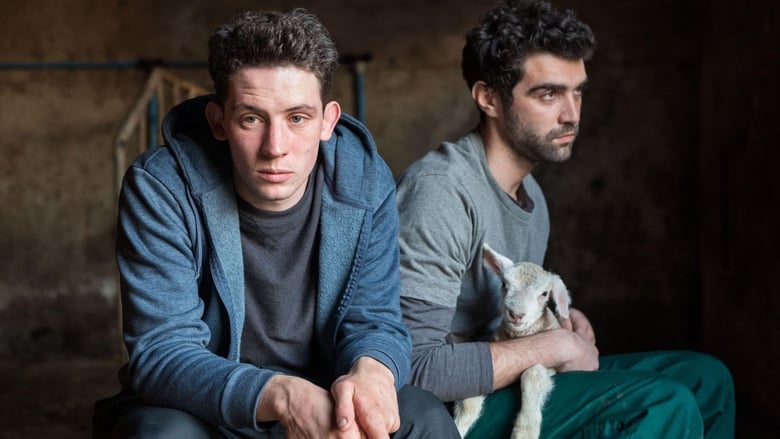
Symbolizes Johnny himself—neglected, weak, and seemingly not worth saving. Gheorghe's refusal to let it die represents his belief in Johnny's potential for redemption.
Johnny wants to let the runt die, following his father's harsh pragmatism. Gheorghe nurses it to life, adopting it to a foster ewe using the skin of a dead lamb—a metaphor for adaptation and survival.
Gloves
Barriers to intimacy and sensation.
Gheorghe often works without gloves or removes them to touch the animals and Johnny. This insistence on direct, tactile contact contrasts with Johnny's desire to insulate himself from the world.
Mud and Bodily Fluids
The raw, unvarnished reality of life and the dissolving of boundaries.
The film is visceral; characters are covered in mud, blood, and afterbirth. It grounds the romance in reality, rejecting sanitized Hollywood gloss for an earthy, authentic connection.
The View from the Top
Perspective and appreciation of beauty.
Johnny rarely looks up from his work. Gheorghe takes him to the top of the hill to simply look at the view, teaching Johnny to see value and beauty in the land that he previously only saw as a burden.
Philosophical Questions
Can we choose our duty, or does it choose us?
Johnny initially views the farm as a curse forced upon him. The film explores whether freedom comes from escaping responsibility or from accepting it willingly and finding meaning within it.
Is vulnerability a prerequisite for strength?
The film deconstructs the traditional masculine ideal of stoicism. It argues that true strength is not the ability to endure pain alone, but the courage to open up and care for another, as demonstrated by Gheorghe's nurturing approach to farming.
Core Meaning
God's Own Country is a meditation on the transformative power of tenderness in a harsh environment. Director Francis Lee explores how toxic masculinity and emotional repression can be dismantled through intimacy and connection.
Unlike many LGBTQ+ films that focus on the external conflict of coming out or societal homophobia, this film focuses on the internal struggle to accept love. It posits that vulnerability is not a weakness, but a necessary strength for survival, mirroring the care required to keep livestock alive in the unforgiving landscape.