God's Own Country
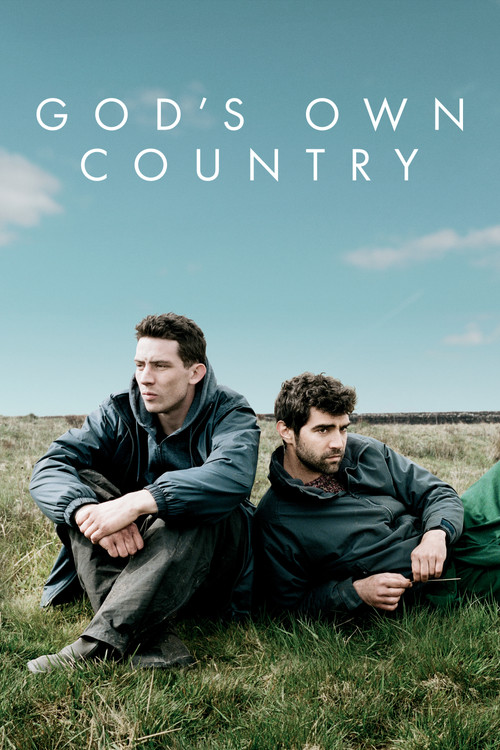
A raw, tactile romance set against the harsh windswept moors of Yorkshire. Amidst mud, blood, and isolation, a repressed sheep farmer finds tenderness and transformation in the arrival of a Romanian migrant worker.
God's Own Country

God's Own Country

31 August 2017 United Kingdom 105 min ⭐ 7.8 (961)
Director: Francis Lee
Cast: Josh O'Connor, Alec Secăreanu, Gemma Jones, Ian Hart, Harry Lister Smith
Drama Romance
Transformation through Intimacy Landscape as Character Xenophobia and Belonging Duty vs. Freedom
Box Office: $2,559,939

Overview

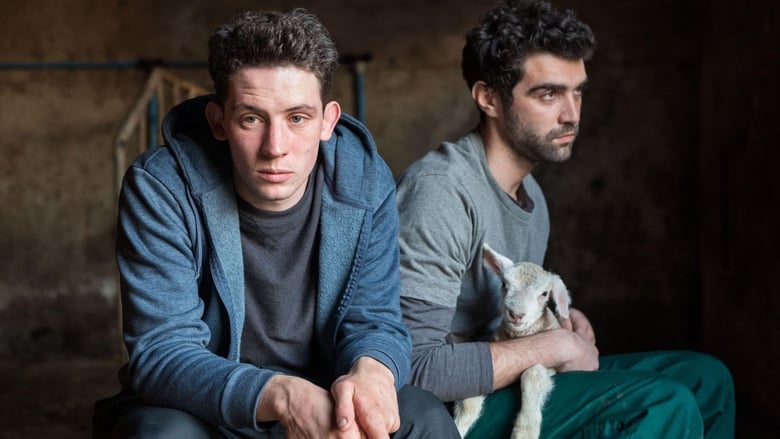
Johnny Saxby (Josh O'Connor) is a young sheep farmer in Yorkshire who numbs the frustration of his lonely, grueling life with binge drinking and casual, emotionless sex. Forced to take over the family farm after his father Martin (Ian Hart) suffers a stroke and his grandmother Deirdre (Gemma Jones) becomes too old to manage, Johnny operates in a state of angry stoicism.

The arrival of Gheorghe Ionescu (Alec Secareanu), a Romanian migrant worker hired for the lambing season, initially provokes Johnny's hostility and xenophobia. However, as they work side-by-side in the isolation of the moors, their relationship shifts from aggression to intense physical intimacy. Gheorghe's gentle patience teaches Johnny not only how to care for the animals with tenderness but also how to be vulnerable himself.

When a crisis threatens the farm and Johnny's old self-destructive habits resurface, he drives Gheorghe away. Realizing his mistake and desperate to change his trajectory, Johnny must confront his emotional repression to win Gheorghe back and forge a new future for himself and the farm.

Core Meaning

God's Own Country is a meditation on the transformative power of tenderness in a harsh environment. Director Francis Lee explores how toxic masculinity and emotional repression can be dismantled through intimacy and connection.

Unlike many LGBTQ+ films that focus on the external conflict of coming out or societal homophobia, this film focuses on the internal struggle to accept love. It posits that vulnerability is not a weakness, but a necessary strength for survival, mirroring the care required to keep livestock alive in the unforgiving landscape.

Thematic DNA

Transformation through Intimacy 35%
Landscape as Character 25%
Xenophobia and Belonging 20%
Duty vs. Freedom 20%

Transformation through Intimacy

Johnny's journey from a closed-off, angry individual to an open, loving partner is the film's spine. Gheorghe introduces a physical and emotional language of care—seen in how he touches the sheep and prepares food—that Johnny slowly adopts, replacing his rough, transactional view of sex and work.

Landscape as Character

The Yorkshire moors are not just a backdrop but a reflection of Johnny's internal state. The mud, wind, and cold represent the brutality of his isolation. As he opens up, the camera captures the landscape with more warmth and beauty, suggesting that one's perception of 'home' changes with emotional state.

Xenophobia and Belonging

The film tackles post-Brexit tensions and casual racism. Johnny initially calls Gheorghe a 'gypsy,' using xenophobia as a shield. Gheorghe's dignity in the face of this prejudice highlights the theme of who belongs to the land—not just those born on it, but those who care for it.

Duty vs. Freedom

Johnny feels trapped by his familial obligation to the farm, viewing it as a prison. The film resolves this not by having him escape, but by finding a way to choose the responsibility on his own terms, integrating his personal happiness with his duty.

Character Analysis

Johnny Saxby

Josh O'Connor

Archetype: The Repressed Antihero
Key Trait: Emotional Repression

Motivation

Initially motivated by a desire to numb his pain and fulfill obligation; later motivated by love and a desire to build a meaningful life.

Character Arc

Starts as angry, self-destructive, and emotionally numb. Through his relationship with Gheorghe, he learns to be vulnerable, takes responsibility for his life, and ultimately breaks the cycle of bitterness to become a loving partner and capable farm owner.

Gheorghe Ionescu

Alec Secăreanu

Archetype: The Nurturing Outsider
Key Trait: Gentle Strength

Motivation

Survival, finding a place to belong, and the instinct to nurture living things.

Character Arc

Arrives as a stoic stranger facing prejudice. He asserts his dignity and slowly opens his heart to Johnny, acting as the catalyst for the farm's and Johnny's transformation. He eventually finds a home where he is valued.

Martin Saxby

Ian Hart

Archetype: The Ailing Patriarch
Key Trait: Bitter Pragmatism

Motivation

Legacy and the survival of the family farm.

Character Arc

A bitter, disabled man who is harsh on his son. After a second stroke and seeing Johnny's maturation, he softens, offering a silent but crucial nod of approval for Johnny to run the farm his way.

Symbols & Motifs

The Runt Lamb

Meaning:

Symbolizes Johnny himself—neglected, weak, and seemingly not worth saving. Gheorghe's refusal to let it die represents his belief in Johnny's potential for redemption.

Context:

Johnny wants to let the runt die, following his father's harsh pragmatism. Gheorghe nurses it to life, adopting it to a foster ewe using the skin of a dead lamb—a metaphor for adaptation and survival.

Gloves

Meaning:

Barriers to intimacy and sensation.

Context:

Gheorghe often works without gloves or removes them to touch the animals and Johnny. This insistence on direct, tactile contact contrasts with Johnny's desire to insulate himself from the world.

Mud and Bodily Fluids

Meaning:

The raw, unvarnished reality of life and the dissolving of boundaries.

Context:

The film is visceral; characters are covered in mud, blood, and afterbirth. It grounds the romance in reality, rejecting sanitized Hollywood gloss for an earthy, authentic connection.

The View from the Top

Meaning:

Perspective and appreciation of beauty.

Context:

Johnny rarely looks up from his work. Gheorghe takes him to the top of the hill to simply look at the view, teaching Johnny to see value and beauty in the land that he previously only saw as a burden.

Memorable Quotes

I don't want to be a fuck-up anymore.

— Johnny Saxby

Context:

Spoken to Gheorghe in Scotland when Johnny goes to beg him to return to the farm.

Meaning:

The turning point of the film. It is Johnny's first verbal admission of vulnerability and his desire to change, signaling the end of his self-destruction.

Freak.

— Johnny Saxby

Context:

Johnny says this to Gheorghe playfully near the end; Gheorghe replies, 'So are you.'

Meaning:

Originally an insult, it becomes a term of endearment and reclamation, acknowledging that they are both outsiders who fit together.

In my country, spring is the most beautiful. The sun. The flowers. The smells.

— Gheorghe Ionescu

Context:

Gheorghe speaking about Romania while they are working on the moors.

Meaning:

Highlights Gheorghe's appreciation for nature and beauty, contrasting with Johnny's bleak view of his surroundings. It also foreshadows the emotional 'spring' he will bring to Johnny.

If you think I'm cleaning your sick up again you've got another thing coming.

— Deirdre Saxby

Context:

Deirdre scolding Johnny after finding him hungover/sick in the bathroom.

Meaning:

Establishes the tough love and exhaustion of the grandmother, highlighting the burden Johnny's behavior places on his family.

Philosophical Questions

Can we choose our duty, or does it choose us?

Johnny initially views the farm as a curse forced upon him. The film explores whether freedom comes from escaping responsibility or from accepting it willingly and finding meaning within it.

Is vulnerability a prerequisite for strength?

The film deconstructs the traditional masculine ideal of stoicism. It argues that true strength is not the ability to endure pain alone, but the courage to open up and care for another, as demonstrated by Gheorghe's nurturing approach to farming.

Alternative Interpretations

The Political Allegory: Some critics view the film as a direct response to Brexit. Gheorghe represents the vital, revitalizing force of Europe/immigration that the stagnant, isolated 'island' (Johnny/ the farm) rejects but desperately needs to survive.

Nature vs. Nurture: The film can be read as a study on environmental determinism. Johnny is hard and cold because the land is hard and cold. Gheorghe constitutes a 'new climate' that literally changes Johnny's nature, suggesting that toxic masculinity is a learned defense mechanism against a harsh environment, not an inherent trait.

Cultural Impact

God's Own Country is widely regarded as a landmark in New Queer Cinema. Upon release, it was inevitably dubbed the 'British Brokeback Mountain,' but critics and audiences quickly distinguished it for its happy ending and lack of 'coming out' angst. The film is celebrated for moving beyond the 'tragic gay narrative,' presenting a world where homophobia exists but is not the central conflict; the conflict is internal.

It also sparked discussions about the representation of rural working-class life in Britain, offering a gritty counter-narrative to the romanticized 'heritage cinema' often associated with the UK. Its release post-Brexit vote gave its themes of immigration and xenophobia added resonance, highlighting the dependence of the British economy on migrant labor.

Audience Reception

The film received near-universal acclaim, holding a 98% rating on Rotten Tomatoes. Praised aspects included the intense chemistry between O'Connor and Secăreanu, the authentic and unglamorous depiction of sex and farm work, and the stunning cinematography. Criticisms were minor, with some viewers finding the pacing slow or the lack of dialogue initially difficult to engage with. It has since cult status as one of the best LGBTQ+ films of the 21st century, particularly cherished for its hopeful resolution.

Interesting Facts

  • Josh O'Connor and Alec Secăreanu worked on a real farm for weeks before filming to learn how to birth lambs and build walls, ensuring all farm work on screen was authentic.
  • The film was shot in chronological order, which is rare in filmmaking. This allowed the actors' chemistry and the characters' relationship to develop naturally over time.
  • Director Francis Lee grew up on a farm in Yorkshire and had to make a similar choice to Johnny: stay and work the land or leave for drama school.
  • No fake animals or puppets were used. The birth scenes are real, and the actors really assisted in the deliveries.
  • Johnny's blue jumper, which he finds and smells, is often compared to the shirts in 'Brokeback Mountain,' though Francis Lee has cited his own life and 'The Farmer's Wife' as primary influences.
  • The film was banned in several countries, including Malaysia and China, due to its explicit sexual content.
  • Josh O'Connor lost a significant amount of weight to play Johnny, wanting to look 'wiry' and exhausted like a real overworked farmer.

Easter Eggs

Bird Sounds (The Curlew)

The sound design uses specific bird calls to mirror the narrative. The call of the curlew, a bird associated with spring in Yorkshire, is heard when the relationship begins to blossom, signaling hope.

Gheorghe's Sweater

When Johnny goes to retrieve Gheorghe, he finds his sweater. This is a visual nod to the iconic 'shirts scene' in Brokeback Mountain, acknowledging the cinematic lineage while subverting the tragic ending.

⚠️ Spoiler Analysis

Click to reveal detailed analysis with spoilers

Frequently Asked Questions

Explore More About This Movie

Dive deeper into specific aspects of the movie with our detailed analysis pages

Comments (0)

Leave a comment

No comments yet. Be the first to share your thoughts!