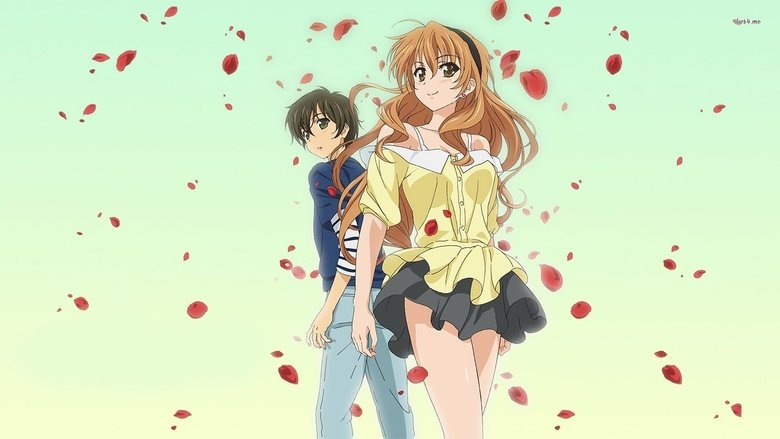
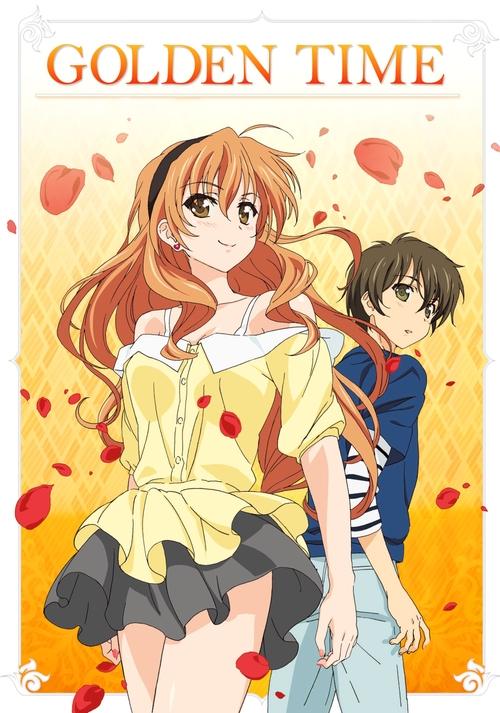
The central twist of "Golden Time" is the nature of Banri Tada's amnesia. After falling from a bridge, the soul or consciousness of the eighteen-year-old Banri, complete with all his memories, was separated from his body. This entity, referred to as "Ghost Banri," follows the new, amnesiac Banri, providing narration and context about the past. The new Banri is a blank slate, while Ghost Banri is hopelessly in love with their high school friend, Linda. The conflict intensifies as the new Banri falls in love with Kouko Kaga.
A major plot point is the revelation that Linda was present on the night of the accident; she was late to meet Banri to answer his love confession. Her answer would have been "Yes." Her guilt over this is the reason she hides their past from the new Banri. Throughout the series, Banri's new memories prove to be unstable. At one point, his old memories return completely, erasing his entire college life, including his love for Kouko. He returns to his hometown, effectively reverting to his pre-accident self.
The finale resolves this through a climactic sequence on the bridge. When Kouko finds Banri, she shows him the mirror she gave him, which triggers the return of his new memories. In a metaphysical space, the new, complete Banri confronts Ghost Banri. Linda appears in this space and finally gives her "Yes" to Ghost Banri, giving him the closure he needed. Ghost Banri then departs, effectively merging with or passing on, allowing the now-whole Banri to fully embrace his present. He and Kouko reunite, with the implication that while his memory may always be fragile, their bond is strong enough to endure. The ring Kouko wears in the final scene symbolizes their promise of a future together.