Golden Time
ゴールデンタイム
"When you're in a four-sided triangle and haunting yourself, how can things get even MORE complicated?"
Overview
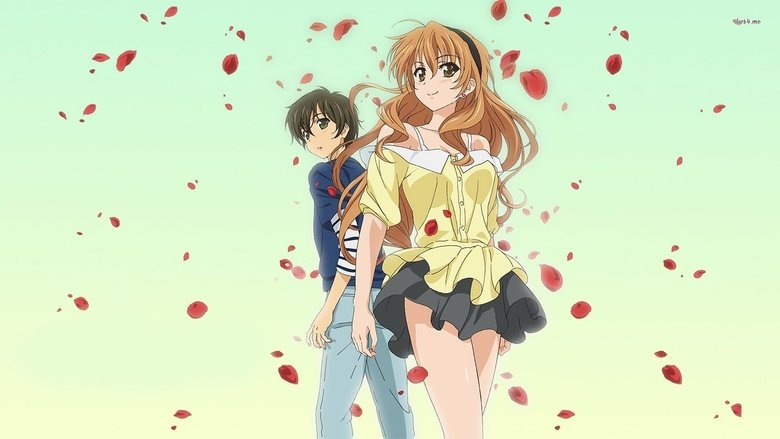
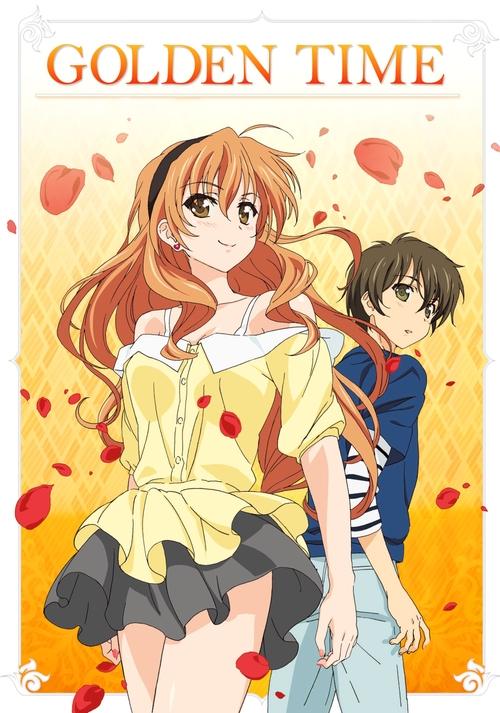
"Golden Time" follows Banri Tada, a newly admitted student at a private law school in Tokyo. Following a tragic accident right after his high school graduation, Banri suffers from severe retrograde amnesia, completely erasing all memories of his past. As he navigates his new life, he befriends Mitsuo Yanagisawa and shortly after, has a dramatic encounter with the beautiful and obsessively devoted Kouko Kaga. Kouko has spent years singularly focused on Mitsuo, her childhood friend with whom she made a pact to marry, and has followed him to college to his dismay.
As Banri and Kouko's lives become intertwined, the series moves beyond the typical "will they or won't they" trope of romance anime. Instead, it delves into the complexities of a budding relationship set against the backdrop of college life. The central conflict revolves around Banri's struggle with his identity. His past self, personified as a "ghost" that he alone can perceive, holds all of his lost memories, including his feelings for his high school friend, Linda. The narrative explores the turbulent emotional landscape of love, insecurity, and the daunting process of forging a new identity while being haunted by a past you cannot remember but that refuses to let go.
Core Meaning
The core meaning of "Golden Time" revolves around the themes of identity, memory, and the acceptance of one's whole self—past and present—to move forward. The series posits that life is not about starting over with a clean slate but about integrating all experiences, even painful or forgotten ones, into a cohesive identity. Banri's journey with amnesia serves as a dramatic metaphor for the universal struggle of reconciling who we were with who we are becoming. The conclusion emphasizes that true happiness and meaningful relationships are found not by erasing the past, but by accepting it and choosing one's path in the present, even with the knowledge that the future is uncertain and memories can be fragile. It's a story about the courage to love and define oneself in the face of profound internal conflict.
Thematic DNA
Identity and Memory
The central theme is the exploration of identity through the lens of amnesia. Banri is literally split into two selves: the new Banri living in Tokyo and the "ghost" of the old Banri who retains all pre-accident memories. This conflict drives the narrative, forcing Banri to question who he truly is. The series explores whether identity is the sum of one's memories or a product of present actions and relationships. His fear of his old memories returning and erasing his new life is a constant source of anxiety for both him and Kouko. Ultimately, the series suggests that reconciliation, not erasure, is the key to becoming a whole person.
The Nature of Love and Relationships
"Golden Time" presents a more realistic depiction of a romantic relationship than many anime. It moves past the initial confession to explore the daily struggles, insecurities, and joys of being a couple. Kouko and Banri's relationship is tested by her initial obsession with Mitsuo, her subsequent insecurities, and Banri's unstable memory. The series examines codependency, trust, and the effort required to maintain a relationship through difficult circumstances, showing that love isn't a fairy-tale ending but an ongoing journey of growth and mutual support.
Past vs. Present
The show constantly juxtaposes Banri's forgotten past with his developing present. His high school love for Linda clashes directly with his new love for Kouko. This theme is not only internal to Banri but also affects Linda, who struggles with her unresolved feelings and the guilt surrounding Banri's accident. The story argues that one cannot simply escape the past. It shapes the present, and confronting it, as both Banri and Linda must do, is essential for personal growth and for their relationships to mature.
Character Analysis
Banri Tada
Makoto Furukawa
Motivation
Initially, his motivation is to simply live a normal college life and escape the void of his past. This quickly evolves into a desire to build a future with Kouko and protect the happiness he's found. His primary motivation becomes the fight to hold onto his new identity and memories against the encroaching influence of his past self, driven by his love for Kouko.
Character Arc
Banri's arc is a literal journey of self-discovery. He begins as a blank slate, eager to build a new life after his amnesia. His initial personality is kind, accommodating, and somewhat passive. As the series progresses, he falls in love with Kouko, which gives him a strong anchor to his new identity. However, this identity is threatened by the gradual return of his old memories, represented by his "ghost" self. His arc involves confronting the fear that his new self will be erased. He experiences intense psychological conflict, leading to breakdowns. The climax of his arc is not choosing one self over the other, but integrating them. He accepts the memories and feelings of his past without letting them invalidate the life and love he has built, ultimately becoming a whole, more complex individual.
Kouko Kaga
Yui Horie
Motivation
Her initial motivation is to force Mitsuo to love her, based on a childhood promise. After falling for Banri, her motivation shifts to becoming the "perfect girlfriend" and maintaining their relationship at all costs. This is driven by a deep-seated fear of being worthless if not loved back. Over time, this matures into a genuine desire for Banri's happiness, even if it means she has to endure pain.
Character Arc
Kouko starts as a one-dimensional, obsessive stalker whose entire life revolves around Mitsuo. She is dramatic, insecure, and often childish. Her character arc is one of the most significant in the series. Through her relationship with Banri, she is forced to confront her flaws. She learns to be a friend, to love someone for who they are, and to find her own identity outside of a romantic obsession. She struggles immensely with Banri's condition, with her insecurity often causing friction. However, she grows from being completely dependent and selfish into a person who can provide genuine support, making the difficult decision to break up with Banri when she feels she's hurting him. By the end, she has matured into a more selfless and understanding partner, willing to accept Banri's complex situation.
Linda (Nana Hayashida)
Ai Kayano
Motivation
Linda's primary motivation is to protect Banri and atone for her perceived role in his accident. This manifests as a selfless, almost saintly, desire to see him happy, which often means suppressing her own feelings and needs. She is motivated by a mix of love, guilt, and a genuine sense of friendship.
Character Arc
Linda is introduced as a friendly upperclassman in the Festival Club. It's soon revealed she was Banri's best friend and secret love from high school. Her arc is defined by guilt and indecision. She blames herself for Banri's accident and chose not to reveal their past to him, believing it was for the best. Throughout the series, she is caught between her lingering feelings for the old Banri and her desire to support the new Banri's happiness with Kouko. She acts as a mature and supportive friend but is internally conflicted. Her climax comes in the finale, where she finally confesses her feelings to the "ghost" of the old Banri, giving both of them closure and allowing herself to fully move on and support Banri and Kouko's relationship without the weight of the past.
Symbols & Motifs
The Bridge
The bridge symbolizes transition, connection, and the site of trauma. It is the physical location where Banri's accident occurred, causing his old self to be 'lost' and his new self to begin. It's a liminal space between his past and present lives.
The bridge is where Banri confessed to Linda and later had his life-altering accident. The series finale brings the emotional climax back to a bridge, where Banri finally reconciles his past and present selves, accepting both to move forward with Kouko. This represents a full-circle journey, transforming a symbol of loss into one of healing and integration.
Kouko's Mirror
The mirror represents self-reflection, identity, and the connection between Banri and Kouko. It's a tool for seeing oneself, but in the context of the show, it becomes a conduit for Banri to see his true, integrated self.
Kouko gives Banri a compact mirror early in their friendship to match her own. This mirror is shattered when Banri has a memory-related breakdown on the bridge. In the final episode, it is by looking into Kouko's mirror that Banri's post-amnesia memories are triggered and returned to him, symbolizing that his connection to her is the key to making his identity whole again.
Memorable Quotes
Once you miss the opportunity to say something, the words become increasingly toxic. The best thing to do is to just say everything.
— Linda (Nana Hayashida)
Context:
This is a piece of advice Linda gives, reflecting on her own experiences without explicitly revealing her connection to Banri's past at the time. It's a recurring sentiment that underlines the dramatic tension of the entire series.
Meaning:
This quote encapsulates the central conflict surrounding Linda and Banri's past. Her failure to give him an answer on the bridge led to years of regret and complicated their reunion. It speaks to the broader theme of communication and honesty in relationships being vital to avoid misunderstanding and pain.
I may be unreliable, and I may not be able to do anything, but I'm here. I'll always be with you. I'll always be by your side.
— Banri Tada
Context:
Said during a moment of intense vulnerability, as Kouko expresses her fear that Banri's returning memories will cause him to forget her and their new life. Banri says this to reassure her of his devotion.
Meaning:
This is Banri's heartfelt promise to Kouko as his memory becomes more unstable. It signifies that his love and commitment are not dependent on his memories but on his present choice to be with her. It's a declaration of emotional presence over cognitive certainty.
If a person you love doesn't love you back, you're worthless. That's what I always told myself.
— Kouko Kaga
Context:
Kouko reflects on her past mindset, explaining to Banri the root of her desperate need for affection and why Mitsuo's rejection was so devastating to her sense of self. It marks a moment of self-awareness in her character development.
Meaning:
This quote reveals the core of Kouko's deep-seated insecurity and explains her initial obsessive behavior towards Mitsuo and her later anxieties in her relationship with Banri. Her self-worth is entirely tied to being loved, a flaw she has to overcome to mature.
Episode Highlights
Yes No
This episode is a major turning point. A flashback reveals Banri confessed to Linda on the night of his accident, and she was supposed to give him an answer. In the present, tensions between Kouko, Banri, and Mitsuo boil over at a party, leading to Mitsuo's public confession to Chinami (which is rejected) and Banri's decision to end his friendship with Kouko because her obsession with Mitsuo is too painful for him. The episode ends with Banri confronting Linda about their past.
It's the episode where the central relationships shift dramatically. Kouko is forced to confront the potential loss of Banri, which pushes her to realize her true feelings. The love triangle between Banri, Kouko, and Linda is officially established for the audience, setting up the primary conflicts for the rest of the series.
Reset
Narrated largely by "Ghost Banri," this episode delves deep into a flashback showing the past relationship between Banri and Linda. It reveals more about Linda's feelings for him and the profound connection they shared before the accident. The episode highlights the melancholy of the past and hints that Ghost Banri might be able to influence the present Banri.
This episode provides crucial context for Banri and Linda's past, making their current situation more tragic and complex. It solidifies Ghost Banri as a key narrative device and character, deepening the theme of the past's inescapable influence.
In the Mirror
Banri falls ill with a high fever, causing his memories to become unstable. Linda finds him and takes care of him, leading to an intimate moment that reflects their past closeness. This episode explores the fragility of Banri's new life and the comfort he finds in his past connections.
This episode highlights the physical and psychological toll of Banri's condition. It shows how easily the lines between past and present can blur for him, creating significant emotional turmoil and testing his relationship with Kouko.
Last Smile
Banri's memories begin to return more forcefully, causing him to lose his current memories intermittently. Fearing he will inevitably forget Kouko and return to his old self, she makes the heartbreaking decision to break up with him, believing it will spare them both future pain.
A pivotal dramatic high point, this episode showcases Kouko's character growth from clinging and selfish to making a painful, self-sacrificing choice for Banri's sake. It directly confronts the central conflict of the series: the potential erasure of their shared history.
Golden Time
In the finale, Banri, having lost his college memories, is back at his hometown. Kouko visits him, and through her mirror, his memories of their time together are restored. In a metaphysical sequence, Banri confronts his "ghost" self on the bridge. Linda arrives and finally gives her answer to the old Banri, allowing him to find peace. The new, whole Banri rushes to Kouko, and they reaffirm their love.
This episode provides a powerful, albeit confusing for some, resolution to all the major plotlines. It symbolically integrates Banri's two selves, gives closure to Linda and the old Banri's story, and culminates in the triumphant reunion of Banri and Kouko, affirming that their love can withstand even the loss of memory.
Philosophical Questions
What constitutes personal identity: our memories or our present self?
The series explores this question through Banri's amnesia. His new self, formed without any memories of his past, develops a distinct personality, new relationships, and a new love. However, the "ghost" of his past self, which is purely made of memories, claims to be the "real" Banri. The show constantly asks whether the person we are is the sum of our experiences, or the person we choose to be in the present moment. Banri's struggle to reconcile these two halves suggests that identity is not a static thing but a continuous process of integration. The ending proposes that both are essential parts of a whole, and one cannot truly exist without acknowledging the other.
Can love survive the loss of shared memories?
This question is at the heart of Banri and Kouko's relationship. Kouko's greatest fear is that Banri will forget her, and indeed, his memories of their time together do fade and disappear entirely at one point. The series tests the idea of love as an emotional bond versus a collection of shared experiences. Kouko's decision to pursue Banri even after he has forgotten her, and his ability to regain his feelings for her through an emotional, rather than purely cognitive, trigger (the mirror), suggests that love can be a force powerful enough to transcend memory itself, existing as a deeper connection that can be rediscovered.
Alternative Interpretations
The most debated aspect of "Golden Time" is the nature of "Ghost Banri" and the finale's resolution. One interpretation is that Ghost Banri is a literal, supernatural entity—the actual spirit of Banri that was separated from his body during the accident. This reading leans into the supernatural themes mentioned in the light novel's genre description.
A more widely accepted psychological interpretation posits that Ghost Banri is not a ghost at all, but a mental manifestation—a personification of Banri's subconscious, representing his repressed memories and past identity. In this view, the final confrontation on the bridge is not a supernatural event but a purely internal, metaphorical breakthrough where Banri integrates his fractured psyche. Linda's ability to see and speak to Ghost Banri in this scene is often seen as a symbolic moment of her addressing the past and letting go, rather than a literal interaction with a spirit. This interpretation keeps the story grounded in the realm of psychological drama.
Cultural Impact
"Golden Time" was well-received upon its release in 2013, particularly among fans of the romance genre. Coming from the author of "Toradora!", it had high expectations, which many feel it met by offering a more mature and realistic take on relationships. A key distinction was its university setting, a departure from the ubiquitous high school backdrop of most romance anime. This allowed the series to explore themes and situations more relevant to young adulthood, such as living independently, part-time jobs, and more complex relationship dynamics.
Critically, the show was praised for its constantly evolving and realistic characters who make mistakes and learn from them. It subverted genre expectations by having the main couple get together early on, focusing the drama not on the confession but on the challenges of maintaining a relationship, particularly one under the strain of a condition like amnesia. However, the series also drew criticism. Some viewers found Kouko's personality grating and overly dramatic, while others felt the supernatural-esque element of "Ghost Banri" was an odd fit for an otherwise grounded drama. The ending, particularly the metaphysical sequence, was a point of confusion for many, though it is generally interpreted as a metaphorical resolution of Banri's internal conflict. Despite these criticisms, "Golden Time" remains a memorable and respected entry in the romance anime canon for its emotional depth and mature storytelling.
Audience Reception
Audience reception for "Golden Time" is generally positive, though often divided. Many viewers praise it as one of the best and most realistic romance anime, appreciating its mature, college-setting take on relationships and its willingness to tackle complex emotional issues. The character development, particularly for Kouko, is frequently highlighted as a strong point, with many fans enjoying her transformation from an obsessive stalker to a mature, caring partner. The emotional weight of the drama, especially the painful moments of Banri's memory loss, is often cited as being highly effective and heart-wrenching.
However, the series has its detractors. A significant portion of the audience finds Kouko's character to be annoying, selfish, and overly dramatic, which makes it difficult for them to invest in the central romance. Another common point of criticism is the plot device of "Ghost Banri," which some feel is an unnecessary and out-of-place supernatural element in a story that is otherwise grounded in realism. The ending also proved to be confusing and somewhat rushed for some viewers, who felt the resolution was too metaphorical or that certain character arcs, like Linda's, were not fully resolved to their satisfaction. Despite these divisions, it is widely regarded as a compelling drama that stands out from typical high-school rom-coms.
Interesting Facts
- The series is based on a light novel series written by Yuyuko Takemiya, who is also the author of the popular romantic comedy series 'Toradora!'.
- The 24-episode anime is an adaptation by J.C.Staff, a studio well-known for producing successful romance and slice-of-life anime.
- The anime adaptation reportedly condenses the source material, with some fans noting that nuances and comedic bits from the light novels and manga were skipped to fit the story into 24 episodes.
- The voice actors from the anime reprised their roles for a drama CD and a web radio show that were released in 2013.
Easter Eggs
A character named Nana who fronts a punk rock band appears in the series.
This is widely seen as a reference to Nana Osaki, one of the two protagonists from the famous manga and anime series "NANA." The character shares a similar punk aesthetic and musical profession, acting as a fun homage for fans of josei and shoujo genres.
⚠️ Spoiler Analysis
Click to reveal detailed analysis with spoilers
Frequently Asked Questions
Explore More About This Movie
Dive deeper into specific aspects of the movie with our detailed analysis pages
Comments (0)
No comments yet. Be the first to share your thoughts!